Mastering Competitive Analysis
Introduction to Competitive Analysis
What is Competitive Analysis?
Competitive analysis is the process of identifying your business rivals and evaluating their strategies to determine their strengths and weaknesses in relation to your own. Think of it like a sports team studying game footage of their opponents. They're not just watching for fun; they're looking for patterns, weaknesses, and opportunities to exploit on game day.
The main goal is to get a clear picture of the competitive landscape. What are other businesses in your space doing? What are they good at? Where are they falling short? Answering these questions helps you find market gaps, anticipate shifts in the market, and make smarter, more informed decisions for your own business.
The Benefits of Looking Sideways
Conducting a competitive analysis isn't about copying what others are doing. It’s about gathering intelligence to carve out your own unique space in the market. One of the biggest advantages is identifying gaps—unmet needs or underserved customer segments that your competitors are ignoring. For example, if all the coffee shops in a neighborhood focus on quick, grab-and-go service, there might be an opening for a shop with comfortable seating and a quiet atmosphere for remote workers.
By researching companies active in your market or niche, you can identify market gaps, avoid common pitfalls, and most importantly of all - refine your unique value proposition so that your idea has a chance to stand out in the competitive landscape.
This process directly helps you gain a competitive advantage. When you understand your competitors' pricing, marketing tactics, and product features, you can position your own offerings more effectively. You might decide to compete on price, offer a higher-quality product, or focus on exceptional customer service. Without this insight, you're essentially flying blind.
The Core Components
A good competitive analysis has a few key parts. It’s a structured way of looking at the market, not just a random browse of competitor websites.
- Identify Your Competitors: Who are you actually competing against? It's important to look at both direct competitors (those who sell a similar product to the same audience) and indirect competitors (those who solve the same problem with a different solution).
A local pizzeria's direct competitor is the pizza place across the street. An indirect competitor could be a taco truck, a grocery store selling frozen pizzas, or even a food delivery app—they all solve the "what's for dinner?" problem.
- Analyze Their Strengths and Weaknesses: Once you know who your competitors are, you need to dig into what they do well and where they struggle. This often involves looking at their products, pricing, marketing strategies, and customer reviews. A common framework for this is a SWOT analysis (Strengths, Weaknesses, Opportunities, Threats).
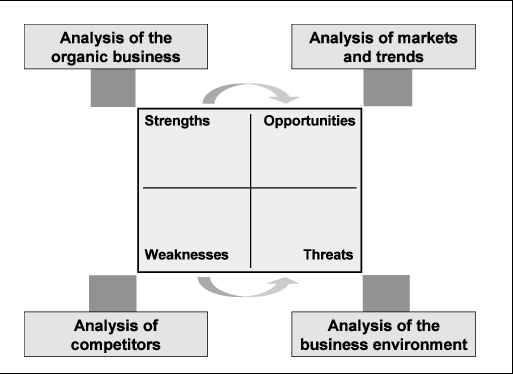
For example, a competitor might have a strong brand presence (strength) but a clunky, outdated website (weakness). This weakness could be an opportunity for you to capture customers who value a smooth online experience.
- Understand Market Dynamics: This is about zooming out to see the bigger picture. What are the current trends in the industry? Are there new technologies changing how things are done? How are customer expectations evolving? Understanding the overall market environment gives context to your competitors' actions and helps you spot broader threats and opportunities.
By consistently keeping an eye on these components, you can move from simply reacting to your competitors to proactively shaping your own path to success.
What is the primary goal of conducting a competitive analysis?
A high-end Italian restaurant opens in a city. Which of the following would be considered an indirect competitor?