Mastering Communication Strategy
Foundations of Communication
The Core of Communication
Communication is more than just talking. It’s the process of sending and receiving information between two or more people. Whether you're sending a text message, giving a presentation, or just having a conversation, you're participating in a complex exchange. To get better at it, we first need to understand how it works.
Thinkers have developed models to simplify this process. These aren't perfect representations, but they help us see the moving parts and identify where things can go wrong.
How Communication Flows
The simplest way to think about communication is as a one-way street. This is called the linear model.
In this view, a sender encodes a message and sends it through a channel to a receiver, who then decodes it. Along the way, the message can be disrupted by “noise.” Noise isn't just sound; it can be anything that interferes with the message, like unclear language, cultural differences, or a bad internet connection.
The linear model is simple, but it's missing a key element. Communication is rarely a one-way street. When you talk to someone, you watch their reactions and listen to their replies. This brings us to a more realistic model.
The interactive model shows communication as a two-way process. Each person is both a sender and a receiver, constantly exchanging messages and providing feedback.
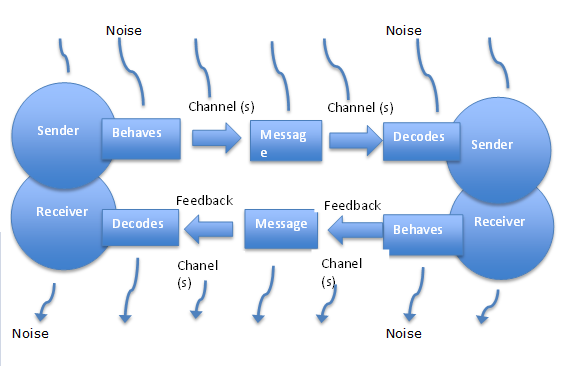
This model introduces two crucial ideas: feedback and context.
- Feedback: This is the receiver's response to the message. It can be verbal, like asking a question, or nonverbal, like nodding in agreement or looking confused. Feedback lets the sender know if their message was understood.
- Context: Each person brings their own experiences, beliefs, and values to a conversation. This “field of experience” shapes how they interpret messages. The more overlap in context between two people, the more likely they are to understand each other.
The Power of Simplicity
No matter which model you use, the goal is shared understanding. The single biggest obstacle to this is a lack of clarity. When a message is too complex, filled with jargon, or poorly organized, it forces the receiver to work too hard to decode it. Many just give up.
Being concise is just as important. A message buried in unnecessary details loses its impact. People have limited attention, so it's vital to get straight to the point.
Effective communication isn't about sounding smart. It's about being understood.
This is where feedback becomes your best tool. Pay attention to it. If people seem confused, don't assume they aren't listening. It might be a sign that your message isn't as clear as you think it is. Use their feedback to rephrase, simplify, and try again.
By understanding these basics—the flow, the importance of clarity, and the role of feedback—you build a strong foundation for communicating more effectively in any situation.
What is the primary feature that distinguishes the interactive model of communication from the linear model?
A manager sends a long, technical email full of acronyms to a new intern. The intern is confused but doesn't ask for clarification. Which communication barrier is most evident here?