Mastering Commercial Engagement
Understanding Consumer Behavior
What Makes People Buy?
It’s easy to think of shopping as a simple calculation of needs and costs. I need milk, so I’ll buy the cheapest carton. But human behavior is rarely that straightforward. Our decisions are guided by a complex mix of thoughts, feelings, and social cues that operate just beneath the surface.
Understanding these psychological drivers is key to understanding why we choose one product over another. It’s not about manipulation, but about recognizing the fundamental patterns in how people think and act. When we see what truly motivates a decision, we can communicate more effectively.
The Principles of Persuasion
Psychologist Robert Cialdini identified several key principles that influence our decisions. These aren't tricks; they are deeply ingrained social behaviors that guide our interactions.
Reciprocity
noun
The tendency to feel obligated to give something back after receiving something first.
Think about a time you were given a free sample at a grocery store. This small gift creates a subtle social obligation. Even if you don't consciously feel indebted, you may be slightly more inclined to buy the product. The principle of reciprocity is at play, making you want to return the favor.
Scarcity
noun
The perception that products are more attractive when their availability is limited.
When we believe something is in short supply, we see it as more valuable. Phrases like "limited time offer" or "only 3 left in stock" create a sense of urgency. We experience a fear of missing out, which can push us to make a decision more quickly than we otherwise would have.
These principles highlight our desire for fairness (reciprocity), our fear of loss (scarcity), and our reliance on credible sources (authority). They are mental shortcuts we use to navigate a complex world.
The Heart Decides
We often believe our choices are rational and well-thought-out. In reality, emotions are frequently in the driver's seat. Many studies show that we often make decisions based on how we feel and then use logic to justify that choice afterward.
A person buying a luxury car isn't just purchasing transportation. They're buying the feeling of success, freedom, or excitement. A parent buying organic baby food isn't just buying nutrients; they're buying peace of mind. These emotional connections are powerful motivators.
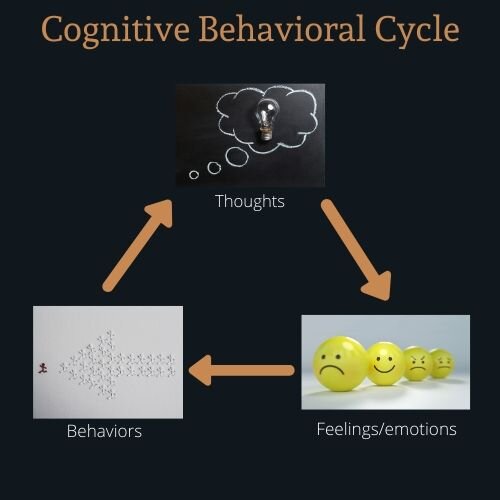
Effective brands understand this. They don't just sell a product's features; they sell an experience or an identity. They connect with customers on an emotional level by telling stories, using evocative imagery, and building a sense of community. The goal is to make the customer feel something positive in relation to the product or service.
Psychology in branding is the secret sauce behind the emotional pull of some of the world’s most successful brands.
Following the Crowd
Imagine you're choosing between two restaurants for dinner. One is bustling with happy customers, while the other is completely empty. Which one do you choose? Most people would pick the busy one, assuming it must be better. This is social proof in action.
Social Proof
noun
A psychological phenomenon where people assume the actions of others reflect correct behavior for a given situation.
When we're uncertain, we look to others for clues about what to do. It’s a mental shortcut that helps us make decisions with less effort. This is why customer testimonials, online reviews, and user-generated content are so influential.
Social proof works because we trust people like us more than we trust traditional advertising. Seeing that others have had a positive experience with a product or service reduces our perceived risk and makes us more confident in our own decision to buy. It provides a sense of safety in numbers.
A grocery store offers you a free sample of a new snack. According to the principle of reciprocity, what is the most likely psychological effect this has on you?
An e-commerce website displays the message "Limited time offer!" next to a product. This tactic primarily leverages which psychological principle?
By understanding these core principles—persuasion, emotion, and social proof—you gain a clearer picture of the invisible forces that shape consumer behavior.