Mastering Combat Dynamics
Biomechanical Striking Efficiency
The Engine of a Strike
A powerful strike isn't just about arm or leg strength. It's about the entire body working as a single, coordinated system. This system is called the —a sequence of movements that transfers force from the ground, up through your legs and core, and finally into your fist or shin. Think of it like cracking a whip. The power comes from the handle, but the real speed and impact are at the very tip, created by a wave of energy traveling along its length.
Proper skeletal alignment is the key to making this transfer efficient. If your posture is broken, energy leaks out, and the strike loses power. Different martial arts have developed unique ways to use this chain, trading off between raw power, speed, and recovery time.
Rotation vs. Snap
Consider the difference between a Muay Thai roundhouse kick and a traditional Karate kick. They serve a similar purpose but are mechanically worlds apart.
The Muay Thai kick is a rotational power strike. It's like swinging a baseball bat. The fighter pivots on their standing foot, rotates their hips fully, and swings their entire leg as a single, heavy lever. The striking surface is the hard shin bone, and the goal is to transfer the body's full momentum into the target, maximizing impact force.
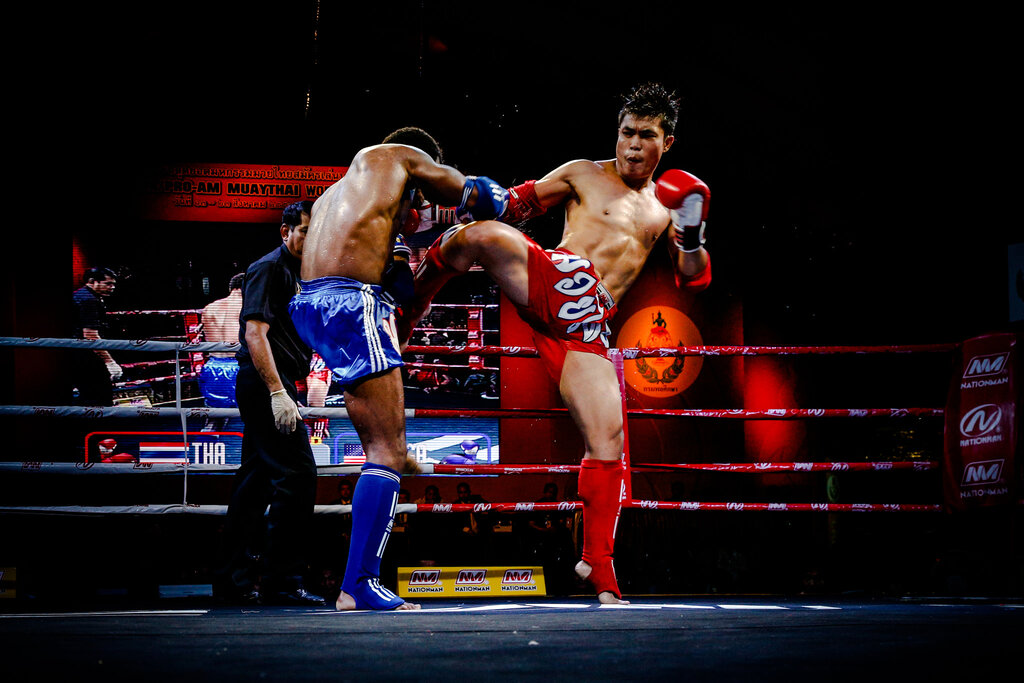
A Karate kick, on the other hand, is often a snapping movement. The knee is chambered high, then the lower leg snaps out and retracts almost instantly. This technique relies on fast-twitch muscle fibres and rapid knee extension. While it may generate less raw force, its speed makes it harder to see coming, and the quick recovery allows the fighter to return to a stable defensive stance immediately. It prioritizes speed and safety over singular impact.
Control and Structure
Striking isn't just about offense. Muay Thai provides a masterclass in structural control with the '' clinch. This isn't simply grabbing the opponent. By controlling their head, you control their posture. You break their skeletal alignment, making it nearly impossible for them to generate power from the ground up. Their kinetic chain is short-circuited.
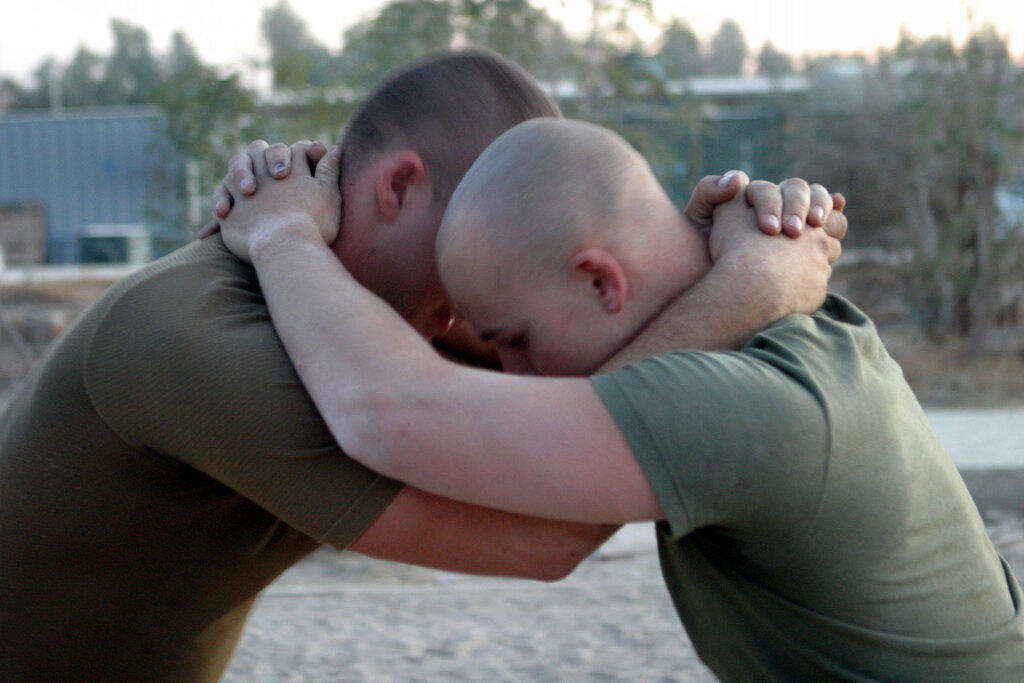
Once their structure is compromised, they become highly vulnerable to devastating close-range weapons like knees and elbows. These strikes don't need a long wind-up because the control from the clinch has already created the opening and nullified the opponent's base.
Defensive Postures
Finally, consider the guard. A boxer or kickboxer often uses a guard where the hands are held tightly to the chin and temple. This provides excellent protection for the head against punches. However, it can leave the body more open.
The traditional Muay Thai guard is often higher and more open. The hands are positioned further from the head, and the forearms are angled to defend against a wider array of attacks, including high kicks and elbows. This long guard acts as a frame, helping to manage distance and parry strikes before they gain full momentum. The trade-off is that it can leave more direct openings for straight punches down the middle. Each guard is a biomechanical solution optimized for the specific threats common in that sport.
What is the primary function of the 'kinetic chain' in striking?
According to the text, what is the main purpose of the 'Thai Plumb' clinch?
Every stance, strike, and guard in martial arts represents a choice in biomechanics, a trade-off between power, speed, and safety.