Mastering Combat Dynamics
Striking versus Grappling Biomechanics
Force vs. Redirection
In martial arts, every movement is a conversation about force. A striker, like a Muay Thai fighter, wants to end that conversation abruptly. Their goal is to generate massive kinetic energy and deliver it in a straight line, a direct force vector aimed at penetrating the target. Think of it as a spear.
A grappler, like a Brazilian Jiu-Jitsu practitioner, wants to change the subject entirely. They aren't trying to meet force with force. Instead, they aim to capture, redirect, and manipulate the opponent's force vector. Their approach is more like a whirlpool, pulling the opponent off-balance and into their control.
The Kinetic Kick
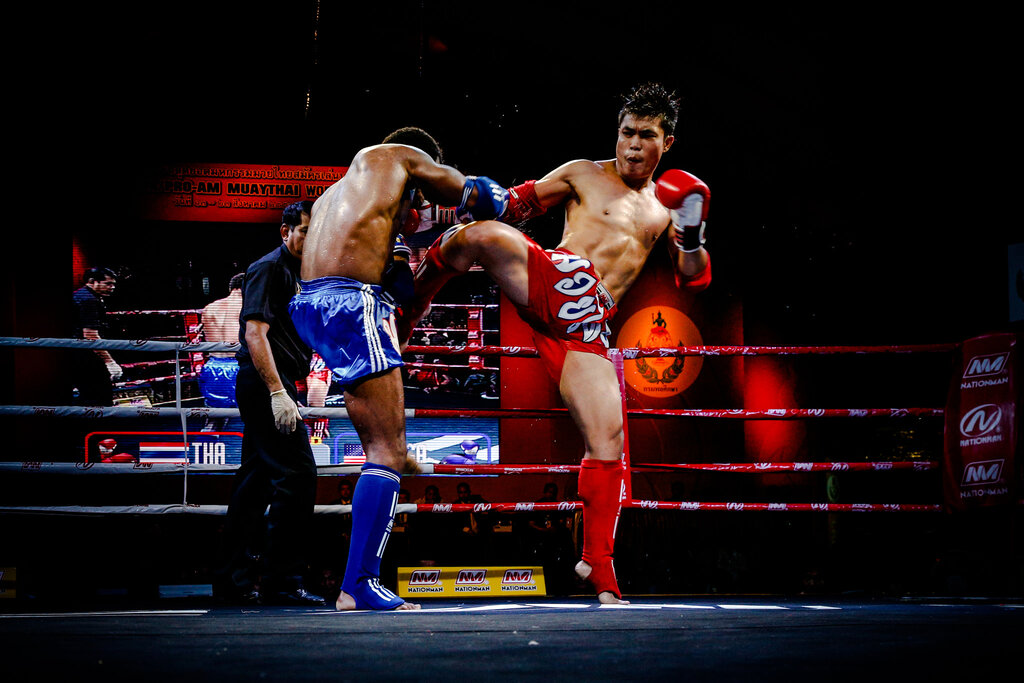
Let's analyze the Muay Thai roundhouse kick. It's a masterclass in generating kinetic energy. The power doesn't come from the leg alone; it starts from the ground up. The fighter pivots on their standing foot, which acts as an anchor. This pivot allows the hips to rotate violently, creating torque.
This rotational energy travels up through the core and into the kicking leg, which acts like the end of a whip. This entire sequence is a kinetic chain, where each link amplifies the energy of the one before it. The objective is to maximize mass and velocity at the point of impact, creating a devastatingly powerful strike.
The Power of Leverage
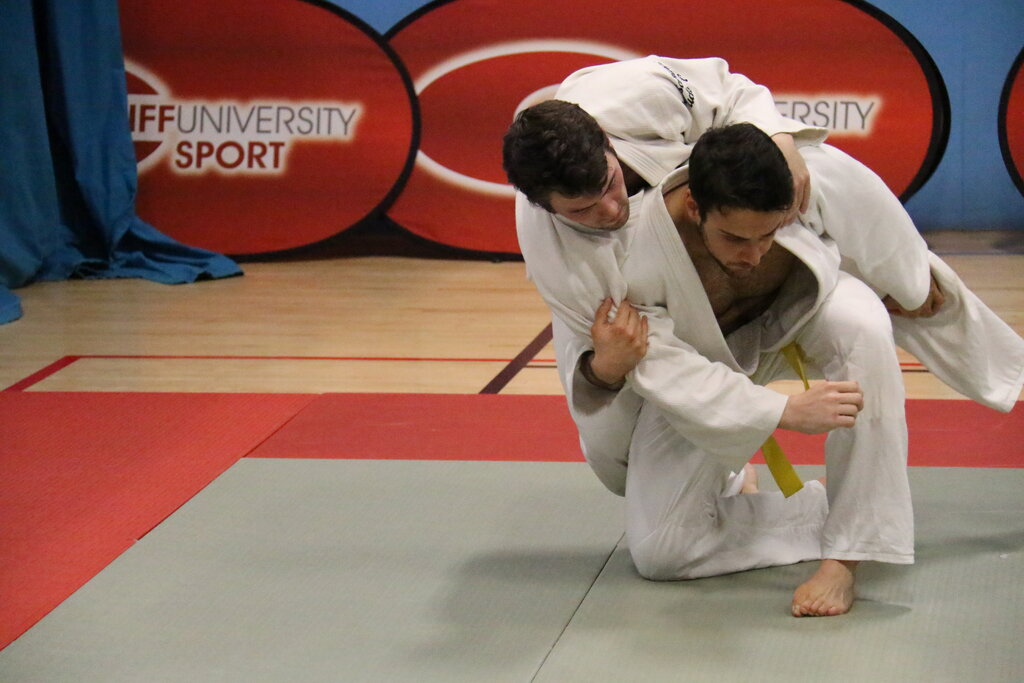
Now consider a BJJ hip throw. The goal here is not to generate internal force but to hijack the opponent's. When an opponent rushes forward, they bring their own kinetic energy. The grappler steps in, not to block, but to get their hip under the opponent's s.
In this action, the grappler’s hip becomes a , the pivot point of a lever. The opponent's body is the lever arm. With a small amount of rotational force, the grappler redirects the opponent's entire momentum, sending them to the mat. It’s a beautiful application of physics, where technique allows a smaller person to control a much larger one by manipulating forces rather than creating them from scratch.
Commitment and Consequence
Every attack requires a structural commitment. Throwing a powerful roundhouse kick involves shifting nearly all your weight to one leg and rotating your body completely. This is a moment of high power, but also high vulnerability. If the kick is evaded, the striker is off-balance and exposed.
A grappler exploits this. When a striker commits to a powerful punch or kick, they often shift their center of gravity forward. A grappler can use this forward momentum to their advantage, changing levels and shooting for a takedown. The striker's penetrating force vector becomes a liability.
Conversely, a grappler must close the distance to be effective, putting them at risk from the striker's close-range weapons like knees and elbows. The defensive sprawl is a direct counter to a takedown attempt. By thrusting the legs back and dropping the hips, the fighter lowers their center of gravity and makes it nearly impossible for the grappler to get underneath them. It's a biomechanical wall, designed specifically to negate the grappler's leverage-based attack.
Grappling techniques, including takedowns, submissions, and ground control, heavily rely on biomechanical principles.
Understanding these trade-offs is key. A striker invests in creating overwhelming force, accepting the risk of instability. A grappler invests in control and redirection, accepting the risk of closing distance. The clash between these two approaches is a physical chess match governed by the laws of physics.
What is the primary goal of a striker like a Muay Thai fighter, as described in the text?
The power of a Muay Thai roundhouse kick starts from the ground and is amplified through a sequence of body movements. This sequence is known as a: