Mastering Cognitive Excellence
Applied Neuroplasticity
Priming the Brain for Growth
Your brain's ability to change isn't a passive process. You can actively create the conditions for efficient learning by modulating key neurochemicals. Think of it like preparing soil before planting seeds. One of the most important of these is Brain-Derived Neurotrophic Factor (BDNF), a protein that acts like a fertiliser for your neurons, promoting their survival, growth, and the formation of new connections.
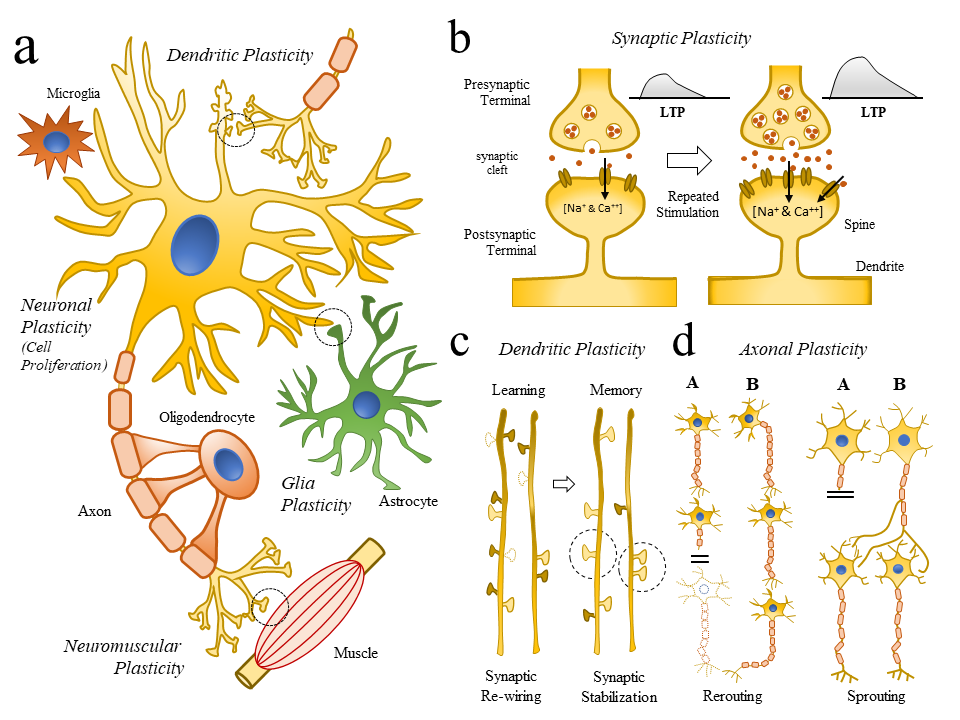
Increasing BDNF levels essentially tells your brain it's time to grow and adapt. Two of the most effective ways to do this are through consistent aerobic exercise and diet. Vigorous exercise that elevates your heart rate is a powerful trigger for BDNF release, preparing your brain for a subsequent learning session. Similarly, what you eat directly influences your brain's chemistry. The is specifically designed to support cognitive health by combining elements of the Mediterranean and DASH diets.
Advanced Encoding Strategies
With the brain primed for growth, the next step is to encode new information effectively. This requires moving beyond simple repetition. Recursive Encoding is a technique for building deep, robust understanding by revisiting foundational concepts with your current, more advanced knowledge.
Imagine learning a programming language. You first learn what a 'variable' is. Later, you learn about 'data types', and later still about 'memory management'. Recursive encoding means looping back to your initial concept of a 'variable' and re-interpreting it through the lens of memory management. This doesn't just reinforce the old knowledge; it transforms it into a richer, more interconnected neural structure.
Another powerful technique is Contrast-Based Encoding. Instead of learning concepts in isolation, you study opposing or related ideas simultaneously. For example, learning about inductive and deductive reasoning together. This forces your brain to work harder to distinguish between them, creating sharper mental models and preventing conceptual overlap. The mental effort involved generates a state of , which strengthens the specific neural pathways for each distinct concept.
Rewiring the Synapse
These learning strategies work because they influence the fundamental mechanism of neuroplasticity: the adjustment of synaptic weights. Learning isn't just about creating new connections, but about strengthening or weakening existing ones. This is governed by a principle called (STDP).
Simply put, if a neuron (A) repeatedly fires just before a second neuron (B) and contributes to its firing, the connection from A to B gets stronger. If neuron A fires just after neuron B, the connection gets weaker. It’s a mechanism of cause-and-effect at a cellular level.
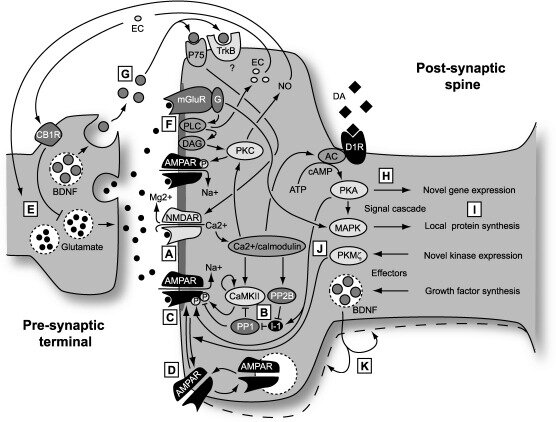
This timing-dependent rule is how your brain learns associations. The strategies we've discussed, like contrast-based encoding, create clear and consistent firing patterns, allowing STDP to efficiently fine-tune synaptic weights for specific knowledge.
By understanding these principles, you can shift from being a passive recipient of information to an active architect of your own neural landscape.
What is the primary role of Brain-Derived Neurotrophic Factor (BDNF) in the brain?
A programmer is struggling to understand a new complex function. They decide to go back and review the basic programming principles they first learned, re-interpreting them in the context of the new, advanced function. Which learning technique is this an example of?