Mastering Coffee Extraction and Processing
Post-Harvest Fermentation Chemistry
The Chemistry Before the Roast
Once a coffee cherry is picked, its journey is far from over. Post-harvest processing isn't just about drying the bean; it's a deliberate biochemical intervention. The goal is to modulate the bean's internal chemistry, creating a specific palette of precursor molecules that will later transform into the flavors and aromas we love during roasting. This transformation is driven by a microscopic workforce of yeast, bacteria, and native enzymes.
The sugary, sticky layer surrounding the coffee bean, the , is the fuel for this entire process. How producers manage this layer dictates which metabolic pathways are favored, directly shaping the final cup profile. The choice between washed, natural, and honey processing is a choice between different chemical futures for the bean.
Metabolic Pathways and Flavor
Each processing method creates a unique micro-environment, encouraging different types of microbial activity.
In the washed process, the mucilage is mechanically scrubbed off almost immediately. Any fermentation that occurs is brief, typically taking place in water tanks for 12 to 48 hours. The primary goal here isn't to add flavor, but to break down any remaining pectin so the bean can be cleaned thoroughly. This minimal microbial influence is why washed coffees are known for their clean, bright acidity and flavor clarity, expressing the bean's origin and variety with little interference.
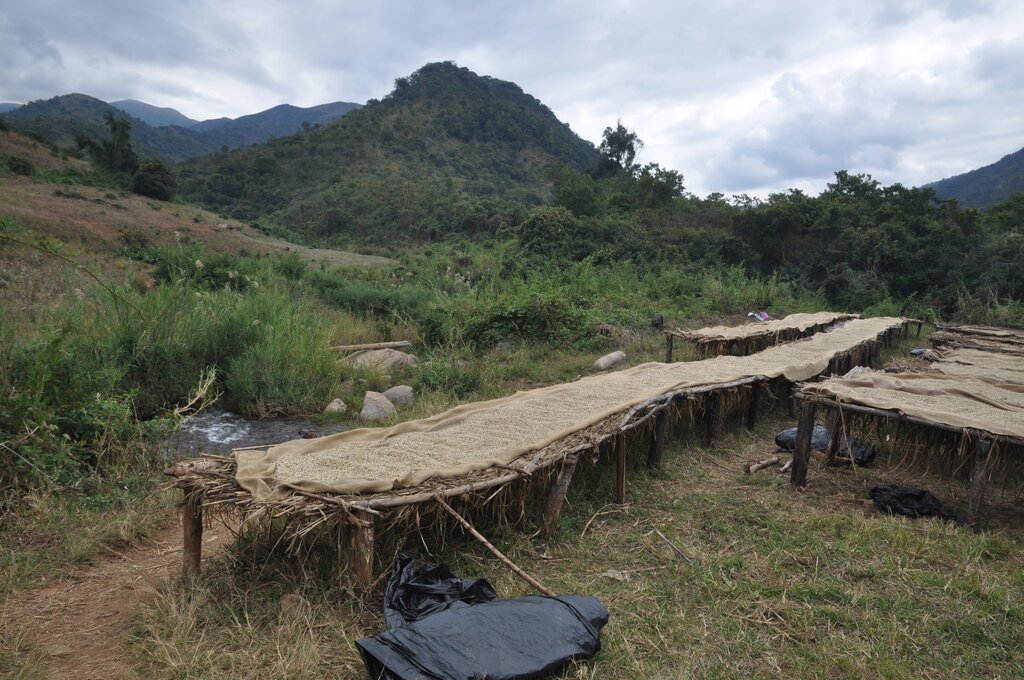
The natural process is a completely different story. The cherry is left intact during drying, creating a complex, multi-stage fermentation. Initially, the cherry's skin limits oxygen, kicking off within the fruit pulp. Yeasts consume the sugars, producing ethanol and a host of fruity esters. As the cherry dries and the skin becomes more permeable, aerobic bacteria take over, converting ethanol into acids like acetic acid. This prolonged contact with fermenting fruit allows byproducts to osmose into the bean, resulting in the heavy body, low acidity, and intense fruit-forward notes characteristic of natural coffees.
Honey processing strikes a balance. The cherry skin is removed, but a controlled amount of mucilage is left to dry on the bean. The more mucilage that remains (moving from yellow to red to black honey), the more fuel is available for microbial activity. This method develops significant sweetness and body from the mucilage's sugars and lipids without the intense ferment character of a natural process. The result is a cup that marries the clarity of a washed coffee with the sweetness and body of a natural.
Cell Structure and Roasting
These chemical transformations have a direct impact on the bean's physical structure, which in turn dictates how it behaves in the roaster. The of the bean is altered by the processing method, affecting its density and porosity.
Processing doesn't just change the chemistry inside the bean; it changes the physical structure of the bean itself.
Washed beans, having had their mucilage removed early, are typically very dense. Their tight cellular structure conducts heat efficiently and evenly during roasting. However, this density also means they can be susceptible to scorching if too much heat is applied too quickly.
Natural-processed beans are generally less dense and more porous. The prolonged fermentation and slow drying process cause the cell walls to become more permeable. In the roaster, this porosity can lead to less even heat transfer and a higher risk of tipping (scorching on the bean's ends). Roasters must use a more gentle approach to ensure the bean roasts uniformly from the inside out.
Honey-processed beans fall in between, with a density that correlates to the amount of mucilage left on the bean. Understanding a bean's processing method is therefore critical for a roaster to unlock its full potential.
What is the primary fuel for the fermentation process that occurs after a coffee cherry is picked?
Which processing method is most associated with clean, bright flavors and high acidity, often described as expressing the bean's origin with minimal interference?