Mastering Cloud Security Knowledge
Cloud Computing Basics
What Is the Cloud?
Think about how you watch movies. A decade ago, you probably owned a collection of DVDs. If you wanted to watch something new, you had to go out and buy it. Today, you likely use a streaming service. The movies are stored on someone else's computers, and you just access them over the internet whenever you want.
Cloud computing is a lot like that, but for computer resources. Instead of owning and maintaining your own servers and data centers, you can access services like computing power, storage, and databases from a cloud provider over the internet.
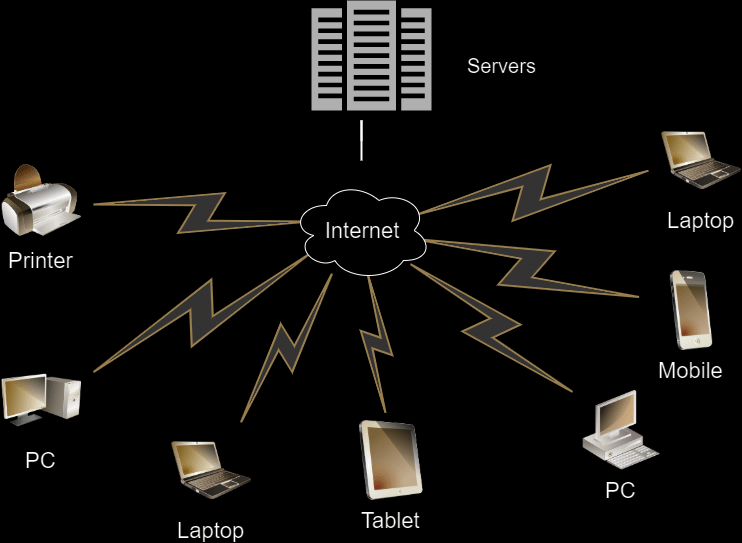
Cloud computing is the delivery of computing services—servers, storage, databases, networking, software, analytics, and intelligence—over the internet (“the cloud”).
The core idea is accessing resources "on-demand." You get what you need, when you need it, and you typically only pay for what you use. This pay-as-you-go model is a major shift from the traditional approach of buying and managing physical hardware, which requires a large upfront investment.
The Three Main Flavors
Cloud computing isn't a one-size-fits-all solution. It comes in three main service models, each offering a different level of control and management. A good way to understand them is by thinking about pizza.
- Make it yourself: You buy the oven, stove, and utensils. You're responsible for the ingredients, the recipe, and the cooking. This is the most flexible option but requires the most work.
- Pizza delivery: A restaurant makes the pizza, and you just provide the table and drinks. You don't have to worry about the cooking, just serving it.
- Dine in: You go to the restaurant. They handle everything from cooking to cleanup. All you do is show up and eat.
These three options correspond directly to the main cloud service models: IaaS, PaaS, and SaaS.
| Service Model | Pizza Analogy | What You Manage |
|---|---|---|
| IaaS | Make it yourself | Applications, Data, OS |
| PaaS | Pizza delivery | Applications, Data |
| SaaS | Dine in | Nothing |
Infrastructure as a Service (IaaS) is the most basic model. It provides fundamental computing infrastructure: virtual servers, storage, and networking. It's like leasing the kitchen equipment. You get the flexibility to build whatever you want, but you are responsible for managing the operating system, software, and applications.
Platform as a Service (PaaS) goes one step further. The provider manages the underlying infrastructure and the operating systems and development tools. You just focus on building and running your applications without worrying about software updates or hardware maintenance. This is the pizza delivery option; you manage the final product, but the core work is done for you.
Software as a Service (SaaS) is the most common model. The provider delivers a complete software product that's ready to use over the internet. Think of email services, file storage, or office software. You just use the application, and the provider handles everything else. It's like dining at the restaurant.
Where the Cloud Lives
Just as there are different service models, there are also different ways to deploy cloud resources. These are known as deployment models.
Public Cloud: This is the most common model. Resources are owned and operated by a third-party cloud provider and delivered over the internet. All hardware, software, and other supporting infrastructure is owned and managed by the provider. You share these resources with other organizations, or "tenants."
Private Cloud: Here, the cloud infrastructure is used exclusively by a single organization. It can be located at the company’s own data center or hosted by a third-party provider. This offers more control and privacy but comes at a higher cost.
Hybrid Cloud: This approach combines public and private clouds, allowing data and applications to be shared between them. This gives businesses greater flexibility and more deployment options. For example, a company might use the public cloud for non-sensitive tasks while keeping critical applications on a private cloud.
There's also a less common model called a Community Cloud, where infrastructure is shared by several organizations with common concerns, such as specific security or compliance requirements. It's like a semi-private cloud for a group with shared interests.
Sharing the Responsibility
A common point of confusion with the cloud is security. Who is responsible for keeping things safe, you or the cloud provider? The answer is: both of you.
This is explained by the shared responsibility model. The cloud provider is always responsible for the security of the cloud. This includes the physical security of their data centers and the hardware that runs their services. You, the customer, are responsible for security in the cloud. This includes securing your data, managing who has access, and configuring your applications correctly.
Think of it like renting an apartment. The landlord is responsible for securing the building (locks on the main door, a sturdy structure). But you are responsible for locking your own apartment door and not leaving your valuables out in the open.
The exact division of responsibility changes depending on the service model (IaaS, PaaS, or SaaS). With IaaS, you have more responsibility because you manage the operating system and software. With SaaS, the provider manages almost everything, so your responsibility is much smaller, often just focused on managing users and their access rights.
Now that you understand the core concepts of cloud computing, let's test your knowledge.
What is the core idea behind the "pay-as-you-go" model in cloud computing?
Using the provided pizza analogy, which cloud service model is like having a pizza delivered, where the cooking is done for you but you provide the table and drinks?
Understanding these fundamentals—what the cloud is, its different models, and how responsibility is shared—is the first step toward using it effectively and securely.