Mastering Claude for Code Generation and Analysis
Introduction to Large Language Models
What Are Large Language Models?
Large Language Models, or LLMs, are a type of artificial intelligence designed to understand and generate human-like text. Think of them as incredibly advanced autocomplete systems. They've been trained on a vast library of text and code from the internet, allowing them to recognize patterns, grammar, context, and even nuanced concepts.
A Large Language Model (LLM) is a type of artificial intelligence program designed to understand, generate, and work with human language.
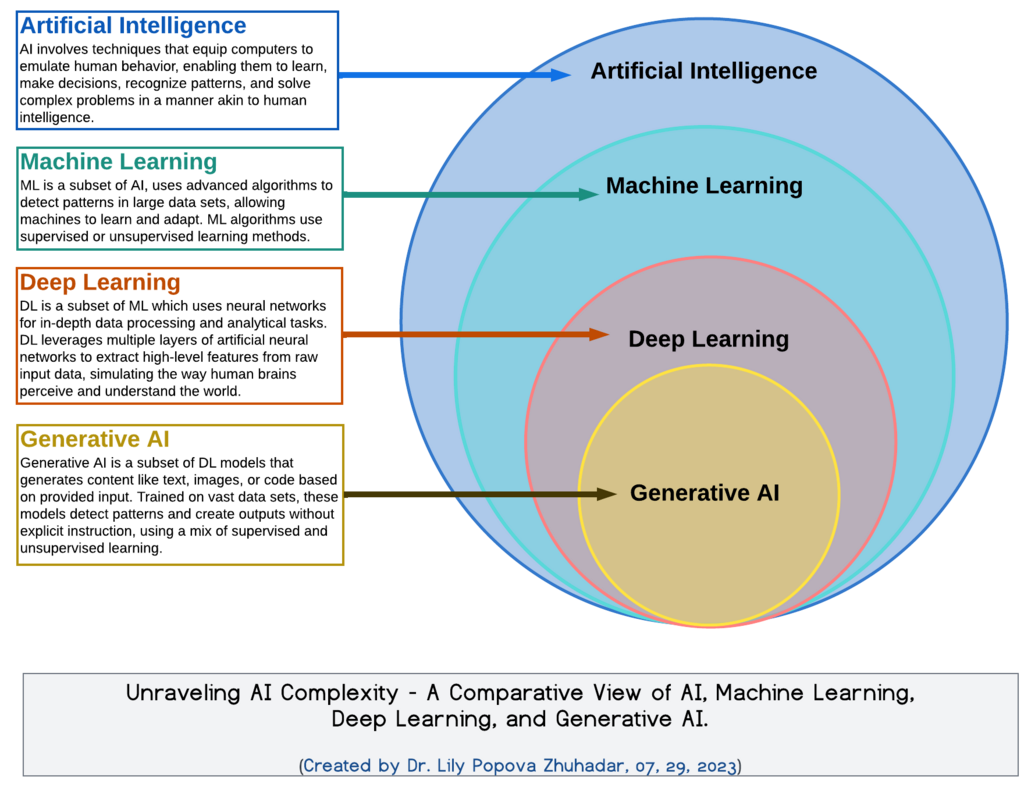
At their core, LLMs are built on neural networks, which are computing systems loosely inspired by the human brain. These networks have billions of parameters, which are like tiny knobs that get adjusted during training. This massive scale is what allows them to capture the incredible complexity of language.
How LLMs Learn
The training process for an LLM is a monumental task. It starts with a phase called pre-training. In this stage, the model is fed an enormous amount of text data—we're talking about a significant portion of the public internet, digital books, and more. The model's job is to predict the next word in a sentence or fill in missing words. By doing this billions of times, it learns grammar, facts, reasoning abilities, and even some biases from the data it's trained on.
After pre-training, the model is often fine-tuned. This second phase uses a smaller, more curated dataset to teach the model to perform specific tasks, such as answering questions in a helpful way, translating languages, or writing code.
Imagine reading a library of millions of books, but instead of just remembering the stories, you learn the underlying rules of how every word, sentence, and idea connects. That’s a simplified view of what LLM training accomplishes.
What Can LLMs Do?
Because they are trained on such diverse data, LLMs are incredibly versatile. They can perform a wide range of natural language processing (NLP) tasks without needing to be explicitly programmed for each one. Their ability to understand context and generate coherent text makes them useful for many applications.
| Application | Description |
|---|---|
| Text Generation | Writing essays, emails, poems, and other creative text. |
| Summarization | Condensing long articles or documents into key points. |
| Translation | Translating text from one language to another. |
| Question Answering | Providing direct answers to questions based on a given context. |
| Sentiment Analysis | Determining the emotional tone of a piece of text (positive, negative, neutral). |
One of the most powerful applications of LLMs is in the world of programming. Because their training data includes vast amounts of code from public repositories, they learn the syntax, patterns, and logic of programming languages just as they learn human languages.
To an LLM, a programming language like Python is just another language with its own grammar and vocabulary. This allows it to 'translate' a human language request into functional code.
This capability allows developers to describe a function they need in plain English, and the LLM can generate the corresponding code. It can also explain existing code, find bugs, or convert code from one programming language to another. For example, if you asked an LLM to "write a Python function that takes a list of numbers and returns the sum," it might produce something like this:
def calculate_sum(numbers):
  """This function takes a list of numbers and returns their sum."""
  total = 0
  for number in numbers:
    total += number
  return total

# Example usage:
my_numbers = [1, 2, 3, 4, 5]
print(calculate_sum(my_numbers))  # Output: 15
This ability to bridge the gap between human language and machine code is what makes LLMs a revolutionary tool for software development and beyond.
Ready to check your understanding?
What is the primary purpose of the pre-training phase in developing an LLM?
An LLM's architecture is loosely inspired by the human brain and is a type of computing system called a ______.
Understanding these core concepts is the first step toward using LLMs effectively for any task, from writing an email to building complex software.