Mastering Claude for Code Generation
Introduction to Claude's Coding Capabilities
Your AI Coding Partner
Think of an AI coding assistant like Claude as a partner in your software development process. Instead of just answering questions, it actively participates in writing, fixing, and improving code. This is like pair programming, but with an AI that has been trained on a vast amount of information.
Claude can interpret instructions in plain English and translate them into functional code, streamlining the path from an idea to a working program. It integrates directly into your workflow, helping you tackle complex problems and tedious tasks with greater speed and efficiency.
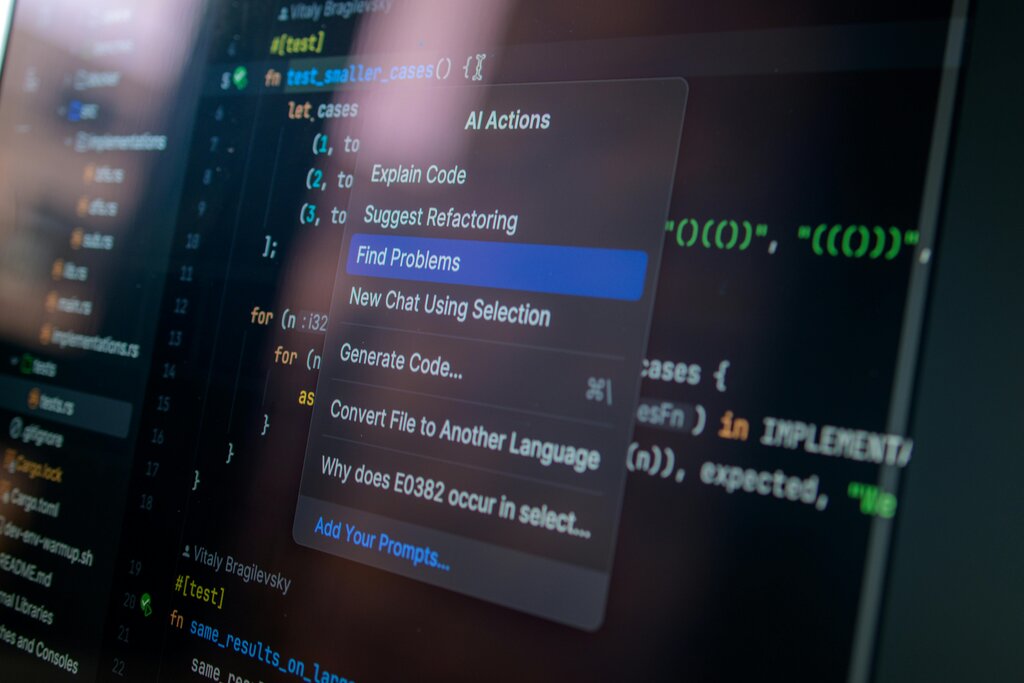
From Idea to Code
One of the most powerful features of an AI assistant is its ability to generate code from a simple description. You can describe the function you need, and Claude will write it for you. This is especially useful for common tasks or when you're working with a new library or framework.
Let's say you need a Python function to calculate the area of a circle. You could give Claude a prompt like: "Write a Python function that takes a circle's radius as input and returns its area. Include a check to make sure the radius isn't negative."
Claude can generate a complete, ready-to-use block of code from a single natural language request.
import math

def calculate_circle_area(radius):
    """Calculates the area of a circle given its radius."""
    if radius < 0:
        return "Error: Radius cannot be negative."
    return math.pi * radius ** 2

# Example usage:
area = calculate_circle_area(10)
print(f"The area is: {area}")
Fixing and Improving Code
Beyond writing new code, Claude is a valuable tool for debugging and refactoring. Debugging is the process of finding and fixing errors, while refactoring involves restructuring existing code to improve its readability and maintainability without changing its behavior.
Imagine you have a piece of code that isn't working correctly. Instead of staring at it for hours, you can present it to Claude, explain the problem, and ask for a fix. Let's look at a function that's supposed to add up a list of numbers but contains a bug.
# Buggy code
def sum_list(numbers):
  total = 0
  for number in numbers:
    # This line has an error. It reassigns total instead of adding to it.
    total = number
  return total

my_numbers = [1, 5, 10]
print(sum_list(my_numbers)) # Expected output: 16, Actual output: 10
You can provide this code to Claude and ask, "This function should sum the numbers in a list, but it's only returning the last number. Can you fix it?"
Claude will identify the error in the line total = number and correct it to total += number, explaining why the change was necessary.
Refactoring is just as important. Well-structured code is easier to understand and build upon. You can ask Claude to make your code more efficient or easier to read. For example, you could say, "Can you rewrite this for loop using a list comprehension to make it more concise?"
This turns your AI assistant into a collaborator that not only fixes immediate problems but also helps you adhere to best practices, improving the long-term quality of your software.
What is the primary role of an AI coding assistant in the software development process?
The process of restructuring existing code to improve its readability and maintainability without changing its external behavior is known as:
Using an AI assistant like Claude can fundamentally change how you approach coding, turning it into a more interactive and collaborative process.