Mastering Classical Christian Education with Doug Wilson
Introduction to Classical Christian Education
An Ancient Model for Modern Minds
Classical Christian education isn't a new trend. It’s a return to a time-tested model of learning that shaped Western thought for centuries. Rooted in the traditions of ancient Greece and Rome, this approach was embraced by early Christians who saw it as a powerful way to cultivate wisdom, virtue, and faith.
The core idea is simple: education isn't just about accumulating information or preparing for a job. It’s about shaping the whole person. It seeks to integrate all knowledge under the conviction that all truth is God's truth, whether it's found in Scripture, history, science, or art. This model aims to teach students how to think, not just what to think.
The Three Roads of Learning
The foundation of classical education is the Trivium, a Latin term meaning "the three ways" or "the three roads." It’s not a list of subjects, but a framework for learning that aligns with a child's natural cognitive development. The Trivium consists of three stages: Grammar, Logic, and Rhetoric.
Think of the Trivium as an apprenticeship in learning. First, you learn the tools (Grammar). Then, you learn how to use them (Logic). Finally, you become a craftsman who can create something new (Rhetoric).
Each stage builds on the last, providing students with the essential tools for a lifetime of learning. The goal is to move from basic knowledge to deep understanding, and finally to wise and persuasive expression.
The Grammar Stage (roughly grades K-6) capitalizes on a young child's natural ability to absorb information. Children at this age are excellent mimics and can memorize songs, poems, and facts with ease. This stage focuses on laying a solid foundation of knowledge—the basic building blocks of every subject. Students learn phonics, math facts, historical timelines, and Latin vocabulary, gathering the raw material for future learning.
The Logic Stage (grades 7-9) aligns with the time when adolescents begin to think more abstractly and argumentatively. They start asking "why?" and are quick to spot inconsistencies. This stage channels that energy by teaching them the principles of formal logic and critical reasoning. Students learn to analyze arguments, identify fallacies, and construct sound proofs, moving from knowing facts to understanding the relationships between them.
The Rhetoric Stage (grades 10-12) is the capstone of the Trivium. By this point, students have a broad knowledge base and the tools of logic to organize it. Now, they learn to express their ideas persuasively, clearly, and eloquently. They learn to write compelling essays, deliver engaging speeches, and defend their positions with wisdom and grace. This is the stage where knowledge and understanding are synthesized into articulate wisdom.
The Modern Revival
While this model is ancient, its resurgence in modern America is relatively recent. A key figure in this revival is Douglas Wilson. In the early 1980s, he helped found Logos School in Moscow, Idaho, which became a blueprint for the modern classical Christian education movement.
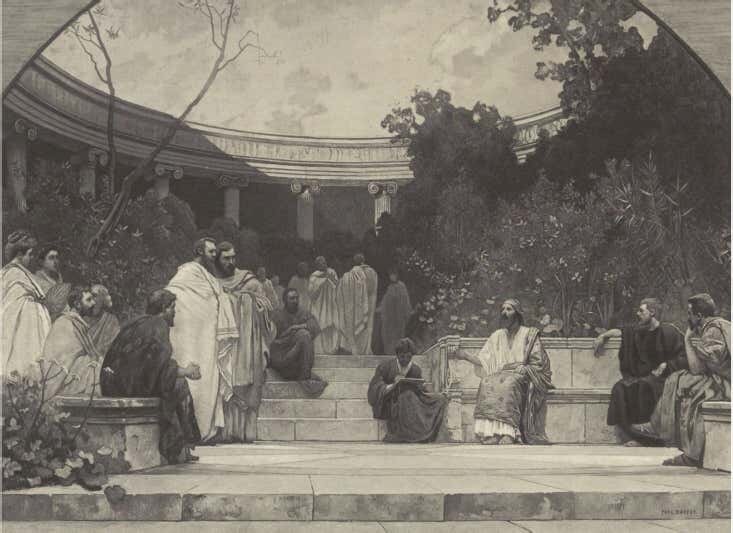
Through his writing and the success of Logos School, Wilson helped reintroduce a generation of Christian parents and educators to the Trivium. Logos School developed a curriculum that intentionally integrated a Christian worldview with the classical model, emphasizing a rigorous study of the liberal arts, including Latin, logic, and rhetoric.
The school's approach demonstrated that this ancient method could effectively equip students for the challenges of the modern world, not by teaching them trendy subjects, but by providing them with timeless tools of learning. This sparked a grassroots movement, leading to the founding of hundreds of similar schools and homeschool co-ops across the country.
The Trivium, the foundation of classical education, is composed of which three stages, in order?
According to the classical model, what is the primary focus of the Grammar Stage (grades K-6)?