Mastering Class 10 SSC History
Historiography Western Perspectives
The Science of Storytelling
History isn't just a list of dates and famous names. It's a discipline with its own methods, a way of asking questions about the past and finding answers. Modern historical writing, which began to take shape in 18th-century Europe, is built on a scientific foundation. This approach has four key characteristics.
- It starts with well-formed questions.
- These questions are anthropocentric—they are about the actions of human beings.
- Answers are supported by reliable evidence.
- It presents a story of humanity's journey over time.
This scientific approach didn't appear overnight. It grew from the ideas of philosophers and thinkers who insisted that our understanding of the past must be based on reason and verifiable facts, not on divine stories or unexamined traditions.
Pioneers of a New Approach
The French philosopher René Descartes was among the first to stress the importance of scepticism. He argued one should never accept anything as true until all grounds for doubt are gone. For historians, this meant critically examining sources and verifying the authenticity of documents.
Building on this, the writer argued that history shouldn't just be about politics, wars, and the lives of rulers. He believed a true history must also consider social traditions, trade, the economy, and agriculture. In many ways, he is considered the founder of modern historiography, as he broadened its scope to include the full spectrum of human activity.
In Germany, a different philosophical current shaped the study of history. Georg Wilhelm Friedrich Hegel insisted that historical reality should be presented in a logical manner. He proposed that human progress is not random but follows a pattern of development. According to Hegel, the timeline of historical events points towards progress.
Historiography
noun
The study of the writing of history and of written histories. It examines how history has been written over time, looking at the methods, perspectives, and biases of historians.
This emphasis on logic and evidence reached a new level in the 19th century with Leopold von Ranke. A historian at the University of Berlin, Ranke placed immense importance on primary sources. He championed a critical method for analysing documents, urging historians to understand the past 'as it actually was'. His methods professionalised the field and deeply influenced how history was taught and written across Europe and America.
New Questions, New Histories
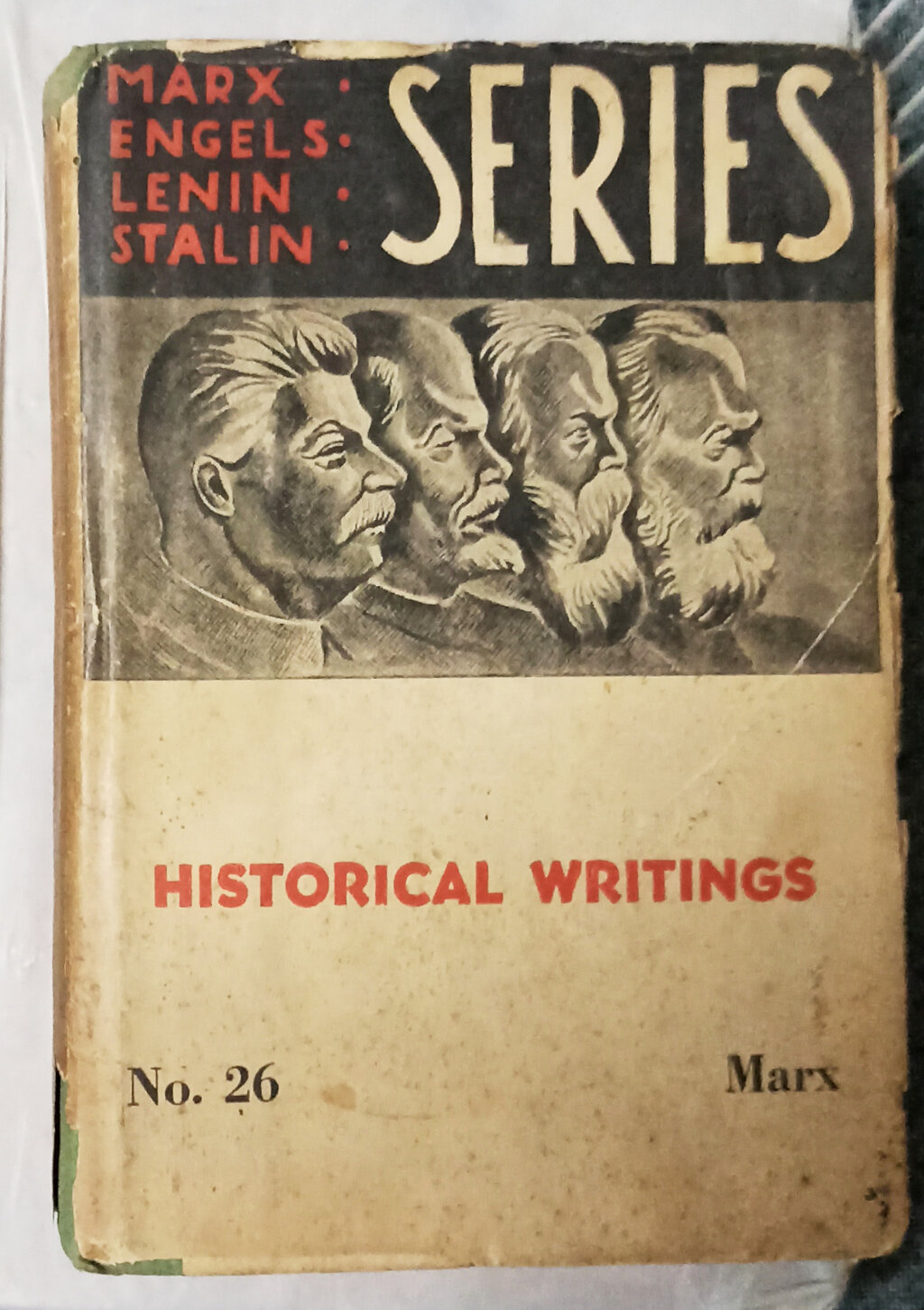
By the late 19th century, new theories began to challenge the focus on politics and great individuals. Karl Marx proposed a radical reinterpretation. He argued that history is not about abstract ideas but about living people and the material conditions they live in. For Marx, human relationships are shaped by the 'means of production'—the tools, factories, and resources used to produce goods. He believed history is the story of between those who control these means and those who do not.
In the 20th century, the in France offered another new direction. Rather than focusing on politics, diplomacy, or war, these historians were interested in the long-term structures of daily life. They studied climate, agriculture, trade, technology, and collective mentalities. They pioneered a more interdisciplinary approach, drawing on geography, sociology, and economics to write a history of ordinary people and their world.
This shift also gave rise to feminist historiography. Scholars began to re-examine history from the perspective of women, who had been largely excluded from traditional accounts. This wasn't just about adding famous women to the narrative, but fundamentally restructuring our understanding of the past to include female experiences, roles, and perspectives.
More recently, the French philosopher challenged the very idea of a single, continuous story of history. In his work The Archaeology of Knowledge, he argued that history is not a smooth line of progress. Instead, it is marked by sharp breaks and transformations. Foucault was less interested in finding out 'what actually happened' and more interested in explaining the transitions and hidden power structures within history. He focused on how concepts like madness, medicine, or punishment changed over time, revealing the unspoken rules that governed knowledge in a particular era.
Thanks to these evolving perspectives, the scope of history writing has expanded dramatically. Historians today study everything from art and architecture to science and sports, recognising that all aspects of human life have a past worth exploring.
According to the text, how did Voltaire change the focus of historical writing?
Which historical approach focused on re-examining the past from the perspective of women, aiming to restructure historical understanding to include their experiences and roles?