Mastering Chess Openings
Opening Principles
First Moves Matter
The first few moves of a chess game, known as the opening, set the stage for everything that follows. Instead of memorizing long sequences of moves, the best way to start is by understanding a few key principles. These ideas will guide you toward a good position, no matter what your opponent does.
Control the Center
Imagine the chessboard as a battlefield. The four squares in the middle – e4, d5, e5, and d4 – are the high ground. Placing your pawns and pieces here or aiming them at these squares gives you a major advantage.
A piece in the center can move to more squares and attack in any direction. A knight on the edge of the board, for example, can only reach four squares. A knight in the center can reach eight. By controlling the center, you gain space and flexibility, limiting your opponent's options.
Starting the game by moving one of your central pawns, either the king's pawn to e4 or the queen's pawn to d4, is a great way to immediately fight for the center.
Develop Your Pieces
Your pieces on the back rank can't do anything. Development is the process of moving them to more active squares where they can participate in the game. In the opening, you should focus on developing your knights and bishops first. These are called the minor pieces.
A good rule of thumb is to develop your knights before your bishops. Knights are less flexible and have fewer ideal squares to go to, so it's often easier to decide where to place them early on. Bishops, with their long-range power, can often exert influence even from a few squares away.
The goal is to develop your pieces, control the center of the board, and ensure your king’s safety.
Try to develop a new piece with each move. Avoid moving the same piece multiple times in the opening unless you have a very good reason, like capturing an opponent's piece or avoiding a direct threat. Every move spent on a piece that's already developed is a move you're not using to bring another soldier into the fight.
Keep Your King Safe
The ultimate goal of chess is to checkmate the enemy king, so it's critical to keep your own king out of danger. At the start of the game, the king is vulnerable in the center of the board as pieces begin to fly around.
The best way to protect your king is by castling. This special move accomplishes two things at once: it tucks your king away into a corner fortress behind a wall of pawns, and it brings one of your rooks into the game. You should aim to castle early, usually within the first 10 moves.
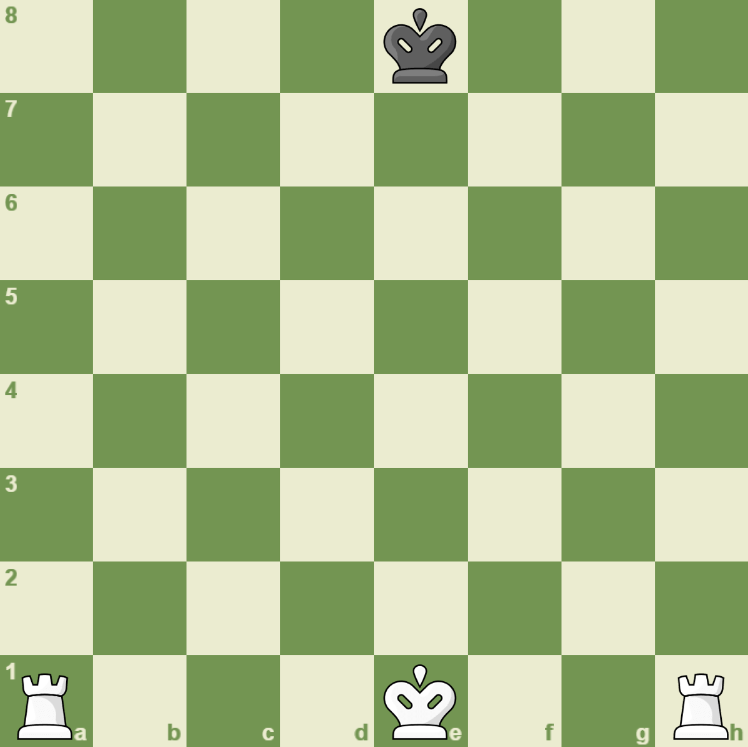
Once you've castled, be careful about moving the pawns in front of your king. Each pawn move creates a potential weakness that your opponent might exploit later.
Don't move your queen out too early. Your queen is your most powerful piece, which also makes it a prime target for your opponent. If you bring it out too soon, your opponent can develop their own pieces by attacking it, forcing you to waste moves running your queen to safety.
Think of your queen as a powerful finisher. Keep it in reserve during the opening and unleash it once the board is more developed and clear targets have emerged.
By following these principles—controlling the center, developing your pieces, and protecting your king—you'll consistently reach strong, playable positions and be well-prepared for the middlegame.
According to opening principles, why is it advantageous to control the four central squares of the chessboard (e4, d4, e5, d5)?
Which of the following is a key principle of piece development in the opening?