Mastering Chess Move Rules
Board Geometry and Coordinates
The Chessboard Grid
The game of chess is played on a square board made up of 64 smaller squares. These squares are arranged in an 8x8 grid, alternating between light and dark colors. This grid is the battlefield where all the action takes place.
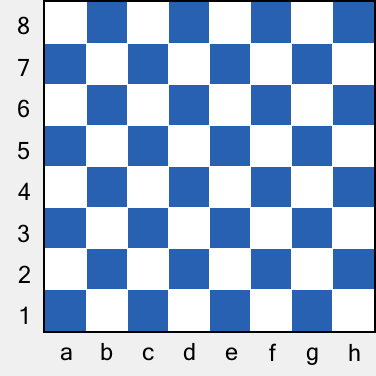
Think of the board as a city map. To find your way around, you need to know the street names. In chess, these streets are called ranks and files.
Ranks and Files
The eight horizontal rows of squares are called ranks. They are numbered from 1 to 8, starting from the side where the white pieces begin.
The eight vertical columns of squares are called files. They are labeled with letters, from 'a' to 'h', starting from white's left side.
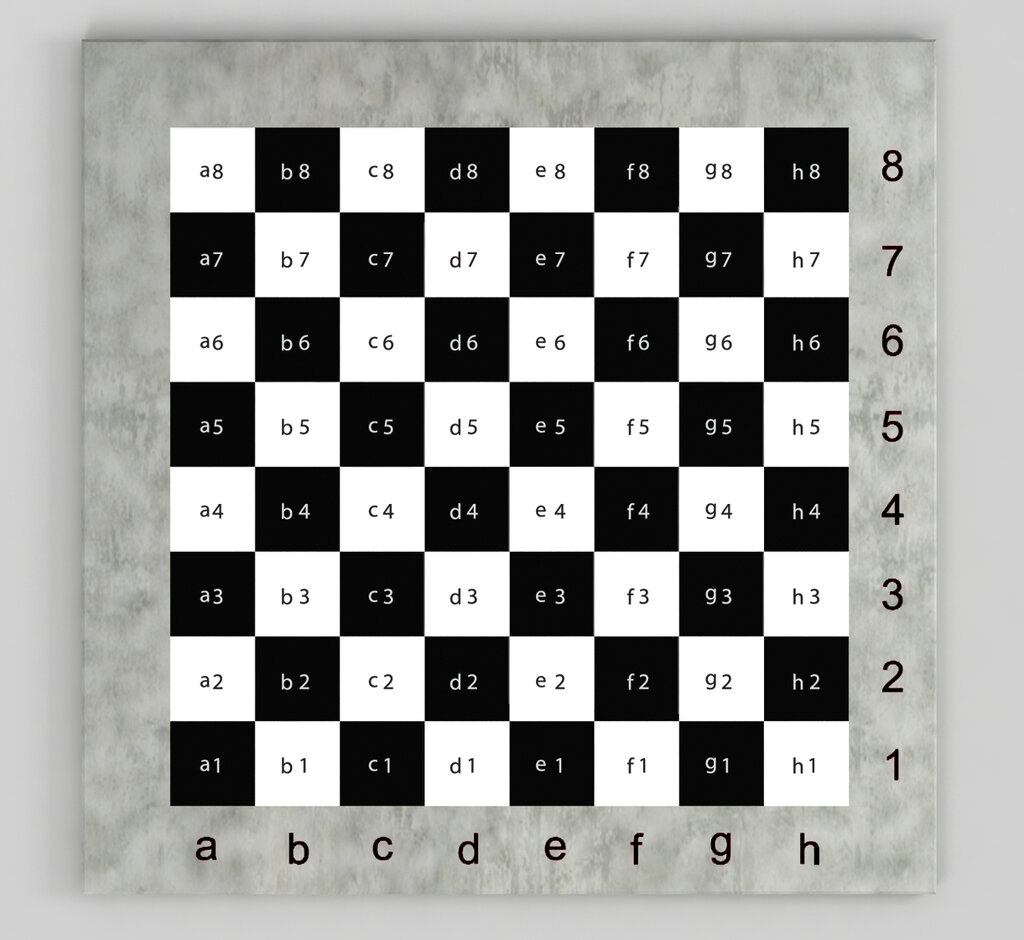
Every single square on the board has a unique name, created by combining its file letter and its rank number. This system is called algebraic notation.
Naming the Squares
To name a square, you always say the file letter first, followed by the rank number. For example, the bottom-left square is 'a1' because it's on the 'a' file and the 1st rank. The top-right square is 'h8'.
This coordinate system is the language of chess. It lets players describe moves, analyze games, and set up puzzles without ambiguity. Knowing it is the first step to understanding how pieces navigate the board.
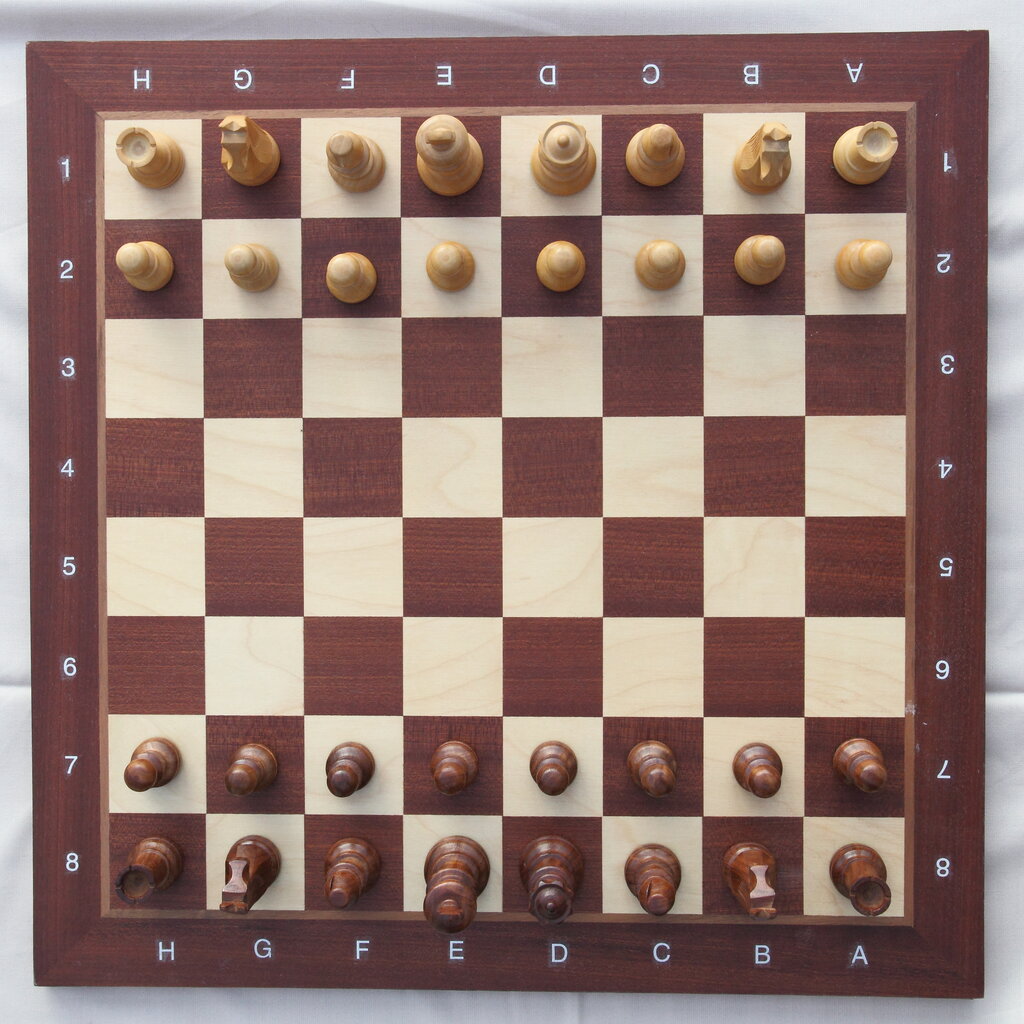
When you set up a chessboard, there's a right way and a wrong way. The most important rule is to place the board so that each player has a light-colored square in their bottom-right corner.
A simple rhyme to remember this is: "white on the right."
This ensures that the queen, which starts on a square of her own color, is placed correctly. The player with the white pieces sits on the side with ranks 1 and 2, and the player with the black pieces sits on the side with ranks 7 and 8.
The Color of Squares
You can determine the color of any square just by its name. The key is to think of the letters as numbers: a=1, b=2, c=3, and so on.
Here's the trick: Add the file number and the rank number together. If the sum is an even number, the square is dark. If the sum is an odd number, the square is light.
For example, let's find the color of square f7. The letter 'f' is the 6th letter of the alphabet. So, we add $6 + 7 = 13$. Since 13 is an odd number, f7 is a light square.
What about c4? 'c' is the 3rd letter. We add $3 + 4 = 7$. Odd again, so c4 is also a light square. This logic is baked into systems like that describe entire board states.
Understanding this coordinate system is essential. It's the foundation upon which all rules of movement are built. Once you can instantly identify any square, you're ready to learn how the pieces move across them.
Time to check your understanding of the board.
What are the vertical columns on a chessboard called?
When setting up the board, which of the following statements is true?
With the map of the board now clear, we can start putting the pieces on it and learning the rules they follow.