Mastering Chemical Solutions and Colligative Properties
Solubility and Henry Law
When Gases Meet Liquids
We know that stirring sugar into water makes it disappear, or dissolve. But what about dissolving a gas, like carbon dioxide, into that same water? The rules are a bit different. For gases, two key factors control how much can dissolve in a liquid: temperature and pressure.
Generally, as temperature goes up, the solubility of a gas goes down. Think of a cold soda versus a warm one. The cold soda stays fizzy longer because more CO₂ gas remains dissolved. A warm soda goes flat quickly because the gas escapes the liquid more easily at higher temperatures. Pressure, however, has the opposite effect. Increasing the pressure of a gas above a liquid forces more of that gas to dissolve into it.
Henry's Law
This relationship between pressure and gas solubility was quantified in the early 19th century by English chemist William Henry and is now known as Henry's Law. It states that at a constant temperature, the amount of a given gas that dissolves in a given type and volume of liquid is directly proportional to the partial pressure of that gas in equilibrium with that liquid.
In simpler terms: double the pressure of a gas above a liquid, and you can dissolve double the amount of that gas into it.
The Henry's Law constant, , is a measure of a gas's solubility. A larger value means the gas is more soluble. This constant is experimentally determined and changes with temperature. It neatly packages the unique interactions between a specific gas and a specific liquid into a single value.
| Gas | (mol/L·atm) at 25 °C in Water |
|---|---|
| Oxygen () | |
| Nitrogen () | |
| Carbon Dioxide () | |
| Helium () |
Notice how much larger the constant is for carbon dioxide compared to nitrogen or oxygen. This is why carbonated drinks are possible—CO₂ is naturally quite soluble in water, especially under pressure.
Henry's Law in Action
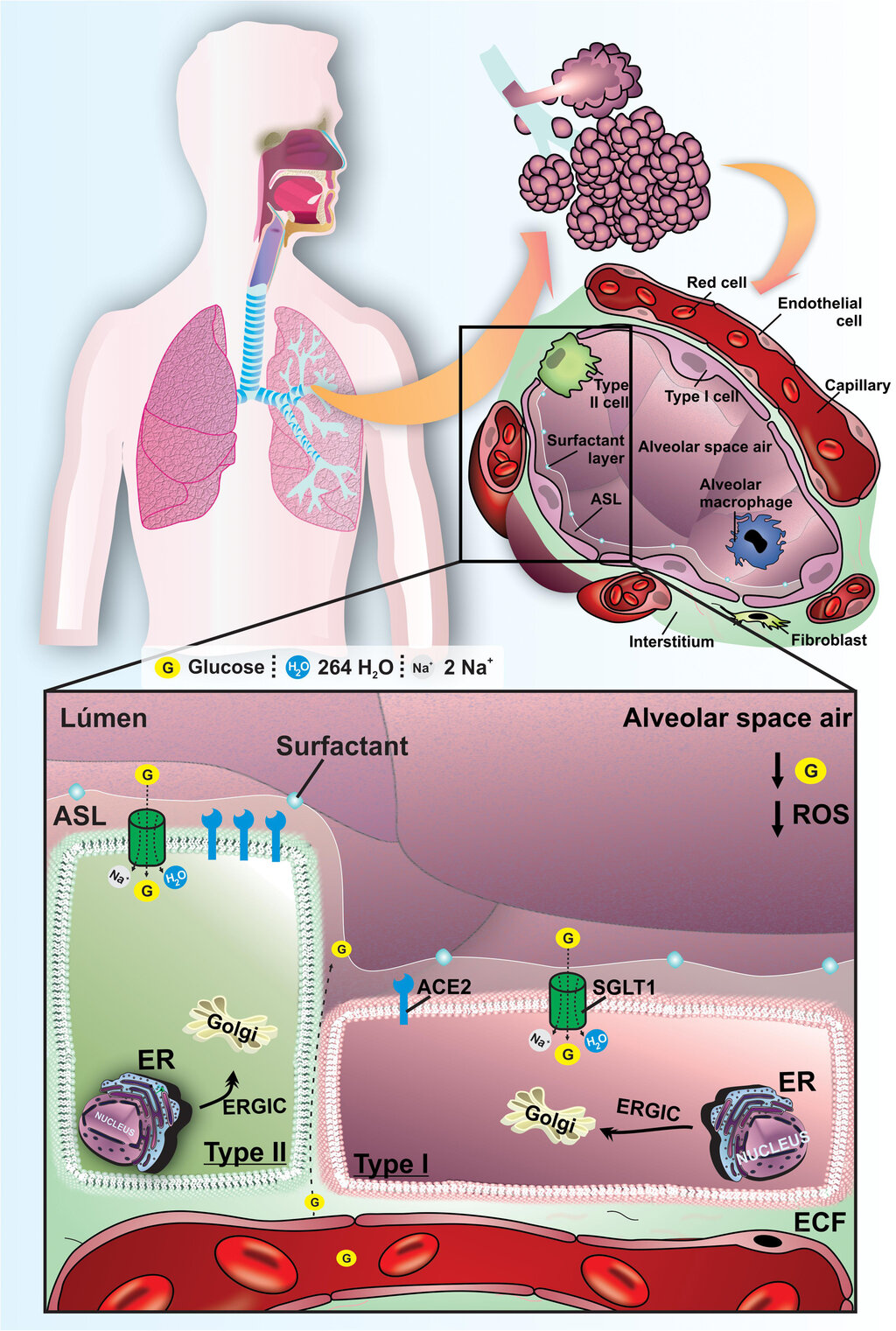
This principle isn't just for making soda. It has profound implications in biology, medicine, and engineering. Your own body relies on Henry's Law every second. In your lungs, the air you inhale has a higher partial pressure of oxygen than your blood. This pressure difference drives oxygen to dissolve into your bloodstream, where it's transported to your cells.
A more dramatic example occurs with deep-sea divers. The air they breathe from tanks is highly pressurized to counteract the immense water pressure. As a diver descends, the high pressure causes more nitrogen from the air to dissolve in their bloodstream, following Henry's Law. This is harmless as long as the diver remains at depth. However, if they ascend too quickly, the external pressure drops rapidly. The dissolved nitrogen comes out of solution and forms bubbles in their blood and tissues, a painful and potentially fatal condition known as or "the bends."
To prevent this, divers follow strict ascent schedules with decompression stops, allowing the dissolved nitrogen to be gradually and safely eliminated from the body through breathing.
Putting It to the Test
Let's calculate the concentration of dissolved oxygen in a stream at 25 °C. Air is approximately 21% oxygen, and standard atmospheric pressure is 1 atm. First, we find the partial pressure of oxygen:
Now, we can use Henry's Law. From the table above, the constant for oxygen at this temperature is mol/L·atm.
This calculation shows how environmental conditions directly impact the amount of life-sustaining oxygen available in aquatic ecosystems.
Time to check your understanding.
How does increasing the temperature of a liquid generally affect the amount of gas that can be dissolved in it?
What is the phenomenon called when divers ascend too quickly, causing dissolved nitrogen to form bubbles in their bloodstream?
Understanding how gases dissolve in liquids is fundamental to fields ranging from beverage manufacturing to respiratory medicine. Henry's Law provides a simple yet powerful tool for predicting and managing these interactions.