Mastering ChatGPT
Introduction to ChatGPT
What Is ChatGPT?
ChatGPT is a conversational AI developed by OpenAI. You can ask it questions, have it write an email, summarize a long article, or even help you code. It's designed to understand and generate human-like text based on the prompts you give it.
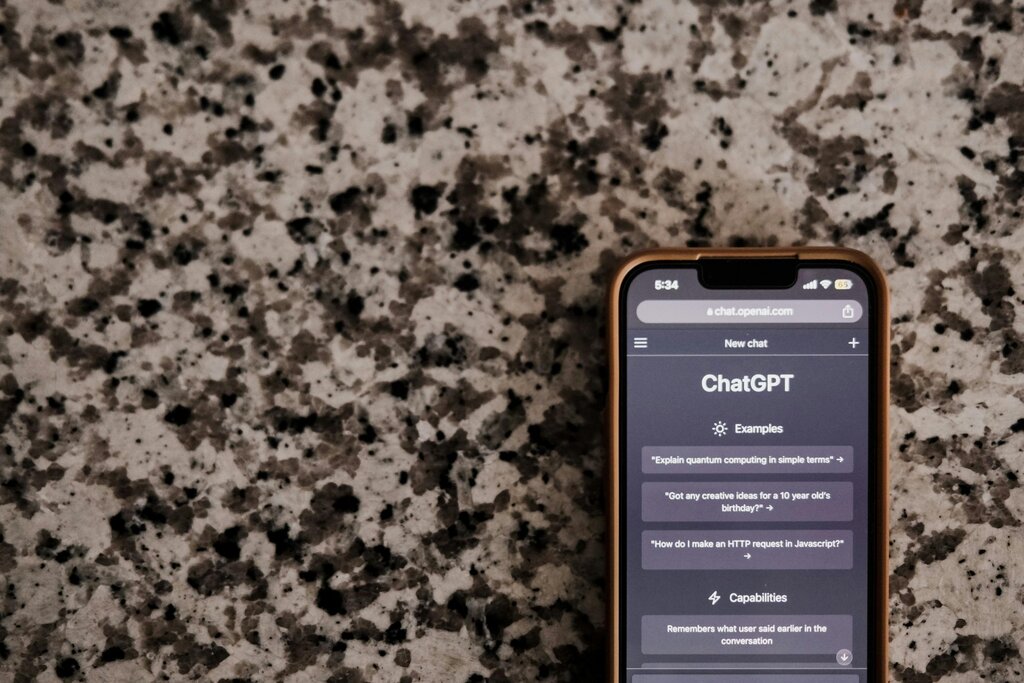
Since its public release, it has become one of the most rapidly adopted technologies in history. Its ability to handle a wide range of tasks has made it a versatile tool for students, professionals, and creatives alike.
ChatGPT is an artificial intelligence (AI) chatbot built on top of OpenAI's foundational large language models (LLMs) like GPT-4 and its predecessors.
How It Works
At its heart, ChatGPT is powered by a Large Language Model, or LLM. Think of an LLM as an enormous digital brain trained on a vast library of text and code from the internet. This training allows it to learn the patterns, grammar, context, and nuances of human language.
The specific type of LLM used is a GPT, which stands for Generative Pre-trained Transformer.
- Generative: It creates, or generates, new text word by word, predicting the next most likely word based on the input it's been given.
- Pre-trained: It has already completed its foundational learning on a massive dataset before you interact with it.
- Transformer: This is the model architecture that allows it to understand the context and relationships between words in a sentence, even long ones.
This combination of being pre-trained on diverse data and using a powerful architecture to generate responses is what makes its conversations feel so natural and coherent.
The Evolution of GPT
ChatGPT didn't appear overnight. It's the result of years of research and development, with each version of the GPT model becoming significantly more capable than the last.
| Model | Key Advancement |
|---|---|
| GPT-3 | One of the first models to show truly impressive text generation. It could write articles, answer questions, and perform basic reasoning, making AI much more accessible. |
| GPT-3.5 | This was the model that powered the initial public release of ChatGPT. It was specifically fine-tuned for dialogue, making it better at conversational back-and-forth. |
| GPT-4 | A major leap forward. GPT-4 introduced multimodal capabilities, meaning it could understand and process not just text, but images as well. Its reasoning skills also became far more sophisticated. |
| GPT-5.1 | Represents the current state of the art, with further improvements in speed, accuracy, and the ability to handle even more complex, multi-step tasks with greater reliability. |
Each new version builds upon the last, expanding the model's knowledge, improving its reasoning, and adding new features. This steady progress is what has transformed ChatGPT from a fascinating experiment into a genuinely useful tool.
At its heart, what kind of model powers ChatGPT?
What does the 'GPT' in ChatGPT stand for?