Mastering Celery Workers for Scalable Applications
Celery Worker Architecture
How Celery Workers Get Things Done
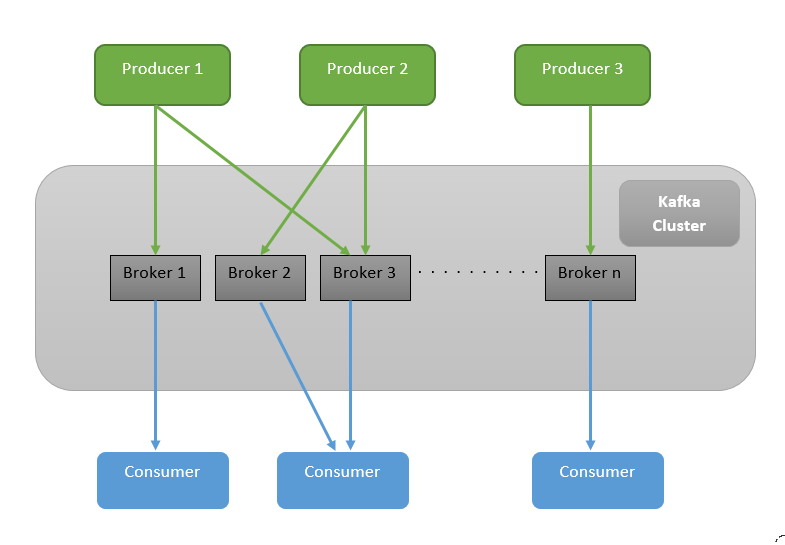
Celery's power lies in its distributed architecture. Instead of one program trying to do everything at once, tasks are handed off to a team of dedicated processes called workers. This setup involves a few key players: your application, a message broker, one or more Celery workers, and an optional result backend.
Your main application is the producer. When it needs a long-running or resource-intensive job done, like sending an email or processing a video, it doesn't do the work itself. Instead, it packages the job into a message and sends it to the message broker. The Celery worker is the consumer, listening for these messages, executing the tasks, and reporting back.
The Role of the Broker
The message broker is the central communication hub. Think of it as a to-do list that your application adds items to. The workers watch this list, grab tasks when they become available, and get to work. The broker ensures that messages are delivered from your application to a worker, even if they aren't running at the same time or on the same machine.
This setup decouples your application from the task execution. Your app can quickly hand off a task and remain responsive to user requests, while the heavy lifting happens in the background.
Celery doesn't implement its own message queue; it relies on dedicated broker services. The two most popular choices are RabbitMQ and Redis.
- RabbitMQ is a robust, feature-rich message broker designed specifically for this purpose. It offers complex routing and guarantees message delivery.
- Redis is an in-memory data store that can also function as a highly efficient and fast message broker. It's often simpler to set up and manage for many common use cases.
Celery is a Python based task queuing software package that enables execution of asynchronous computational workloads driven by information contained in messages that are produced in application code (Django in this example) destined for a Celery task queue.
Tracking Task Outcomes
What happens after a worker finishes a task? Sometimes you don't need to know. But often, your application needs to check the task's status (e.g., pending, started, success, failure) or retrieve its return value. This is where the result backend comes in.
When a result backend is configured, the worker stores the outcome of the task there. Your application can then query this backend using the task's unique ID to get the information it needs. Like the broker, this can be a service like Redis or a more traditional database such as PostgreSQL or MySQL.
Built for Scale and Resilience
One of the most significant advantages of this architecture is scalability. If your task queue starts backing up, you don't need to re-architect your application. You simply start more worker processes. These new workers will automatically connect to the broker and start helping with the workload. You can run workers across multiple machines to create a powerful, distributed computing cluster.
This design also provides fault tolerance. If a worker process crashes while executing a task, Celery and the broker can ensure the task isn't lost. With the right configuration, the task can be re-queued and picked up by another available worker. This makes the system resilient and ensures that important jobs eventually get done, even when individual components fail.
In Celery's architecture, what is the role of the main application that creates and sends tasks?
Which component in a Celery system is responsible for storing the status and return values of completed tasks for later retrieval?
Understanding these components and how they interact is key to effectively using Celery to build scalable and reliable applications.