Mastering Cake Moisture and Texture
Recipe Hydration Ratios
The Language of Liquids
Every cake recipe is a balancing act. The key relationship is between the dry ingredients, primarily flour, and the wet ingredients. This balance, known as the hydration ratio, is what determines whether a cake is tender and moist or dense and dry. Instead of relying on volume measurements like cups, professional bakers use a system called baker's percentage to achieve precision. In this system, every ingredient is expressed as a percentage of the total flour weight.
Let's break that down. A recipe with 500g of flour and 350g of water has a hydration of 70%. If it also includes 100g of eggs (which are mostly water), you must add that to the liquid weight. The new total liquid is 450g, pushing the hydration to 90%. Understanding this calculation allows you to diagnose a recipe's potential outcome before you even start mixing. A low ratio might signal a dry, tight crumb, while a very high one could lead to a gummy texture or structural collapse.
The water content in your dough will affect its texture.
Hydration and Structure
Water does more than just moisten ingredients; it's an active participant in building the cake's structure. When liquid hydrates flour, it enables gluten development—the formation of an elastic protein network that traps gases from leaveners. The amount of liquid directly influences the strength and character of this network.
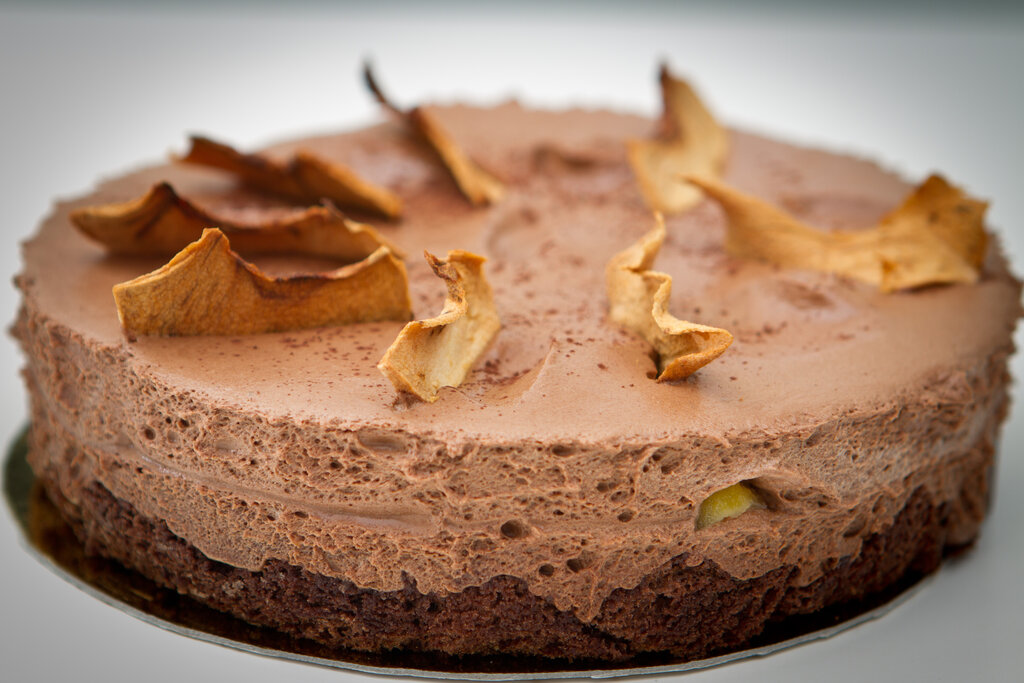
In cakes, we want to limit gluten development to achieve a tender crumb, not a chewy one like in bread. Higher hydration levels can actually help with this. The excess water creates a more fluid batter where gluten strands struggle to connect and form a tough matrix. This results in a softer, more delicate structure. The water also turns to steam in the oven, helping the cake rise and creating a light, open texture. Conversely, a batter that is too dry encourages a more robust gluten network, leading to a denser, tougher final product.
High-Ratio Cakes
A classic pound cake follows a simple 1:1:1:1 ratio by weight of flour, sugar, eggs, and butter. This formula is sturdy but can be dense. To create lighter, moister cakes, bakers developed high-ratio formulas. A high-ratio cake is defined by a specific set of proportions where the weight of the sugar is equal to or greater than the weight of the flour. Furthermore, the weight of the eggs must be equal to or greater than the weight of the fat.
high-ratio cake
noun
A type of cake with a high proportion of sugar and liquid to flour, resulting in a very moist, tender crumb with a fine, even texture.
This might sound like a recipe for a soupy mess. How can a batter with more liquid and sugar than flour hold its shape? The secret lies in using emulsified shortening or a specific mixing method. These fats contain emulsifiers that help the fat and liquid components blend smoothly, allowing the batter to hold onto the extra moisture without breaking. This results in a cake with a velvety texture and an exceptionally tender crumb.
| Characteristic | Traditional Pound Cake | High-Ratio Cake |
|---|---|---|
| Sugar to Flour | Sugar ≤ Flour | Sugar ≥ Flour |
| Liquid to Sugar | Liquid < Sugar | Liquid ≥ Sugar |
| Egg to Fat | Egg < Fat | Egg ≥ Fat |
| Typical Crumb | Denser, tighter | Lighter, finer |
| Mixing Method | Creaming (fat & sugar) | Blending (fat & dry) |
By analyzing a recipe's ratios, you can predict its final texture. If you see the sugar weight exceeding the flour weight, you're likely looking at a high-ratio cake that promises a soft, moist crumb. If the ratios are more balanced, like in a pound cake, expect a sturdier texture. This knowledge empowers you to choose or adjust recipes to get the exact result you want.
Ready to test your understanding of hydration?
What is the primary characteristic of a high-ratio cake formula?
A cake recipe calls for 500g of flour, 300g of milk, and 150g of whole eggs. What is the hydration ratio of this batter?
Mastering these ratios is a significant step toward baking with intuition rather than just following steps. It's the difference between a cook and a chemist.