Mastering Cake Baking Course Creation
Instructional Design Basics
Start with the Learner
Before you plan any lesson, think about who you're teaching. This is the core of a learner-centered approach. Are you teaching a complete beginner who has never sifted flour, or someone who already knows their way around a kitchen but wants to master buttercream flowers? Their starting point, goals, and potential frustrations should guide every decision you make.
Imagine you're writing a recipe. For a child, you'd use simple words and lots of pictures. For a professional chef, you could use technical terms and assume a base level of knowledge. The same ingredient list can be presented in vastly different ways depending on the audience. A good course tailors the experience to the student, not the other way around.
Design a learning environment and instructional materials based on what you know about learners’ needs, priorities and constraints.
Ask yourself some key questions:
- What do my learners already know?
- What specific skill do they want to walk away with?
- What might get in their way? (e.g., lack of specific equipment, fear of failure)
Answering these helps you build a course that feels personal and relevant, which keeps learners motivated.
Build a Solid Structure
Once you know your audience, you need a blueprint. A well-structured course provides a clear path from start to finish. Each lesson should build on the last, creating a logical flow that prevents confusion. This consistency helps learners know what to expect and allows them to focus on the material itself.
Think of it as building a cake, layer by layer. You can't put on the frosting before you've baked the sponge. You start with foundational skills, like proper measuring and mixing techniques, before moving on to more complex tasks like multi-layered assembly or delicate piping work.
A clear structure turns a collection of facts into a real learning journey. It's the recipe that ensures a successful outcome.
Break down your curriculum into manageable modules or lessons. For a baking course, you might have one module on ingredients and equipment, another on basic cake mixing methods, and a third on simple frostings. Within each module, break the content down even further. This approach, often called chunking, helps prevent learners from feeling overwhelmed.
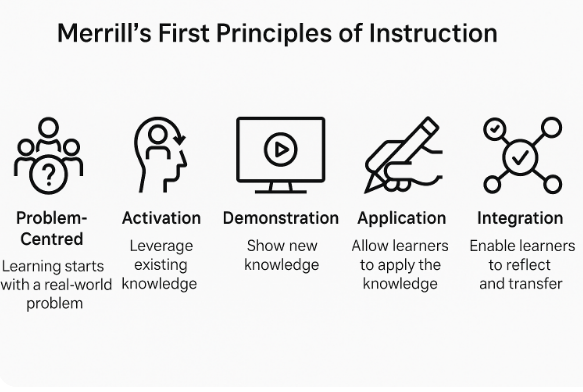
Make Learning Active
Learning isn't a spectator sport. Passively reading text or watching videos is far less effective than actively doing something. Your goal is to create an experience that is both engaging and interactive. This means giving learners opportunities to apply what they've learned.
Instead of just listing the steps to cream butter and sugar, create a short video demonstrating the visual cues of the process. Then, follow it up with a simple challenge: ask learners to submit a photo of their own creamed butter and sugar, and give them feedback on the texture. This transforms passive information into an active skill.
Technology can be a great partner here. You don't need fancy software. A simple shared photo album for student work, a discussion forum to troubleshoot common baking problems, or a short online quiz can make a big difference. The key is to get learners thinking, doing, and interacting with the material.
Check for Understanding
How do you know if your teaching is working? Through assessments and feedback. These aren't just for grading; they're essential tools for learning. Assessments show you what your students have understood and where they might be struggling. Feedback gives them the guidance they need to improve.
Assessments don't have to be formal tests. They can be simple, low-stakes activities:
- A quick quiz on oven temperatures.
- Asking students to identify a curdled batter from a photo.
- A practical assignment, like baking a simple vanilla cupcake.
Feedback is the other half of the equation. It should be specific, constructive, and encouraging. Instead of just saying "Good job," try something like, "Your cupcake has a great, even crumb. Next time, try filling the liners just a little less to get a more domed top." This kind of specific advice is what helps a learner grow their skills.
What is the first and most crucial step in planning any lesson, according to a learner-centered approach?
The text compares structuring a course to building a cake layer by layer. What educational principle does this metaphor illustrate?
These core principles—focusing on the learner, building a solid structure, making it interactive, and providing feedback—are the foundation of any great course, whether you're teaching programming or pastry.