Mastering Business Intelligence Tools
Introduction to Business Intelligence
What Is Business Intelligence?
Businesses are swimming in data. Every sale, customer click, and inventory check creates a digital footprint. On its own, this raw data is just a jumble of numbers and text, like a massive, disorganized library. Business Intelligence, or BI, is the process of finding the right books, reading them, and summarizing the key stories they tell.
Business Intelligence
noun
A technology-driven process for analyzing data and presenting actionable information to help executives, managers, and other corporate end-users make more informed business decisions.
Simply put, BI transforms raw data into understandable insights. Imagine you run an online store. Your raw data might be thousands of individual transaction records. It’s too much to read line by line. BI tools can process that data to answer critical questions: What was our top-selling product last month? Which marketing campaign brought in the most new customers? What time of day do we get the most sales?
Without BI, you're navigating in the dark, relying on hunches or incomplete information. With it, you can make strategic decisions based on what the data is actually telling you.
The goal of BI is to replace guesswork with data-driven facts.
How BI Works
Business Intelligence isn't a single tool but a system with several key components. Think of it as a factory. Raw materials (data) come in one end, go through a production line, and emerge as a finished product (insight) at the other end.
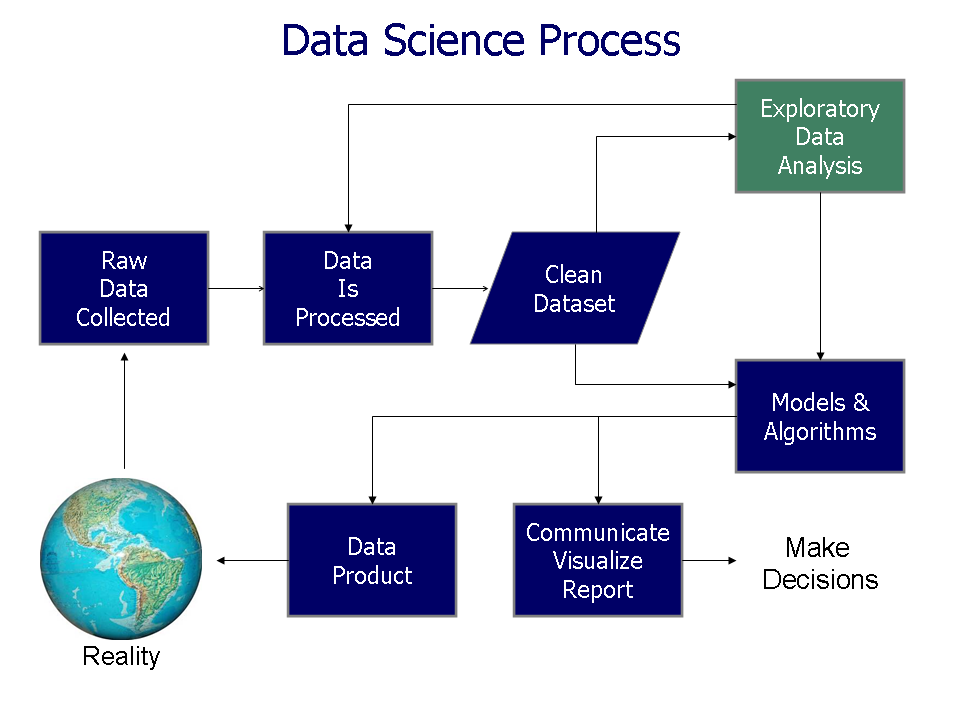
This process generally follows a few core steps:
-
Data Collection: First, the system gathers data from all relevant sources. This could include internal sources like sales databases and inventory systems, as well as external sources like social media trends or market reports.
-
Data Storage: All this collected data needs a home. It's typically stored in a centralized location, often called a data warehouse. This makes the data organized, secure, and ready for analysis. Storing it in one place prevents having to pull from dozens of different systems every time you have a question.
-
Analysis: This is where the magic happens. The BI system sifts through the stored data to find patterns, trends, and anomalies. Analytical tools can perform calculations, compare different time periods, and identify relationships between different data points, like how a discount on one item affects the sales of another.
-
Visualization and Reporting: The findings from the analysis are presented in an easy-to-digest format. Instead of a giant spreadsheet, users see dashboards with charts, graphs, and maps. These reports give a clear, visual summary of what's happening in the business, allowing people to understand complex information at a glance.
The Payoff Better Decisions
The ultimate benefit of BI is smarter, faster, and more confident decision-making across an entire organization. When insights are accessible to everyone, not just data specialists, it empowers teams to perform better.
A marketing team can use BI to understand which campaigns are working and which are not, allowing them to allocate their budget more effectively. An operations manager can monitor supply chain data in real-time to spot potential delays before they become major problems. A sales leader can track team performance against goals and identify which regions need more support.
The main intention of the BI is to enhance the employees' knowledge with information that allows them to make decisions to achieve its organisational strategies.
By providing a clear view of business performance based on hard evidence, BI helps organizations move beyond reacting to problems and toward proactively shaping their future.
What is the primary goal of Business Intelligence (BI)?
In the typical BI process, which step immediately follows data collection?