Mastering Business Combinations
Introduction to Business Combinations
Joining Forces
Companies often decide that the best way to grow or compete is to join with another company. This process is called a business combination. It happens when one company gains control over another business. Think of it like two streams merging to form a larger, more powerful river. The core idea is control: one entity ends up steering the ship for another.
Business Combination
noun
A transaction or event in which an acquirer obtains control of one or more businesses.
This control is usually established when the acquirer buys a majority (more than 50%) of the other company's voting stock. Once that happens, the acquirer can direct the target company's activities and policies. But not all combinations look the same. They can take several different forms.
Different Ways to Combine
Business combinations aren't a one-size-fits-all deal. The structure of the transaction depends on the goals of the companies involved. Here are three common structures:
Merger: Two companies combine into a single entity. Company A acquires Company B, and Company B dissolves, leaving only Company A. Alternatively, both A and B might dissolve to form a completely new entity, Company C.
Stock Acquisition: Company A buys a controlling interest in Company B's stock. Company B doesn't dissolve; instead, it continues to operate as a separate legal entity, but now as a subsidiary controlled by Company A, the parent company.
Asset Acquisition: Company A buys some or all of Company B's assets, like its buildings, inventory, or patents. Company A might also assume some of B's liabilities. Company B may continue to exist as a company or it may dissolve after selling off its assets.
These structures achieve different legal and operational outcomes, and the choice depends on what the acquirer wants to achieve.
The Strategic Goals
Why go through the complex process of combining businesses? Companies are usually chasing strategic advantages that they can't achieve as effectively on their own. The motives often fall into a few key categories.
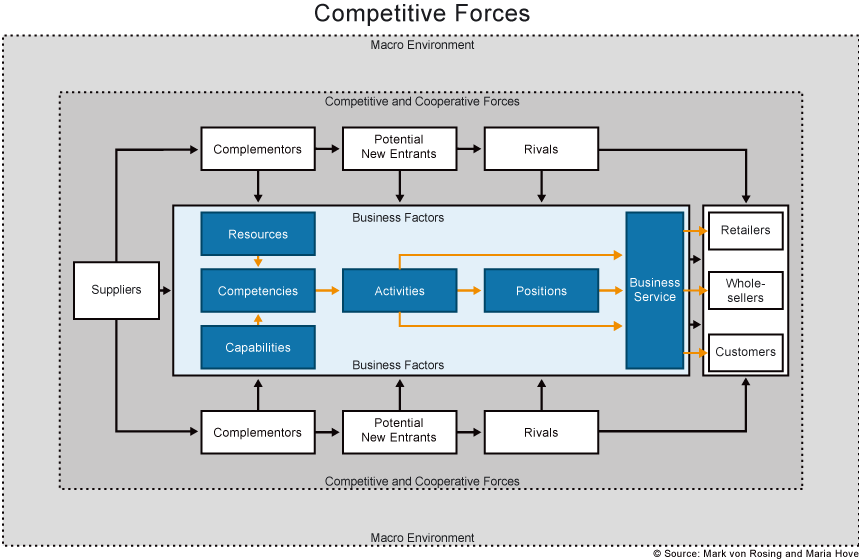
Growth: A company can spend years developing a new product or trying to enter a new country. Or, it can acquire a company that's already there. Acquisitions are a common way to accelerate growth, expand into new geographic markets, or increase market share in an existing one.
Synergy: This is a popular buzzword in the world of mergers and acquisitions. It’s the idea that the combined company will be more valuable than the two independent companies were. Synergies can come from cutting costs—like eliminating redundant roles or combining office spaces—or from boosting revenue, such as by selling one company’s products to the other’s customers.
Access to Resources: Sometimes a company has a weakness it needs to fix. Maybe it lacks a certain technology, a strong brand, or a talented engineering team. Acquiring another business can be the fastest way to get those valuable resources, whether they are tangible assets like factories or intangible ones like patents and people.
Diversification: Putting all your eggs in one basket is risky. By acquiring a company in a different industry, a business can diversify its revenue streams. If one part of the business struggles due to a market downturn, the other part may still perform well, creating a more stable overall company.
Whether considering an acquisition, merger or sale, it is likely one of the most important business decisions executives will make.
Each business combination is a major strategic move with its own unique rationale. Understanding these basic forms and motivations is the first step in analyzing these complex but important transactions.
What is the defining characteristic of a business combination?
The idea that a combined company will be more valuable than the two independent companies were apart is known as ____.