Mastering Business Analysis
Advanced Business Analysis Techniques
Strategic Internal and External Analysis
Beyond foundational analysis, mastering a few advanced techniques can help you dissect complex business problems with greater precision. These frameworks guide you to look at a situation from multiple angles, ensuring you don't miss critical internal factors or external forces. First up is SWOT analysis, a classic tool for strategic planning.
SWOT stands for Strengths, Weaknesses, Opportunities, and Threats. It's a simple but powerful framework that helps you evaluate your organisation's competitive position. Strengths and Weaknesses are internal factors—things you have some control over. Opportunities and Threats are external factors—things happening in the wider market or world that could affect your business.
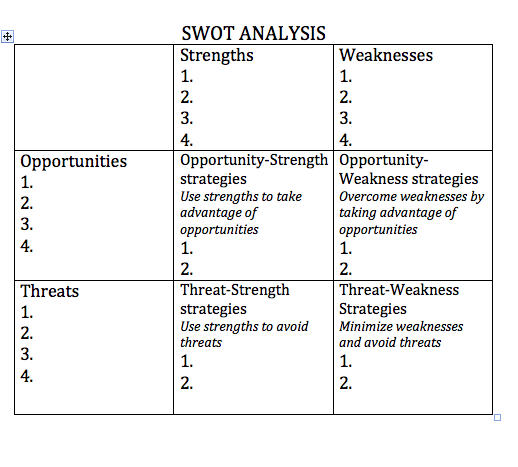
The real power of SWOT isn't just listing items in four boxes. It's about making connections between them. How can you use your strengths to seize opportunities? How can you minimise weaknesses to guard against threats? This is where the analysis turns into a strategy.
For example, imagine a successful e-commerce company that excels at logistics (a strength). They notice a growing market for sustainable goods (an opportunity). A strategic move might be to launch a new line of eco-friendly products, leveraging their efficient delivery network to gain a competitive edge. Conversely, if a key threat is rising shipping costs, their strong logistics might help them negotiate better rates than competitors.
Effective SWOT analysis is about more than just listing points. The goal is to generate actionable strategies by combining insights from the four quadrants.
Mapping the Macro-Environment
While SWOT looks both inward and outward, PESTLE analysis focuses exclusively on the external macro-environment. It's a bird's-eye view of the major forces that could shape your industry and your business. The acronym stands for Political, Economic, Social, Technological, Legal, and Environmental.
Macro-environment
noun
The major external and uncontrollable factors that influence an organisation's decision making, and affect its performance and strategies.
Using PESTLE helps you spot potential opportunities and threats you might otherwise overlook. For instance, a car manufacturer would use it to consider:
- Political: Government subsidies for electric vehicles.
- Economic: Rising inflation affecting consumer purchasing power.
- Social: A shift in preference towards ride-sharing over car ownership.
- Technological: Advances in autonomous driving technology.
- Legal: New emissions standards being phased in over the next five years.
- Environmental: Increased consumer concern about the carbon footprint of manufacturing.
Analysing these factors provides a comprehensive picture of the landscape you're operating in, which is crucial for long-term strategic planning.
Digging for the Root Cause
Sometimes the problem you see is just a symptom of a deeper issue. The Five Whys technique is a simple, effective way to drill down past the obvious symptoms and find the underlying, or root, cause. The method is straightforward: you state the problem and then keep asking "Why?" until you get to the core of the issue.
Imagine a software company notices that user engagement with a new feature is unexpectedly low. A business analyst could apply the Five Whys:
- Why is engagement low? Users aren't completing the onboarding tutorial for the feature.
- Why aren't they completing the tutorial? A critical step in the tutorial has a high drop-off rate.
- Why does that step have a high drop-off rate? It asks users to connect a third-party account, but the connection process fails frequently.
- Why does the connection process fail? Our system's API call is timing out before the third party's system can respond.
- Why is our API call timing out? The timeout limit was set to a default of 2 seconds, which is too short for this specific third-party service.
The team initially thought the problem was a bad tutorial. The root cause was a technical configuration issue. Fixing the symptom (rewriting the tutorial) wouldn't have solved the problem, but fixing the root cause (increasing the API timeout) will.
Each of these techniques offers a different lens through which to view a business challenge. Knowing when to use each one is a key skill for any analyst.
| Technique | Best For | Focus |
|---|---|---|
| SWOT | Strategic planning and competitor analysis | Internal & External (Strengths, Weaknesses, Opportunities, Threats) |
| PESTLE | Understanding the broad, external environment | External only (Political, Economic, Social, Technological, Legal, Environmental) |
| Five Whys | Problem-solving and root cause analysis | Internal processes and specific issues |
Ready to test your knowledge? Let's see how well you've grasped these techniques.
In a SWOT analysis, which two elements are considered internal factors for an organisation?
A business analyst is trying to understand why a recent marketing campaign failed to increase sales. Which technique would be most appropriate for finding the fundamental cause of the problem?
Mastering these frameworks allows you to move beyond surface-level observations and conduct analyses that lead to meaningful, impactful business strategies.