Mastering Brand Leadership
Brand Fundamentals
More Than a Logo
What comes to mind when you think of a brand? For many, it’s a logo, a catchy name, or a specific color scheme. While those are parts of a brand, they aren't the whole story. A logo is just one piece of a much larger puzzle.
A brand is the overall perception and feeling that people have about a company, product, or service. It’s a gut feeling. It’s the sum of every interaction someone has with you, from your website to your customer service to the quality of what you sell. It’s your reputation—what people say about you when you're not in the room.
A logo is one small step in developing a Brand.
Think of it as a promise. A strong brand consistently delivers on a specific promise of value, whether that's quality, innovation, or great customer service. This promise helps people know what to expect and builds a mental shortcut in their minds. When they need what you offer, you’re the first one they think of.
Building Trust and Recognition
In a crowded marketplace, having a strong brand is not just a nice-to-have; it's essential for survival. Branding is the active process of shaping that perception. It's how you differentiate yourself from competitors and create a lasting connection with your audience.
A well-defined brand acts as a guide for the business. It informs every decision, from marketing campaigns to product development, ensuring a consistent and coherent experience for the customer.
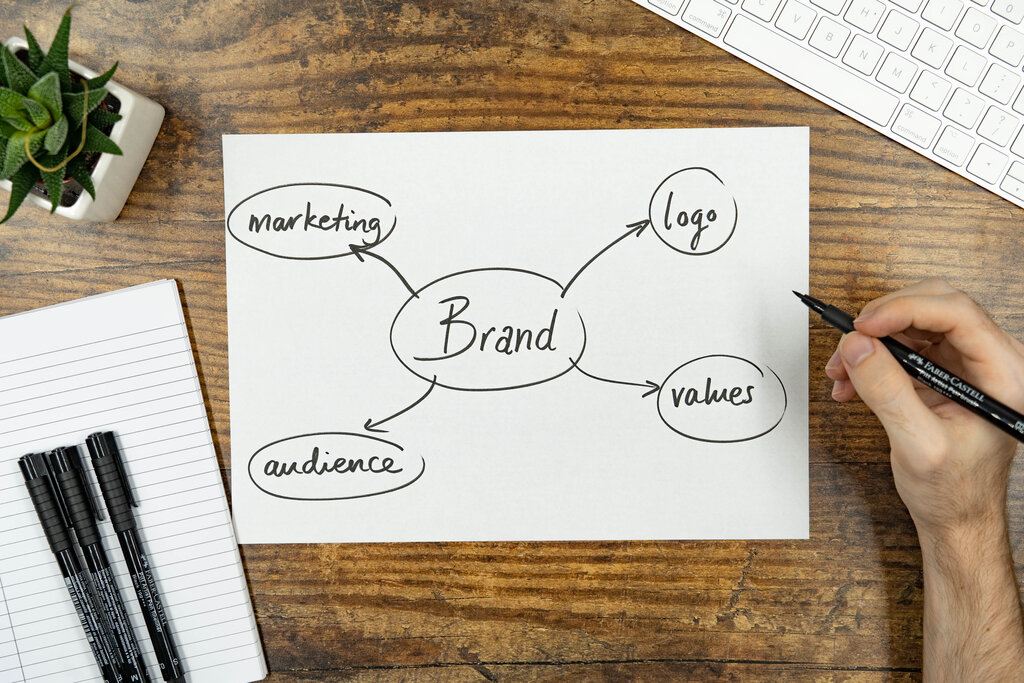
This consistency builds trust. When customers know what to expect, they feel more comfortable choosing your product or service. Over time, this trust blossoms into loyalty, turning one-time buyers into long-term advocates. A strong brand also makes it easier to introduce new products, as the trust you’ve already built gives customers a reason to try your new offerings.
Here’s a simple comparison:
| Feature | Strong Brand | Weak Brand |
|---|---|---|
| Recognition | Instantly recognizable | Easily forgotten |
| Customer Trust | High | Low |
| Pricing Power | Can command a premium | Competes on price alone |
| Loyalty | Creates loyal fans | Attracts one-time buyers |
Ultimately, a strong brand gives you a competitive edge that is difficult to copy. While anyone can replicate a product, no one can replicate your brand.
The Components of Identity
Brand identity is the collection of tangible elements that a company creates to portray the right image to its audience. It’s how you communicate your brand's promise and personality. While it includes visuals, it goes much deeper. The key components work together to create a unified brand experience.
Your brand’s identity is built on its core purpose, its personality, and the visual cues it uses to express itself.
Here are the foundational pieces:
-
Mission and Values: This is your 'why.' Your mission statement defines your purpose, and your values are the guiding principles that dictate your company's behavior. They are the heart of your brand and the foundation for everything else.
-
Brand Voice: If your brand were a person, what would it sound like? Would it be witty and informal, or authoritative and professional? Your brand voice is the personality you use in all your communications, from social media posts to emails. A consistent voice makes your brand feel relatable and human.
-
Visual Identity: This is the most recognizable part of branding. It includes your logo, color palette, typography, and imagery. These visual elements work together to create a distinct look and feel that makes your brand instantly identifiable.
These components don’t work in isolation. A powerful brand identity is one where the mission, voice, and visuals all align to tell the same cohesive story. This creates a strong, memorable impression that sticks with customers.
Which of the following best defines a brand?
A strong brand's consistency primarily helps to build ____ with its audience.
Understanding these fundamentals is the first step toward building a brand that resonates with people and stands the test of time.