Mastering Bodyweight Strength and Skill
Mastering Progressive Overload
Beyond Repetitions
Doing endless push-ups will make you very good at doing push-ups, but it won't necessarily make you stronger in a way that unlocks advanced skills. At some point, adding more repetitions yields diminishing returns. To build the high-tension strength required for skills like the planche or front lever, we need a different approach. Instead of adding more reps or external weight, we manipulate our body itself to make the exercise harder. This is progressive overload, calisthenics-style.
The secret lies in physics, specifically the concept of leverage. In bodyweight training, your limbs act as levers, your joints as pivot points (fulcrums), and your muscles provide the force to counteract the load created by your own body weight. By changing the length of these levers, we can dramatically increase the challenge without changing our weight at all.
Torque
noun
A measure of the force that can cause an object to rotate about an axis. It's the rotational equivalent of linear force. In simple terms, it's twisting power.
The further your centre of mass is from the pivot point (your hands on the floor, for example), the longer the lever arm becomes. A longer lever arm requires your muscles to generate significantly more torque to hold the position. Think of trying to hold a heavy bag. Holding it close to your chest is manageable. Holding it with your arm fully outstretched is much, much harder. The bag's weight hasn't changed, but the torque your shoulder has to produce has skyrocketed.
The Planche Progression
The planche is a perfect example of leverage manipulation. The goal is to hold your body parallel to the ground, supported only by your hands. The progression doesn't involve adding weight; it involves systematically 'lengthening the lever' by changing your body's posture.
You start with a tuck planche, where your knees are pulled into your chest. This keeps your centre of mass very close to your hands (the pivot point). The lever is short, requiring less torque from your shoulders and core. From there, you slowly extend your body, moving through stages:
This same logic applies to the front lever, where you hang from a bar and hold your body parallel to the ground. A tuck front lever is the starting point. Extending one leg increases the difficulty, and extending both legs fully creates the longest possible lever, demanding immense strength from your lats and core.
Pseudo-Planche Lean
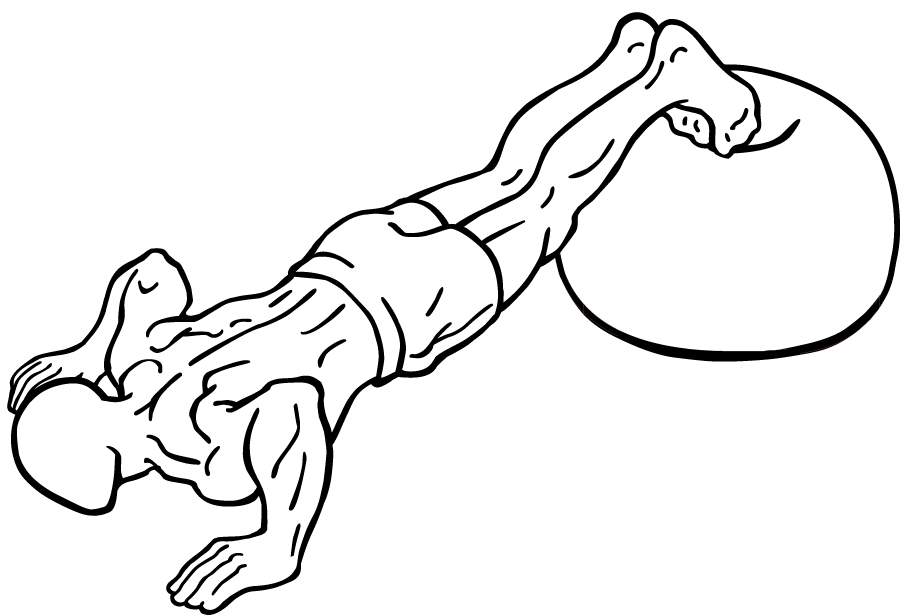
Before you can even lift your feet off the ground for a tuck planche, you must master the (PPL). This is a foundational conditioning exercise that directly trains the principle of leverage. Starting in a push-up position, you lean your shoulders forward, past your hands. The further you lean, the more of your body weight is shifted forward, increasing the torque your shoulders must handle.
The goal isn't to do more reps, but to lean further and hold for time, progressively increasing the lever and thus the intensity.
You can quantify your lean by seeing how far your shoulders can travel past a line drawn up from your wrists. This makes progress measurable. You are getting stronger when you can lean further forward with good form, or hold a certain lean for a longer duration.
Putting It All Together
Moving from high-rep basics to low-rep strength skills requires a mental shift. Progress is no longer measured in the number of reps, but in the quality of your form and the advancement of your posture. You are manipulating physics to your advantage. This is what looks like when the only weight you're using is your own body.
Progressive overload is a fundamental principle in resistance training that involves gradually increasing the demands placed on the muscles over time.
| Progression Method | Description | Primary Variable Changed |
|---|---|---|
| Repetitions | Doing more reps of the same exercise. | Volume |
| Leverage | Changing body posture to increase torque. | Intensity |
| Tempo | Performing the exercise more slowly. | Time Under Tension |
| Density | Doing the same work in less time. | Time |
By understanding and applying the principles of leverage, you can create a clear, measurable path towards even the most difficult calisthenics skills. It’s not about endless repetitions; it’s about intelligent progression.
Ready to check your understanding?
According to the principle of leverage in calisthenics, what happens when you increase the distance between your centre of mass and the pivot point (e.g., your hands)?
The main way to apply progressive overload for advanced calisthenics skills is by adding more repetitions of the basic exercises.
By focusing on these mechanical principles, you'll be able to build true strength that goes far beyond basic fitness.