Mastering Bodyweight Strength and Skill
Optimizing Compound Foundations
Beyond the Basics
You've mastered standard pull-ups and dips. That's a solid foundation. Now, we'll refine those movements to unlock more advanced skills. The goal is to move from simply lifting your body to controlling it with total-body tension and deliberate technique. This is the bridge to skills like muscle-ups and levers.
The first major upgrade is learning to create global tension using the position. Think of it as linking your upper and lower body into a single, rigid unit. Instead of your legs dangling, you'll actively engage your core and glutes, pointing your toes slightly forward. This creates a powerful, streamlined shape that transfers force much more efficiently.
A proper hollow body hold feels like you're subtly trying to fold yourself in half, with your abs and quads pulling everything tight.
Isolate the Engine
Advanced pulling and pushing don't start in your arms. They start with your scapulae, or shoulder blades. To build the specific strength needed for complex transitions, we need to isolate their movement.
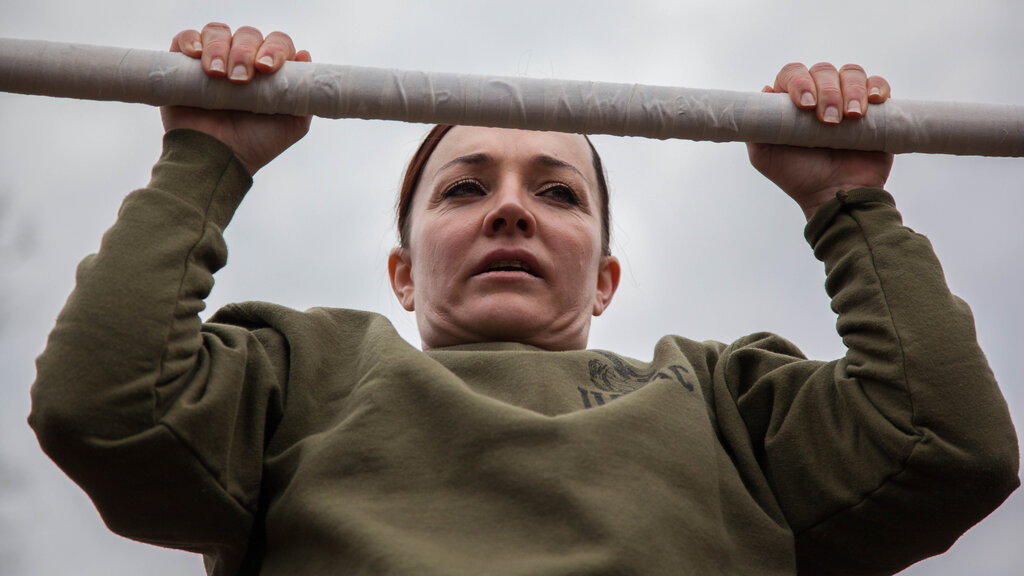
For pulling, this means scapular pull-ups. Hang from the bar with straight arms in a dead hang. Without bending your elbows at all, pull your shoulder blades down and back. Your body will rise a few inches. This small movement builds the initial strength for a powerful pull. It's all about activating the lats and lower traps to initiate the movement correctly.
For pushing, we use scapular shrugs or push-ups. Get in a plank position or at the top of a dip bar. Keeping your arms locked straight, allow your chest to sink by squeezing your shoulder blades together (retraction). Then, push them apart as far as possible, arching your upper back towards the ceiling (protraction). This teaches you to control the shoulder girdle, which is critical for stability in handstands and the muscle-up transition.
Increase Your Range
Once you can initiate movement from the scapula, the next step is to increase the range of motion and power in your reps. This builds strength in the end ranges, where you're typically weakest.
Instead of a standard pull-up where your chin clears the bar, your new goal is the (C2B). The technique is the same, but the intent is explosive. You need to pull with enough force that your lower chest makes contact with the bar. This requires significantly more power and back engagement, building the strength needed to pull your body over the bar in a muscle-up.
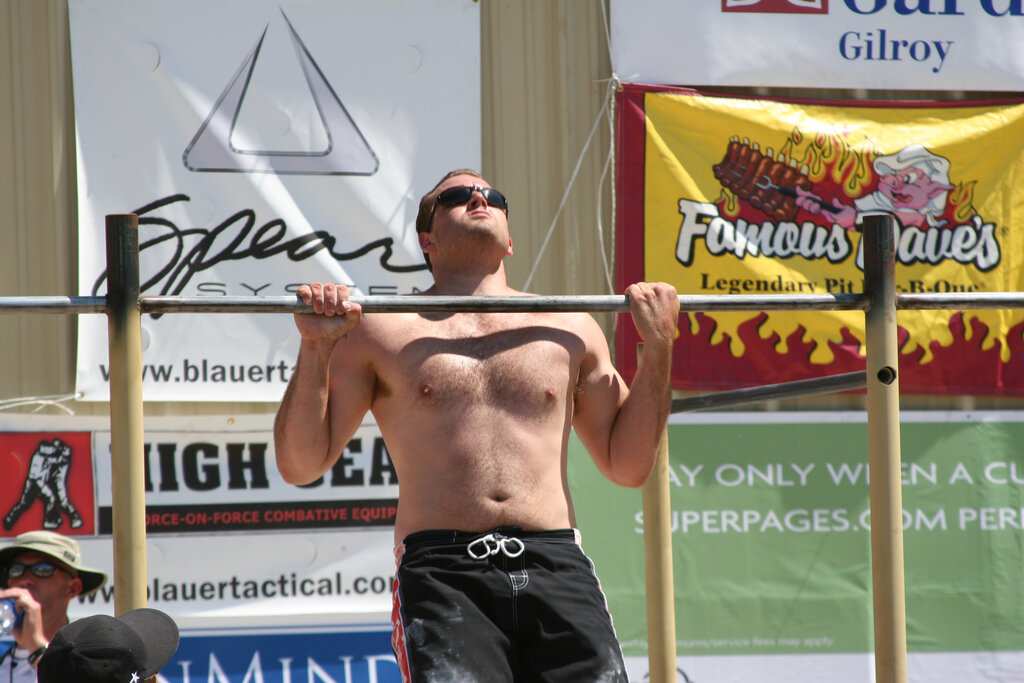
For dips, the focus is on depth and lean. Perform your dips as deeply as possible without pain, aiming for your shoulders to drop below your elbows. As you press up, lean your torso slightly forward. This deep dip with a forward lean not only hits your chest and triceps harder but also begins to mimic the angle of a horizontal press, like a planche push-up. It also strengthens your shoulders in a deep, externally rotated position, crucial for a stable muscle-up catch.
Finally, start playing with tempo. Once you have the form down, introduce explosive repetitions. For both pull-ups and dips, focus on performing the concentric (upward) phase of the movement as fast and powerfully as possible. Then, control the eccentric (downward) phase, taking 2-3 seconds to lower yourself. This combination of speed and control builds power, which is the key to unlocking dynamic movements.
Ready to test your understanding of these foundational refinements?
What is the primary purpose of adopting the 'hollow body' position in advanced bodyweight exercises?
When performing a scapular pull-up, the primary goal is to pull your body up by bending your elbows as much as possible.
By integrating these techniques—hollow body tension, scapular control, extended range of motion, and explosive tempo—you'll transform your basic movements into a powerful platform for the next level of calisthenics.