Mastering Biological Macromolecules
Molecular Building Blocks
How Life Builds
Living organisms are masters of construction, but instead of bricks and mortar, they use molecules. The large, complex molecules essential for life, called polymers, are built from smaller, repeating units called monomers. Think of it like building a long chain out of individual paper clips. Each paper clip is a monomer, and the finished chain is the polymer.
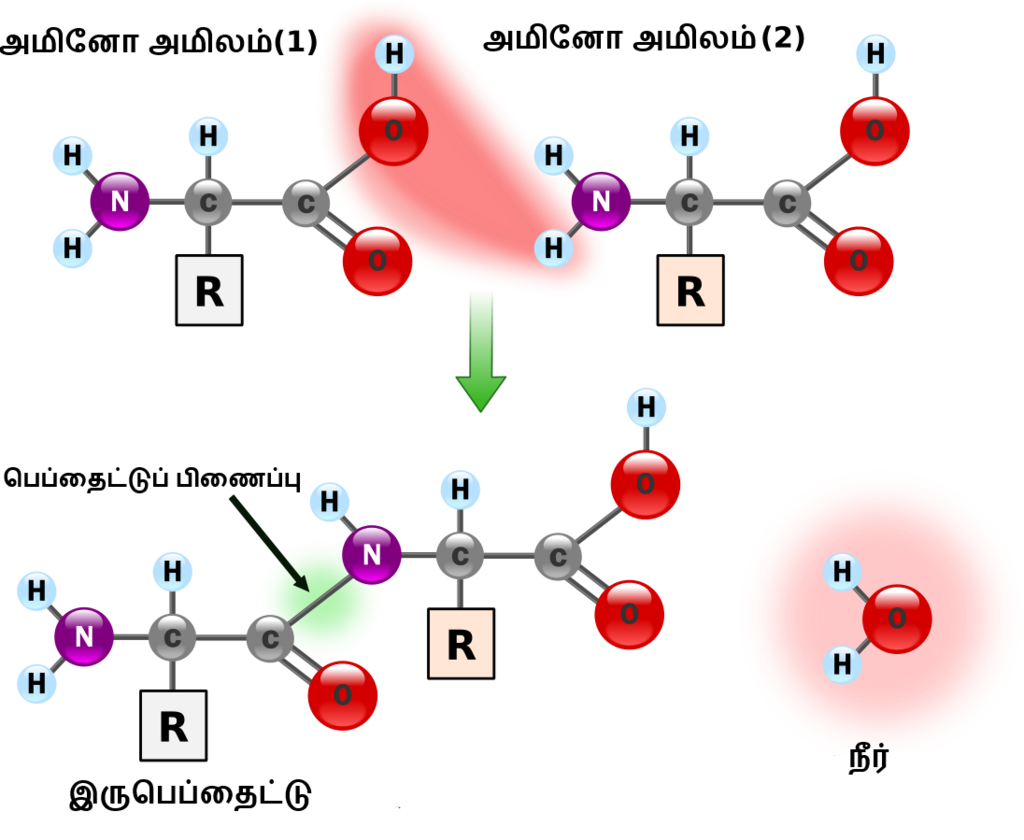
This process of linking monomers together isn't random. It follows a beautifully simple and universal pattern across all four major classes of biological macromolecules: carbohydrates, lipids, proteins, and nucleic acids. The reaction that forges these links is called dehydration synthesis.
Dehydration Synthesis
noun
A chemical reaction in which two molecules are covalently bonded to each other with the removal of a water molecule.
The name says it all. 'Dehydration' means losing water, and 'synthesis' means to make something. In this reaction, one monomer loses a hydrogen atom (H), and the other loses a hydroxyl group (OH). These two combine to form a molecule of water (), and in their place, a strong covalent bond forms, linking the two monomers. This process requires energy to create the new, more complex molecule.
Breaking It Down
Just as there's a standard way to build polymers, there's also a standard way to break them down. This is crucial for processes like digestion, where you need to break down the macromolecules in food into usable monomers your body can absorb.
The process is the exact reverse of dehydration synthesis and is called hydrolysis.
Hydrolysis
noun
A chemical reaction that breaks bonds between two molecules by the addition of water; functions in disassembly of polymers to monomers.
Here, 'hydro' refers to water and 'lysis' means to split. A water molecule is added across the covalent bond linking two monomers. The water molecule splits, with one hydrogen atom attaching to one monomer and the hydroxyl group attaching to the other. This breaks the bond and separates the monomers. Unlike dehydration synthesis, hydrolysis releases energy.
The Efficiency of Modularity
Why do cells use this monomer-polymer system? It's incredibly efficient. By using a small set of versatile monomers, life can create an astonishing diversity of complex polymers. The 20 common amino acid monomers, for example, can be arranged in countless sequences to form millions of different proteins, each with a unique function.
This modularity is also thermodynamically efficient. Having a single, universal mechanism for building (dehydration synthesis) and another for breaking down (hydrolysis) simplifies the cell's toolbox. However, these reactions don't just happen on their own at a useful rate. They are carefully controlled and accelerated by specialized proteins called enzymes, which act as catalysts, guiding the reactions without being consumed in the process.
Anabolism refers to the metabolic processes that build complex molecules from simpler ones (e.g., dehydration synthesis). Catabolism refers to the processes that break down complex molecules into simpler ones (e.g., hydrolysis).
In your body, these two processes are constantly at work, maintaining a dynamic balance. When you eat, catabolism breaks down food into monomers. Your cells then use those monomers in anabolic pathways to build and repair tissues, store energy, and create the molecules you need to function. This continuous cycle of building and breaking down is the essence of metabolism.
Ready to check your understanding?
What is the general term for a large, complex molecule made up of smaller, repeating units called monomers?
Which chemical reaction is responsible for linking monomers together to build polymers?
Understanding how life builds and breaks down molecules is fundamental to biology. These two simple reactions, dehydration synthesis and hydrolysis, are the basis for the assembly and disassembly of nearly every major structure in a cell.