Mastering Binary and Computer Science Foundations
Bit Level Foundations
From Electricity to Information
At its most basic level, a computer manipulates electricity to represent information. It doesn't understand words, images, or numbers the way we do. Instead, it uses a massive collection of tiny electronic switches that can be either on or off. The most fundamental of these switches is the transistor.
Transistors: Billions of microscopic on/off switches etched onto silicon. The fundamental switch.
A transistor is a semiconductor device that can act as a voltage-controlled switch. When a small electrical voltage is applied to its gate, it allows a much stronger current to flow through it—this is the 'on' state. When that gate voltage is removed, the flow of current stops—this is the 'off' state. Because they have no moving parts and are incredibly small, billions of them can be packed onto a single chip, switching on and off billions of times per second.
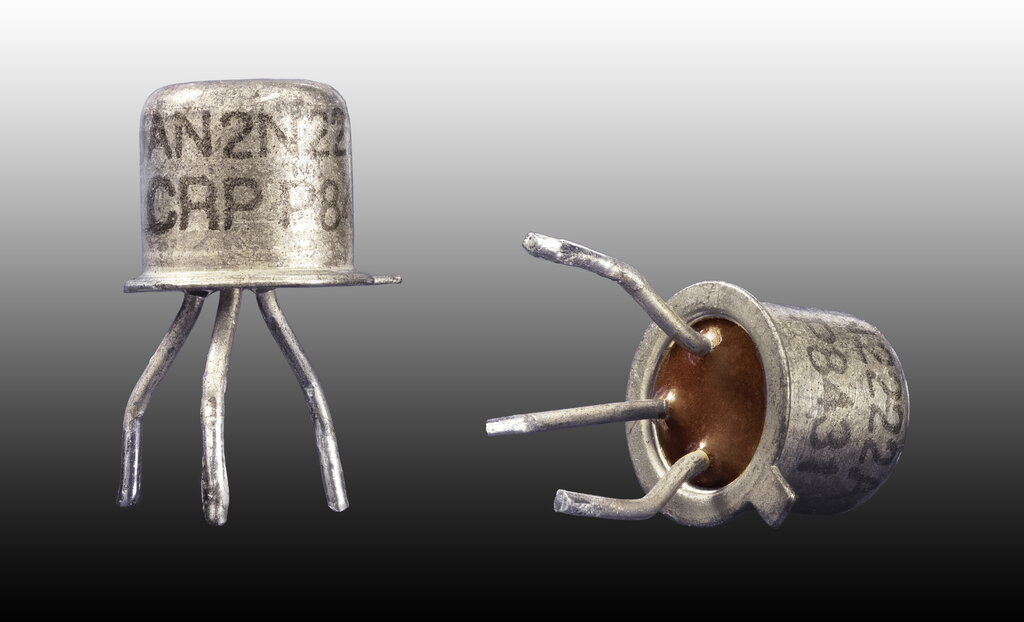
This simple on/off behavior is the bridge from the physical world of electricity to the abstract world of data. We assign meaning to these two states. By convention, a high voltage state (switch 'on') is mapped to the number 1, and a low voltage state (switch 'off') is mapped to the number 0. This single piece of binary information—a 1 or a 0—is called a bit.
Clean Signals from a Noisy World
Electrical signals in the real world are messy. They are susceptible to interference and degradation, which we call noise. An analog signal, which can have any value within a range, is easily corrupted by this noise. A small fluctuation could change its meaning entirely.
Digital systems solve this problem by not caring about the exact voltage level. Instead, they only care if the voltage is above or below a specific level, known as a voltage threshold. As long as the 'high' signal is high enough and the 'low' signal is low enough, the system can reliably interpret it as a 1 or a 0, ignoring minor noise and ensuring data integrity. This is the core reason digital systems are so robust.
The Power of Many Bits
Bit
noun
The smallest unit of data in a computer, representing a single binary value of either 0 or 1. The term is a portmanteau of 'binary digit'.
A single bit is useful, but limited. It can only answer a simple yes/no question. To represent more complex information, we group bits together. Each bit we add doubles the number of possible states we can represent.
With 2 bits, we can represent $2^2 = 4$ unique states (00, 01, 10, 11). With 3 bits, we have $2^3 = 8$ states. A group of 8 bits is so common that it gets its own name: a byte. A byte can represent $2^8 = 256$ different states, enough to represent every letter, number, and common punctuation mark in English.
| Number of Bits | Formula | Number of Unique States |
|---|---|---|
| 1 | 2 | |
| 2 | 4 | |
| 3 | 8 | |
| 4 | 16 | |
| 8 (1 byte) | 256 | |
| 16 | 65,536 |
This exponential growth is what makes binary so powerful. Small increases in the number of bits lead to a massive increase in representational capacity. This principle is how computers handle everything from simple text to high-definition video and complex software.
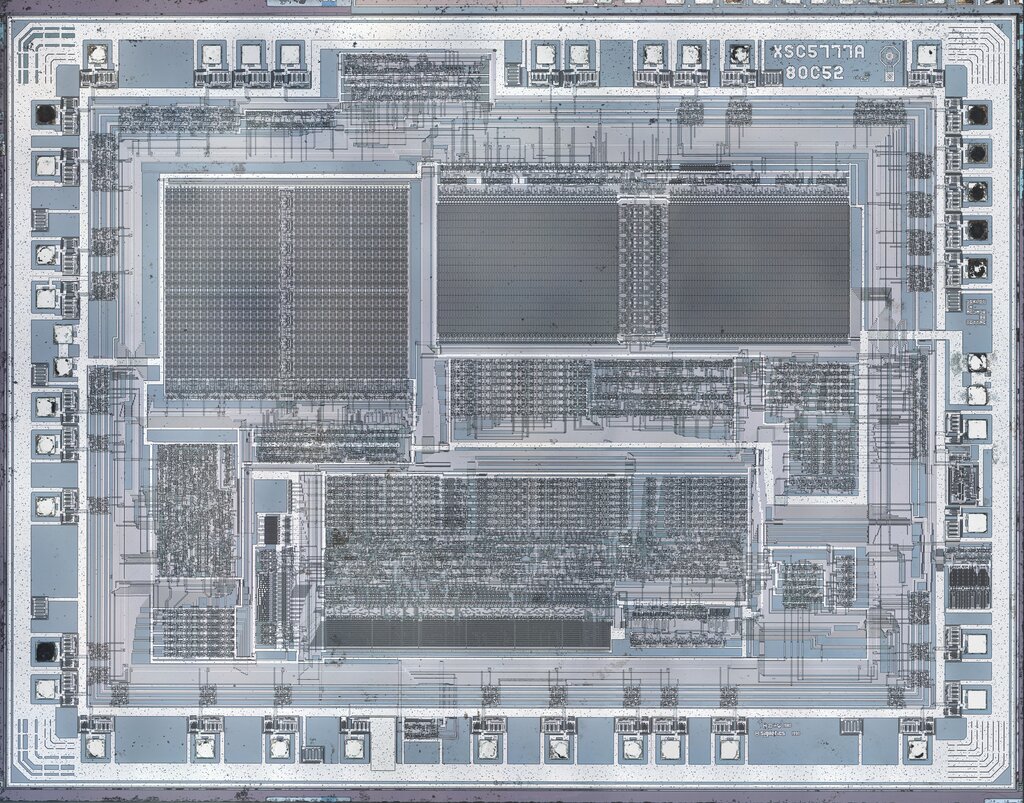
These bits need a physical home. In modern hardware, they are stored in various ways. In a CPU or in RAM (Random Access Memory), bits are represented by the on/off state of billions of microscopic transistors. On a magnetic hard drive, they are stored as tiny magnetic regions oriented in one of two directions. On an SSD (Solid-State Drive), they are electrons trapped in a floating gate. Despite the different physical methods, the underlying principle is the same: two distinct, stable states used to represent 0 and 1.
Let's review what we've covered.
Now, check your understanding.
What is the fundamental electronic component that acts as a switch to represent a 1 or a 0 in a computer?
Why are digital systems more robust against electrical 'noise' compared to analog systems?
Understanding the bit is the first step. By assigning the binary values of 1 and 0 to the physical states of a switch, we create the fundamental atom of all digital information.