Mastering Big Data Fundamentals
Introduction to Big Data
What Is Big Data?
Every day, we create an incredible amount of information. Every social media post, online purchase, and GPS signal adds to a massive, ever-growing collection of data. When these datasets become too large and complex to be handled by traditional data-processing tools, we call it "big data."
Big data isn't just about the amount of data. It's about the potential to uncover new insights and make smarter decisions by analyzing these vast and complex information streams.
Think of it this way: a single book is just data. A library full of books is a lot of data. But big data is like a digital library that's adding millions of new books every second, in thousands of different languages and formats, from novels and scientific papers to audiobooks and videos. You can't just browse the shelves; you need powerful new ways to find what you're looking for.
The Four Vs
To better understand big data, we often talk about its four key characteristics, known as the "Four Vs."
Volume
noun
The sheer scale of data being generated and collected. We're talking about terabytes, petabytes, and even exabytes of information.
This is the most obvious trait of big data. The amount of data in the world is exploding, coming from sources like business transactions, social media, and sensors in smart devices.
Velocity
noun
The incredible speed at which new data is created and needs to be processed.
Data is streaming in at an unprecedented pace. Financial markets, social media feeds, and logistics systems all generate a continuous flow of information that requires rapid processing to be useful.
Variety
noun
The different forms that data can take. It's not just numbers in a spreadsheet anymore.
Data comes in all shapes and sizes. It can be structured, like a customer database, or unstructured, like emails, photos, videos, and audio files. This diversity makes it challenging to manage and analyze.
Veracity
noun
The quality, accuracy, and trustworthiness of the data. Not all data is reliable.
With such a large volume and variety of data, its quality can vary. Veracity deals with the uncertainty and imprecision in data. Is the information accurate? Can we trust it to make important decisions? Answering these questions is a crucial step.
Why It Matters
The ability to collect and analyze big data has transformed industries. Companies can understand customer behavior in incredible detail, leading to personalized products and marketing. In healthcare, analyzing huge datasets can help predict disease outbreaks and develop more effective treatments. Retailers use it to optimize their supply chains, ensuring products are on the shelves when you want them.
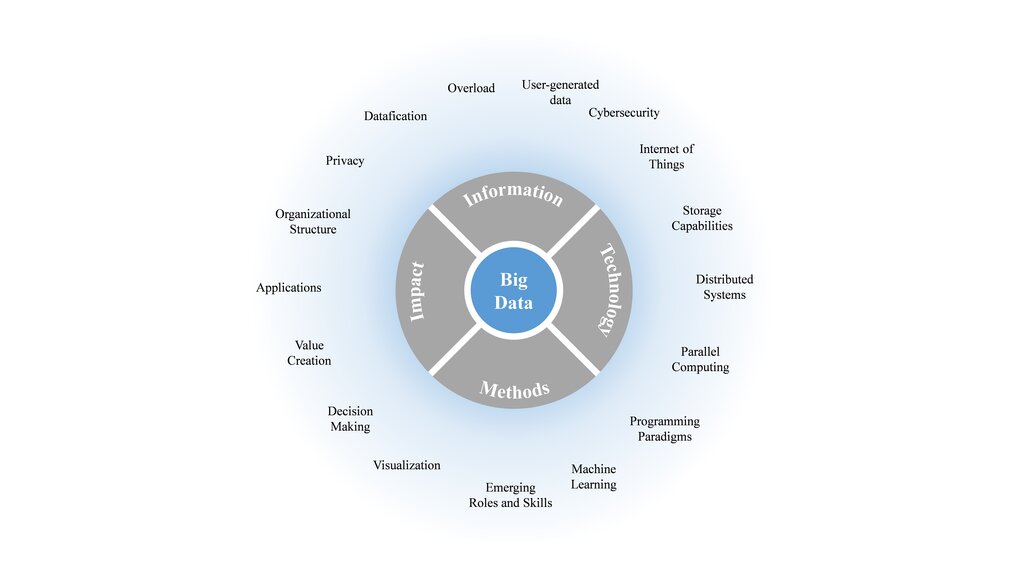
By spotting trends, patterns, and connections that would otherwise remain hidden, organizations can make faster, more informed decisions. This leads to greater efficiency, new opportunities, and competitive advantages.
The Challenges
Working with big data isn't easy. The sheer volume requires massive storage capacity and powerful processing capabilities. Its variety and lack of structure make it difficult to organize and analyze. Ensuring data quality, or veracity, is a constant battle against inconsistent, incomplete, or inaccurate information.
Furthermore, handling vast amounts of data, especially personal information, raises significant privacy and security concerns. Organizations must be careful to manage data responsibly and ethically. These challenges are why specialized fields like data science and data engineering have become so important.
Ready to check your understanding? Let's see what you've learned about the fundamentals of big data.
Which statement best defines "big data"?
The "Four Vs" are key characteristics of big data. Which 'V' refers to the different forms data can take, such as structured databases, unstructured emails, videos, and audio files?
Understanding the Four Vs is the first step in grasping the scale and complexity of big data. These concepts form the foundation for the tools and techniques used to harness its power.