Mastering Behavioral Interviews Through Culture Analysis
Understanding Company Culture
What Is Company Culture?
Think of company culture as the personality of an organization. It's the collection of shared values, attitudes, and practices that guide how people work together. It’s not about the free snacks or the ping-pong table in the break room; it’s about the underlying beliefs that shape decisions and interactions every day.
Culture is the unspoken answer to questions like: How do we handle disagreements? How do we celebrate success? Is it okay to take risks and fail? The answers reveal the true environment of a workplace. Essentially, it's the difference between a place where you feel energized and one where you're constantly watching the clock.
Company Culture
noun
The shared values, beliefs, behaviors, and practices that determine how a company's employees and management interact and handle business transactions.
Why Culture Matters
A strong, positive culture isn't just a nice-to-have, it's a powerful engine for success. It acts like a magnet, attracting talented people who align with the company's values and helping to keep them motivated and engaged. When employees feel they belong and believe in the company's mission, they are more likely to be productive and innovative.
On the flip side, a toxic or undefined culture can be disastrous. It can lead to low morale, high turnover, and poor performance. If the stated values on the wall don't match the day-to-day reality, employees become disengaged and trust erodes. A great culture provides a stable foundation, guiding a company through challenges and growth.
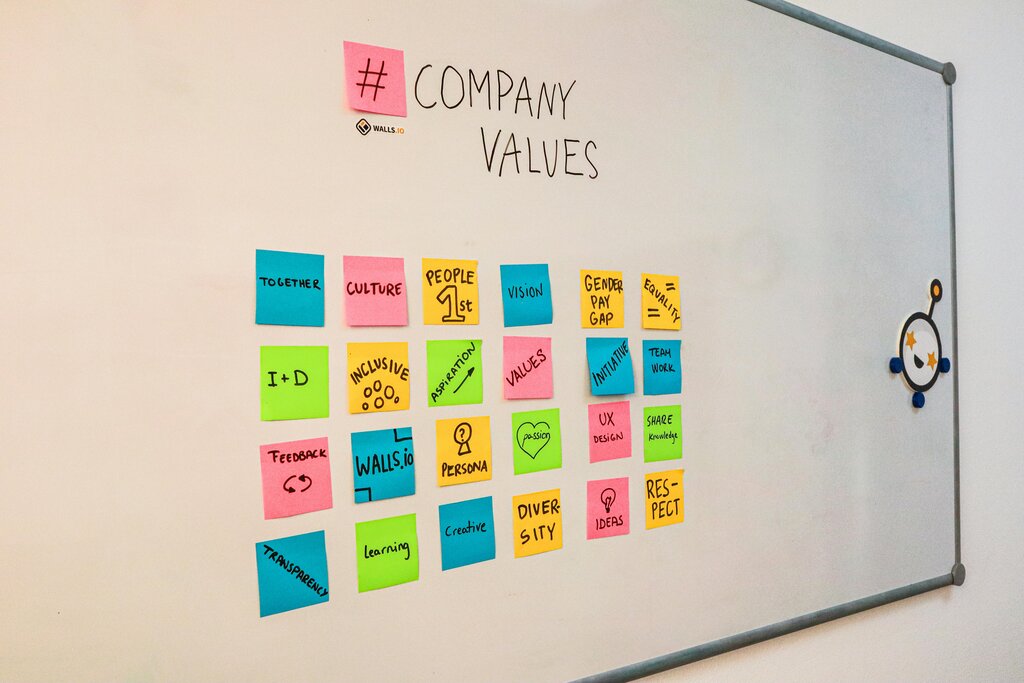
The Building Blocks of Culture
Company culture starts with a few key elements that define what the organization stands for and where it's going. The two most important are its mission statement and its core values.
A mission statement is the company's purpose. It answers the question, "What do we do, and why do we do it?" It’s an external-facing declaration of the company's goals and its impact on customers or the world.
Core values, on the other hand, are the internal guideposts. They answer the question, "How do we behave while we do our work?" These are the fundamental beliefs that dictate how employees should act and make decisions.
| Feature | Mission Statement | Core Values |
|---|---|---|
| Purpose | Defines the company's objective | Guides principles and behavior |
| Focus | Outward (what we do for others) | Inward (how we operate) |
| Example | "To bring inspiration and innovation to every athlete in the world." | "Integrity," "Teamwork," "Customer Focus" |
For a culture to be authentic, values must be more than just words on a poster. They need to be lived out every day, from the CEO to the newest hire.
Leadership is the single most important factor in shaping and maintaining culture. The way leaders act, communicate, and make decisions sets the tone for the entire organization. Their behavior signals what is truly valued, regardless of what the official mission statement says.
Leadership is the key to shaping the organization’s culture.
A leader with a top-down, command-and-control style will likely foster a culture of compliance and caution, where employees are hesitant to take initiative. In contrast, a leader who is collaborative and trusts their team will cultivate a culture of empowerment, creativity, and open communication. Employees see what leaders reward and punish, and they adjust their behavior accordingly.
Ready to check your understanding?
Company culture is best described as...
A company's 'core values' are primarily for an external audience, like customers and investors.