Mastering Basic English Grammar
Parts of Speech
The Building Blocks of Language
Every word in a sentence has a specific job to do. Think of a sentence as a team, where each word is a player with a distinct role. These roles are called parts of speech. Understanding them is the first step to building clear, effective sentences.
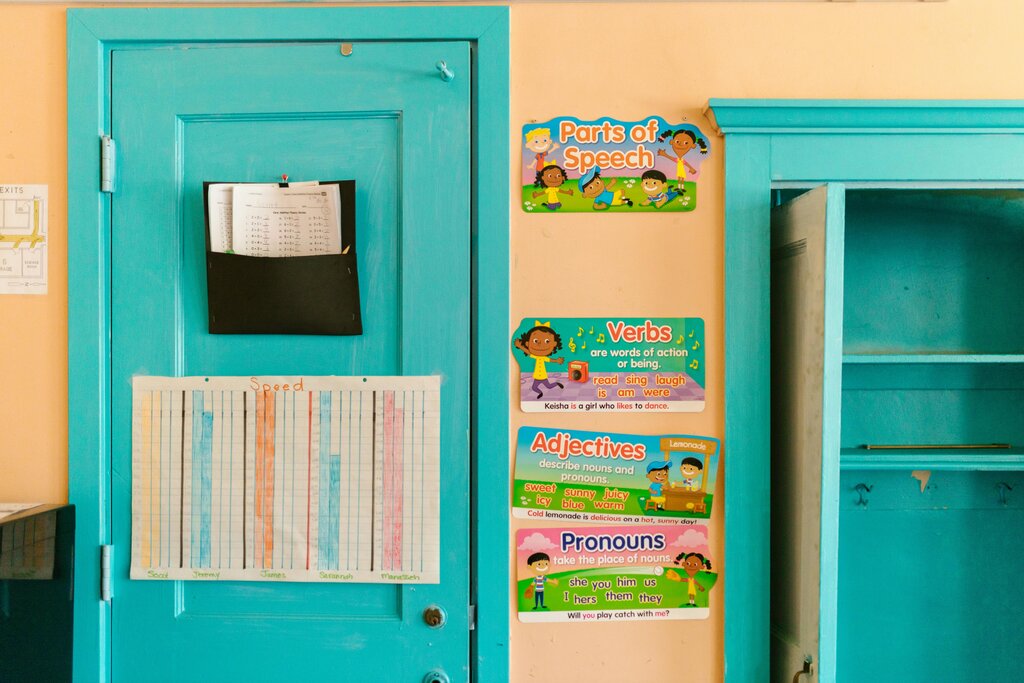
There are eight main parts of speech. Let's walk through each one.
Naming and Describing
noun
noun
A word that represents a person, place, thing, or idea.
Nouns give names to everything around us. They can be tangible, like a desk or a planet, or abstract, like love or freedom. If you can put 'the' in front of it, it's probably a noun.
Examples of nouns include: teacher, New York, computer, and curiosity.
Next up are pronouns. Writing would be very repetitive if we had to use the same noun over and over. Pronouns are shortcuts that stand in for nouns.
Instead of saying, "Maria loves coffee because Maria thinks coffee is delicious," we can say, "Maria loves coffee because she thinks it is delicious." The words she and it are pronouns.
Common pronouns include I, you, he, she, it, we, and they.
verb
verb
A word that expresses an action or a state of being.
Verbs are the engines of sentences. They show what the noun is doing or what state it's in. Action verbs are easy to spot: run, think, create. State-of-being verbs connect the subject to a description, like in the sentence "The sky is blue."
Now let's add some color. Adjectives are words that describe nouns or pronouns. They answer questions like "which one?", "what kind?", or "how many?"
They add detail and make our language more specific. Instead of just "a car," you can have a "fast, red car." Words like happy, tall, three, and interesting are all adjectives.
Just as adjectives modify nouns, adverbs modify verbs, adjectives, or even other adverbs. They often, but not always, end in "-ly." Adverbs answer questions like "how?", "when?", "where?", or "to what extent?"
For example:
- She speaks softly. (modifies the verb speaks)
- He is very tall. (modifies the adjective tall)
- The race finished too quickly. (modifies the adverb quickly)
Connecting the Pieces
Some words don't name or describe things directly. Instead, their job is to connect other words and show relationships. These are the glue that holds sentences together.
Prepositions show the relationship between a noun (or pronoun) and another word in the sentence. They often indicate location, time, or direction.
Think about all the ways you can relate to a box: you can be in the box, on the box, under the box, or near the box. Words like in, on, at, from, and with are prepositions.
I will meet you at the library on Tuesday.
Conjunctions are connectors that join words, phrases, or clauses. The most common ones are easy to remember: for, and, nor, but, or, yet, so.
You can use them to connect simple ideas ("I like coffee and tea") or more complex ones ("I wanted to leave, but I had to stay").
Finally, we have interjections. These are short words or phrases that express strong emotion. They often stand alone and are followed by an exclamation point.
Examples include Wow!, Ouch!, Hey!, and Oh no!
Now let's review these eight essential parts of speech.
Ready to test your knowledge?
Which part of speech is used to name a person, place, thing, or idea?
In the sentence "She quietly opened the old, wooden door," which word is the adverb?
Recognizing these eight roles is the foundation of grammar. Once you can identify the job each word is doing, you're well on your way to mastering the English language.