Mastering Baldrige Category One Leadership
Senior Leadership Practices
Setting the Direction
Senior leadership isn't about day-to-day management; it's about defining the organisation's future. The first responsibility is to set a clear vision and a core set of values. A vision isn't just a catchy slogan for the website. It's a compelling picture of where the organisation is heading, giving purpose and direction to everyone's work.
Values provide the guardrails for how to get there. They are the fundamental beliefs that guide behaviour and decision-making. But simply writing them down is not enough. The key challenge for senior leaders is deployment—ensuring these principles are understood, embraced, and consistently applied across every department and at every level. This means translating high-level concepts into daily actions and embedding them into the organisation's processes, from hiring to performance reviews.
Effective deployment means an employee on the front line makes the same value-based decision that a senior executive would.
Communication and Culture
Vision and values are useless if they remain in the boardroom. Senior leaders must champion them through clear, consistent, and authentic communication. This goes beyond formal announcements or company-wide emails. It involves creating channels for genuine two-way dialogue, actively listening to the workforce, and being visible and approachable.
Through this communication, leaders cultivate the desired organisational culture. A key element of a high-performing culture is accountability. When leaders model accountability for their own actions and decisions, they create an environment where everyone feels a sense of ownership. This builds a where the focus shifts from placing blame to solving problems and achieving collective goals.
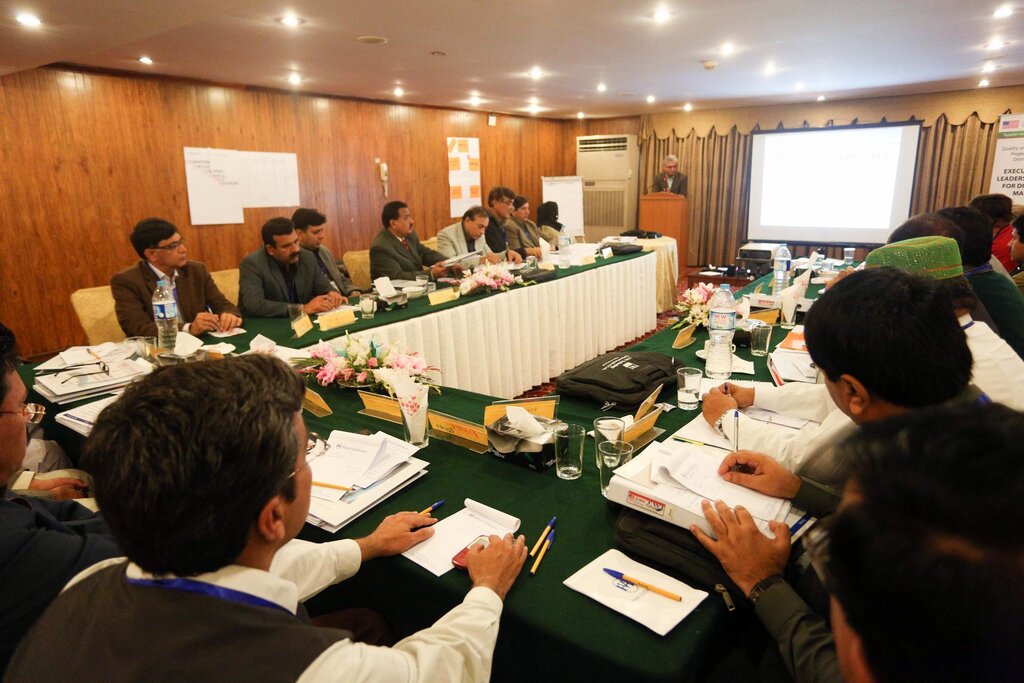
This environment doesn't happen by accident. It is intentionally designed through the systems and processes leaders put in place, from how performance is measured to how success is celebrated.
Measuring Leadership
How do you know if senior leadership is effective? The provides a structured way to evaluate it. Specifically, sub-category 1.1, titled 'Senior Leadership', is worth 70 points and examines how senior leaders guide the organisation and govern its actions.
The evaluation doesn't just look at whether leaders have a vision; it assesses how systematically that vision is deployed. It checks for consistency in communication and whether a culture of success is being actively fostered throughout the entire organisation.
| Scoring Area | Focus | Key Questions |
|---|---|---|
| Vision and Values | How do senior leaders set and deploy the organisation's vision and values? | Are values integrated into daily operations? How is the vision communicated? |
| Communication | How do senior leaders engage the entire workforce? | Are communication channels two-way? Is feedback actively sought and used? |
| Organisational Success | How do leaders create an environment for success? | Is there a focus on innovation and intelligent risk-taking? Is collaboration encouraged? |
A crucial part of this evaluation is how leaders ensure legal and ethical behaviour. This involves establishing clear policies, but more importantly, creating a system of oversight. Leaders are assessed on how they actively monitor and respond to ethical concerns, ensuring the organisation operates with integrity. This isn't just a compliance exercise; it's a fundamental test of leadership commitment to the organisation's stated values.
By regularly assessing their actions against these criteria, leaders can ensure they are not just steering the ship, but steering it effectively towards a shared and principled destination.