Mastering Attention for Precision Assembly
Understanding Focus and Attention
The Mental Toolkit
In manufacturing, especially when working with tiny, high-stakes components like electrical connectors, your most important tools aren't just in your hands. They're in your head. The ability to manage your attention is what separates a good part from a piece of scrap. It’s a skill, and like any skill, it starts with understanding the fundamentals.
Let's break down the three key cognitive functions you use every day on the line.
Focus
noun
The act of deliberately directing your mental energy onto a single task or object, consciously tuning out distractions.
Think of focus as pointing a flashlight in a dark room. You choose exactly what to illuminate. Everything else stays in the shadows.
Concentration
noun
The ability to sustain your focus over a period of time. It's about holding the flashlight steady without letting it flicker or drift.
If focus is pointing the flashlight, concentration is the strength to keep it aimed at the target for as long as the job takes.
Attention to Detail
noun
The skill of noticing and correctly handling the small but critical elements of a task within your focused state.
This is about what you see in the flashlight's beam. It’s not just about looking at a connector; it’s about seeing the precise alignment of each pin, the smoothness of the solder, and the absence of any foreign debris. This is where quality is truly built.
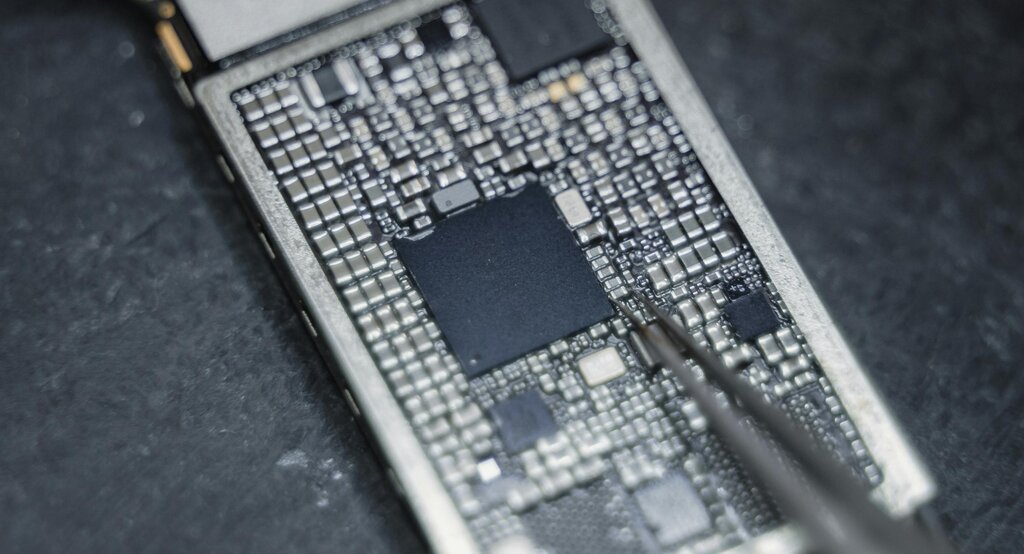
When Focus Slips
A momentary lapse in concentration can have significant consequences. When you're assembling mission-critical connectors, a tiny mistake isn't just a mistake. It's a potential point of failure.
A pin that's misaligned by a hair's width, a stray bit of solder, or a connection that isn't perfectly seated can cause an entire system to fail. These aren't always caught by inspection. Sometimes, the flaw is subtle enough to pass, only revealing itself later.
The immediate results are obvious: increased defects and a higher scrap rate. This costs time and money. Every faulty part has to be reworked or thrown away, slowing down the entire production line. But the long-term impact is even greater. A faulty connector that makes it into a final product could damage a company's reputation and, more importantly, fail when it's needed most.
A tiny error on the assembly line can become a major failure in the field.
The Challenge of Repetition
Maintaining sharp focus isn't easy, especially when the work is repetitive. Our brains are wired to seek novelty, and after performing the same task hundreds of times, they tend to switch to "autopilot."
This is a natural process, but it's risky in a manufacturing setting. When you're on autopilot, your active concentration drops. You might perform the motions correctly, but your attention to detail fades. You become less likely to notice small variations or imperfections that could signal a problem.
Add in distractions from the work environment, like noise or movement, and the natural mental fatigue that builds over a shift. These factors constantly pull at your focus, making it a genuine challenge to maintain the high level of concentration needed for quality work. Understanding these challenges is the first step toward managing them.
Let's review these core ideas.
Which cognitive function is best described as the ability to keep your mental 'flashlight' aimed at a target for a sustained period?
What is a significant long-term risk of a faulty connector getting into a finished product?