Mastering Atomic Habits
Understanding Habits
The Invisible Scripts We Live By
Think about your morning. Did you decide to brush your teeth, or did it just happen? Did you consciously choose your route to work, or did your brain switch to autopilot? Many of our daily actions aren't active choices. They're habits.
Habit
noun
A settled or regular tendency or practice, especially one that is hard to give up.
Habits are mental shortcuts your brain creates to save effort. When you repeat an action enough times in a certain context, your brain learns to automate it. This frees up your conscious mind to focus on new challenges and solve problems. Without habits, we'd be exhausted by the endless decisions of daily life, from tying our shoes to driving a car.
The Habit Loop
Every habit, good or bad, follows the same neurological pattern. It's a four-step loop that runs in the background of our lives, driving our actions. Understanding this loop is the first step to understanding our own behavior.
Let’s break down the four stages:
-
Cue: This is the trigger. It’s a bit of information that predicts a reward. The ding of your phone, the smell of coffee, the time of day—these are all potential cues. Your brain is constantly analyzing your environment for hints about where rewards are located.
-
Craving: This is the motivation. You don't crave the action itself, but the change in state it delivers. You don't crave smoking a cigarette; you crave the feeling of relief it provides. Cravings give habits their power.
-
Response: This is the actual habit you perform, whether it's a thought or an action. The response happens to obtain the reward. Whether a response occurs depends on how motivated you are and how much friction is associated with the behavior.
-
Reward: This is the satisfying outcome that serves two purposes. First, it satisfies your craving. Second, it teaches your brain which actions are worth remembering for the future. The brain is a reward detector.
The loop is complete. The cue is noticed, a craving follows, a response is delivered, and a reward is received. This cycle strengthens the connection between the cue and the response, making the habit more automatic the next time.
From Repetition to Autopilot
How does a sequence of actions become an automatic habit? The answer is simple: repetition.
Every time you repeat the habit loop, the neural connections in your brain related to that behavior get stronger. The communication between brain cells becomes more efficient. Over time, the action is handed over from the conscious, decision-making part of your brain (the prefrontal cortex) to a deeper, more primitive area called the basal ganglia. This is where habits live.
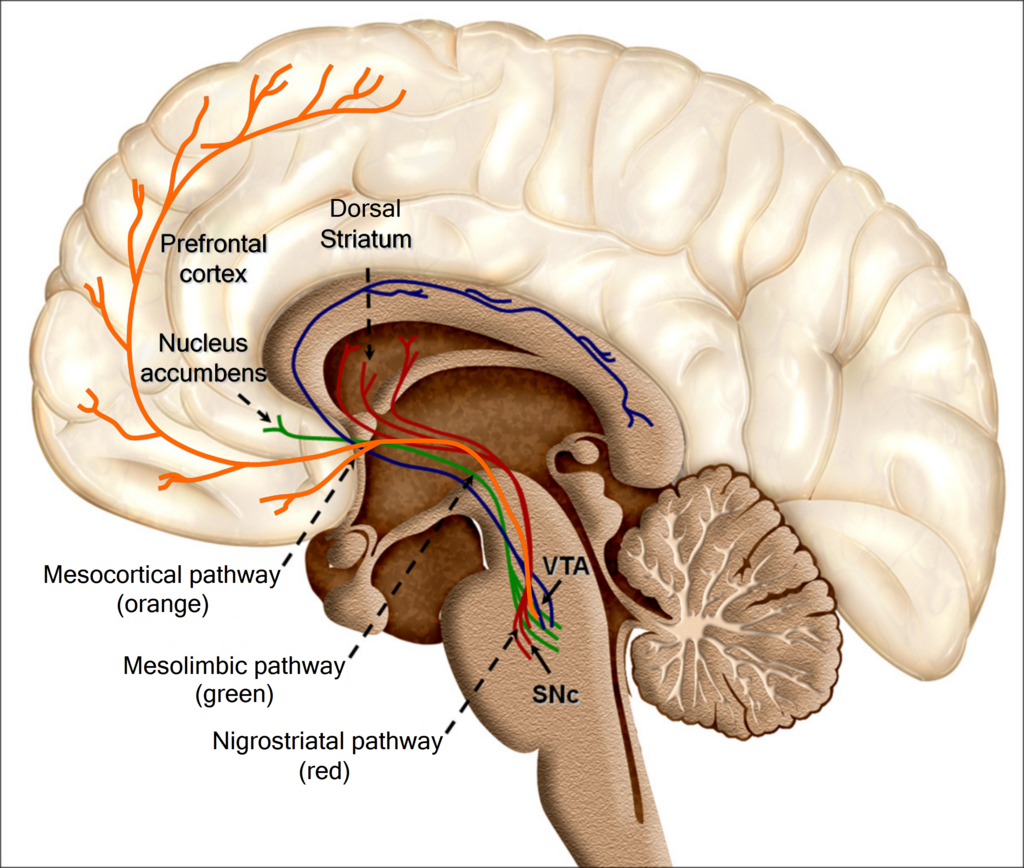
Once a habit is encoded, you no longer need to think about it. Your brain can go on autopilot, freeing up mental energy to focus on other things. This is incredibly efficient. It allows us to perform complex behaviors like driving a car while also holding a conversation. The downside is that the brain can't easily distinguish between a good habit and a bad one. The process of automation is the same for both.
Habits Are the Compound Interest of Self-Improvement
The effects of our habits multiply over time. A small, seemingly insignificant daily routine can lead to remarkable results when repeated for years. Choosing a healthy snack over a sugary one doesn't make much difference on any given day, but its cumulative impact on your health is enormous.
Our lives are largely the sum of our habits. What we repeatedly do—the good and the bad—ultimately shapes our health, our relationships, our knowledge, and our happiness. Understanding the mechanics of how they work is the foundation for everything that follows.