Mastering Artificial Intelligence for Professional Success
Introduction to Artificial Intelligence
What Is Artificial Intelligence?
At its core, Artificial Intelligence (AI) is the science of making machines smart. It's a branch of computer science focused on building systems that can perform tasks that typically require human intelligence. This includes things like learning from experience, solving problems, understanding language, and recognizing objects in a picture.
Think of it this way: instead of programming a computer with a rigid set of instructions for every possible scenario, AI allows the computer to learn the rules for itself.
Artificial Intelligence
noun
A field of computer science dedicated to creating systems capable of performing tasks that normally require human intelligence.
The ultimate goal is to create machines that can reason and adapt. This doesn't mean creating conscious robots like in the movies. It's about building practical tools that can analyze vast amounts of data and find patterns we might miss, helping us make better decisions in fields from medicine to finance.
A Brief History of AI
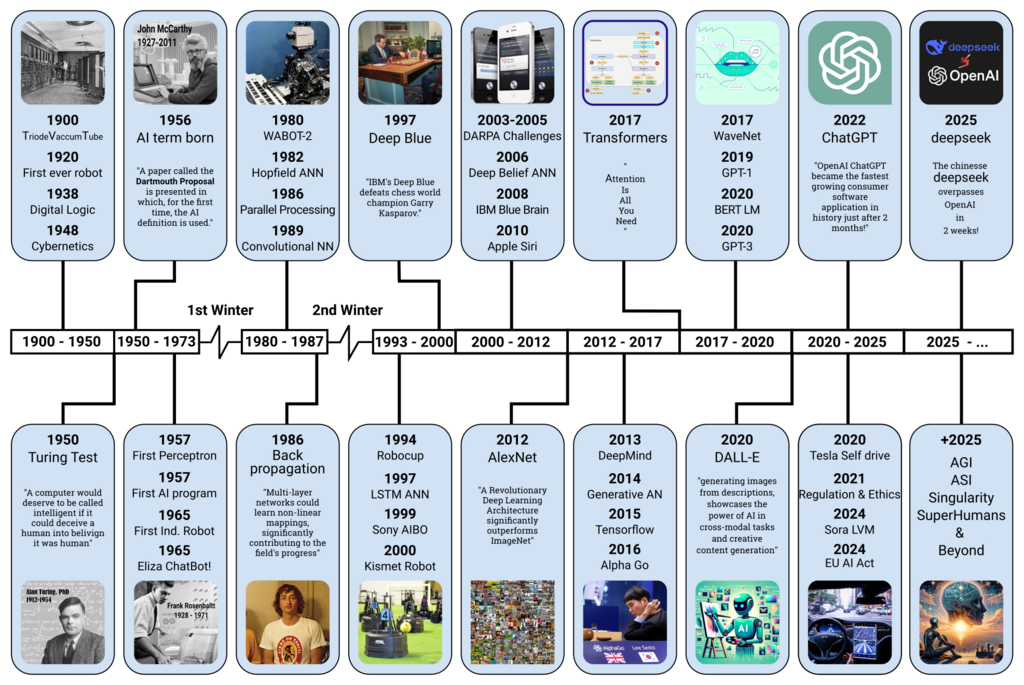
The idea of intelligent machines has been around for centuries, but the formal field of AI research began in the summer of 1956 at a workshop at Dartmouth College. It was there that the term "artificial intelligence" was coined. The early years were filled with excitement and bold predictions. Researchers developed programs that could solve algebra problems and prove theorems in logic. Optimism was high.
But the initial excitement was followed by periods known as "AI winters." Progress slowed down because the computers of the day weren't powerful enough and didn't have enough data to tackle more complex problems. Funding dried up, and the field went through several cycles of hype and disappointment.
Things started to change in the 1990s and 2000s. The rise of the internet created massive amounts of data, and computer processing power grew exponentially. These two ingredients, data and power, were exactly what AI needed to flourish. Suddenly, algorithms that had existed for decades were able to achieve remarkable results, leading to the AI boom we see today.
AI's Impact Today
AI is no longer just a futuristic concept; it's a part of our daily lives. When you ask a virtual assistant for the weather, get a movie recommendation on a streaming service, or use your bank's app to deposit a check, you're interacting with AI.
Its impact spans nearly every industry. In healthcare, AI helps doctors diagnose diseases earlier and more accurately by analyzing medical images. In finance, it detects fraudulent transactions in real-time. Car manufacturers are using AI to develop self-driving vehicles that could make our roads safer. Retailers use it to manage their inventory and suggest products you might like.
From navigating rush hour traffic to filtering spam emails, AI works quietly in the background to make everyday tasks easier and more efficient.
The technology is creating new opportunities and changing the way we work and live. Understanding the basics of AI is becoming essential for navigating the modern world.
Ready to check your understanding?
What is the primary goal of Artificial Intelligence (AI) as a field of computer science?
The term "artificial intelligence" was first coined at a workshop held at which institution in 1956?
This foundation gives us a great starting point for exploring the more specific types of AI and how they work.