Mastering Arabic Reading Fundamentals
Arabic Alphabet
Meet the Arabic Alphabet
The first thing to know about Arabic is that it’s written from right to left. This is the opposite of English and many other languages. It might feel strange at first, but you'll get used to it quickly. The script flows in a cursive style, where letters connect to form words.
There are 28 letters in the Arabic alphabet. Let's take a look at them in their most basic form.
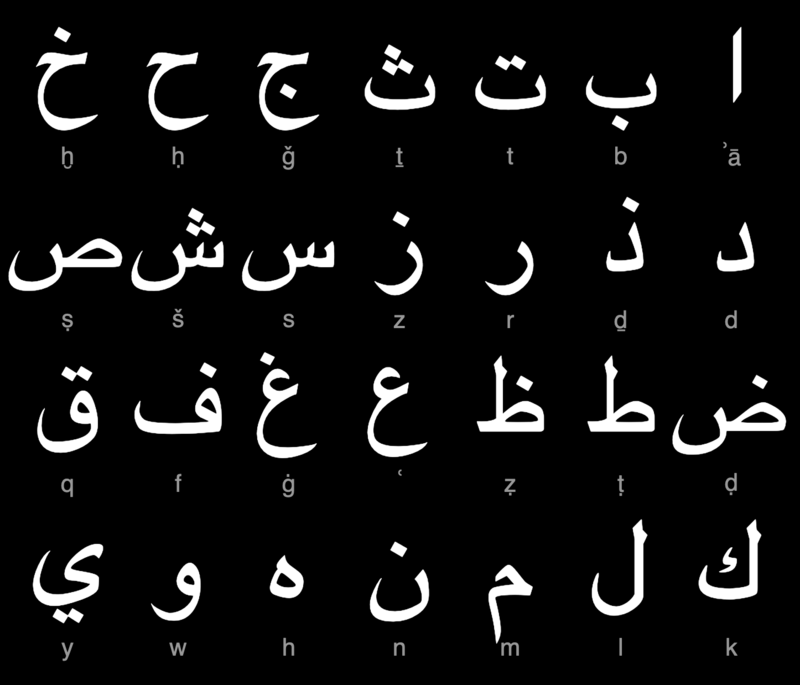
Each letter has a name, just like in English (A, B, C are called 'ay,' 'bee,' 'cee'). The image above shows each letter in its isolated form. This is how a letter looks when it's standing by itself, not connected to any other letters.
The 28 Letters
Here are all 28 letters with their names. Don't worry about memorizing them all at once. The goal right now is just to get familiar with their shapes and names.
| Letter | Name | Letter | Name |
|---|---|---|---|
| ا | Alif | ض | Dhad |
| ب | Ba | ط | Tah |
| ت | Ta | ظ | Dhah |
| ث | Tha | ع | 'Ayn |
| ج | Jeem | غ | Ghayn |
| ح | Ha | ف | Fa |
| خ | Kha | ق | Qaf |
| د | Dal | ك | Kaf |
| ذ | Dhal | ل | Lam |
| ر | Ra | م | Meem |
| ز | Zayn | ن | Noon |
| س | Seen | ه | Ha' |
| ش | Sheen | و | Waw |
| ص | Sad | ي | Ya |
How Letters Connect
The biggest difference between the Arabic script and the Latin alphabet is that most Arabic letters change shape depending on where they are in a word. Think of it like cursive handwriting, where letters flow into one another.
A letter can have up to four forms:
- Isolated: When it stands alone.
- Initial: When it's at the beginning of a word.
- Medial: When it's in the middle of a word.
- Final: When it's at the end of a word.
This might seem like a lot to learn, but you'll notice patterns quickly. Many letters change in very simple ways, often just by extending a small line to connect to the next letter.
However, six letters are a bit different. They are often called "non-connecting" letters because they only connect to the letter before them. They never connect to the letter that comes after them. This creates a small gap in the middle of a word.
The six non-connecting letters are:
ا (Alif), د (Dal), ذ (Dhal), ر (Ra), ز (Zayn), و (Waw)
When you see a gap inside an Arabic word, it's because the letter right before the gap is one of these six non-connectors.
Now that you've seen the letters and the basic rules for how they join together, it's time to review.
Let's check what you've learned.
In which direction is Arabic text primarily written and read?
Why do most Arabic letters change their shape?
Becoming familiar with the 28 letters and the way they connect is the foundation for reading and writing Arabic. With a little practice, recognizing these shapes will become second nature.