Mastering Antifragility
Convexity and Optionality
The Power of Asymmetry
Most of us think about risk and reward in a straight line. If you risk a little, you gain a little. If you risk a lot, you gain a lot. But this linear view misses the most powerful opportunities, which are found in asymmetry. This is the world of convex and concave payoffs.
A concave payoff is one where the potential downside is larger than the potential upside. Think of a casino slot machine. You can lose your money very quickly, but the chance of a massive jackpot is tiny. Your potential for loss far outweighs your likely gain.
A convex payoff is the opposite. It's a situation where the potential upside is significantly greater than the potential downside. With a convex strategy, negative events cause only a small, limited harm, while positive events create a disproportionately large benefit. You are positioned to profit from volatility and uncertainty, rather than being broken by it.
How do you find or create these convex opportunities? The key is through optionality—the right, but not the obligation, to take an action. An option gives you exposure to the upside of a situation while capping your downside to the price you paid for the option itself. You get to participate if things go well, but you can walk away if they don't.
Optionality means you keep bets open, costs low and upside infinite.
Consider venture capital. A VC firm invests in ten startups. They know that eight or nine will likely fail. Their loss on each of those is limited to their initial investment. But if just one startup becomes a massive success—a 'unicorn'—the returns from that single investment can be 100x or 1000x, more than covering all the other losses combined. This isn't just luck; it's a deliberately convex strategy.
You can apply this to your own life. Starting a side project is buying an option. The cost is your time and maybe a small amount of money. That's your maximum downside. The upside, however, is uncapped. It could become a full-time business, a new career path, or simply provide valuable skills. You don't need to know if it will succeed; you just need to know that if it succeeds, the payoff will be disproportionately large.
The Barbell Strategy
A practical way to structure your life or investments for convexity is the This approach involves dividing your resources between two extremes while avoiding the middle ground.
On one end of the barbell, you are hyper-conservative. You place the vast majority of your assets—say, 90%—in extremely safe investments that are protected from negative shocks. Think cash or government bonds. This is your survival fund. It ensures that no single failure can wipe you out.
On the other end, you take the remaining small portion—the other 10%—and allocate it to a portfolio of high-risk, high-reward bets. These are your options. Each one has a small, capped downside (you can only lose what you put in) but explosive, uncapped upside. This structure makes you robust to negative events while giving you significant exposure to positive ones.
Why This Beats Prediction
The beauty of focusing on convexity and optionality is that it frees you from the impossible task of predicting the future. Instead of trying to forecast what will happen, you simply structure your affairs so that you benefit from volatility in either direction.
You don't need to know which specific startup will succeed, which piece of art will become famous, or which scientific discovery will change the world. You just need to be exposed to the possibility. By limiting your downside and leaving your upside open, you've engineered a system where uncertainty becomes your friend.
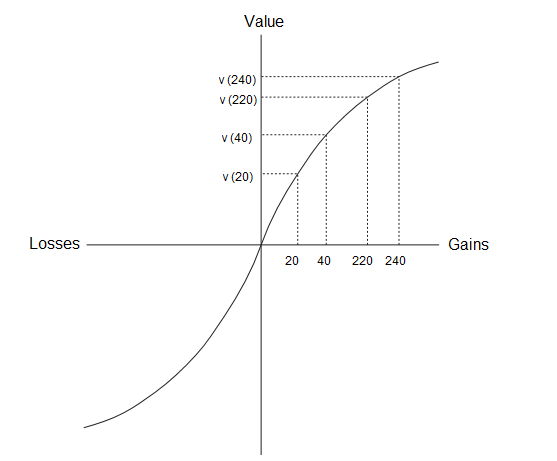
This shifts the focus from accuracy to structure. Your success depends not on being right all the time, but on ensuring that your wins are much, much bigger than your losses. It's a more robust way to navigate a complex and unpredictable world.
Which of the following best describes a convex payoff?
Playing a casino slot machine, where you can lose your investment quickly with only a tiny chance of a massive jackpot, is an example of a __________ payoff.
This approach allows you to thrive in a world of unknowns, turning randomness from a threat into an opportunity.