Mastering Anime Character Illustration
Advanced Anime Head Construction
From Sphere to Structure
You've mastered drawing a circle and crossing it with guidelines. Now, let's move beyond that foundation. Professional anime artists don't just see a sphere; they see a complex surface made of flat planes, like a sculpted block. This approach gives the head weight, structure, and consistency from any angle.
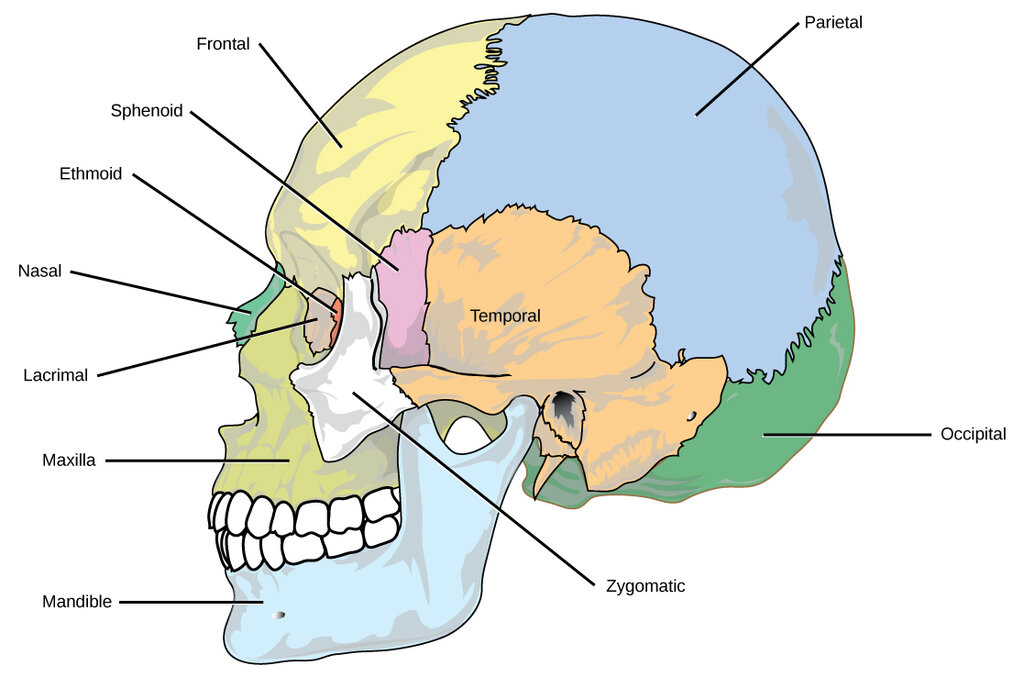
This method is an adaptation of a classic technique used by realistic portrait artists, most famously the Loomis method . The idea is to slice away parts of the sphere to create the flat planes of the sides of the head, the brow, the nose, and the jaw. This defines the underlying skull structure, which is the key to drawing a believable character, no matter how stylized.
Thinking in planes helps you solve complex perspective problems. When you turn the head, you're not just curving a line; you're rotating a three-dimensional object with distinct surfaces. Each surface catches the light differently and changes shape in a predictable way.
Defining Character
The jawline and chin are powerful tools for character design. They communicate age, gender, and personality with just a few lines. A soft, rounded jaw suggests youth or innocence, while a sharp, angular jaw can indicate a more mature, cynical, or masculine character.
Variations in the chin are just as important. A pointed chin is common for female characters or younger boys, while a flatter, broader chin is often used for adult men or more rugged character types. By consciously choosing these shapes, you can immediately tell the audience a lot about who your character is.
| Character Type | Jawline Shape | Chin Shape |
|---|---|---|
| Young Child | Very round, soft | Small, barely defined |
| Teen Female | Softly curved, slight angle | Pointed or small curve |
| Teen Male | More defined angle | Slightly pointed or flat |
| Adult Female | Defined, but can be soft | Varies, often pointed |
| Adult Male | Sharp, angular | Broad, often flat |
Ear placement is a common stumbling block. In a standard side view, the top of the ear aligns with the brow line, and the bottom aligns with the base of the nose. As the head tilts, the ears follow the same perspective lines as the eyes and mouth. For anime, you don't need to draw every fold. Simplify the cartilage into a 'C' or 'S' shape with a smaller hook inside for the tragus.
Finally, the head must connect believably to the body. The neck isn't a simple cylinder. The two most important muscles to indicate are the sternocleidomastoid muscles. These are the two thick, rope-like muscles that run from behind the ears down to the collarbone. Even a simple V-shape helps anchor the head, giving your character a solid, physical presence.
Mastering Angles
The 3/4 view is one of the most common and dynamic angles in anime. It’s also where many artists struggle. The key is to remember that the center guideline for the face is no longer a straight line. It's a curve that wraps around the form of the head. The features on the far side of the face become compressed and partially hidden.
The eye on the far side will appear narrower. The nose will overlap the far cheek, and the far corner of the mouth will be tucked in closer to the centerline. The jawline on the far side will be shorter and curve up sharply to meet the ear.
High (bird's eye) and low (worm's eye) angles push this concept further. When looking down on a character, the forehead becomes the largest feature. The top of the head is more visible, and the chin and jaw are tucked away, appearing much smaller. The eyes will follow the curve of the sphere downwards.
From a low angle, the opposite is true. The jaw and the underside of the chin become massive and dominate the frame. The forehead appears tiny and compressed. The nose is seen mostly from below, and the eyes curve upwards. Mastering these distortions is what separates amateur art from professional, dynamic character work.
Ready to test your knowledge on these advanced techniques?
What is the primary advantage of visualizing the head as a series of flat planes, a technique adapted from the Loomis method?
When drawing a character from a high angle (bird's-eye view), which facial feature becomes the most prominent and exaggerated?
By moving from simple spheres to structured planes and understanding how features behave in perspective, you can draw consistent, dynamic, and believable characters from any angle.