Mastering Animal Feeding Techniques
Introduction to Animal Nutrition
The Building Blocks of Health
Just like building a house requires different materials, an animal's body needs a variety of substances to grow, function, and repair itself. These materials are called nutrients, and they come from the food an animal eats. There are six primary types of nutrients that are essential for health.
The six essential nutrients are carbohydrates, proteins, fats, vitamins, minerals, and water.
We can group these into two categories. Carbohydrates, proteins, and fats are called macronutrients because animals need them in large amounts. They provide the body with energy and the raw materials for growth.
Vitamins and minerals are micronutrients. The body needs them in smaller quantities, but they are just as crucial for health. Finally, there's water, which is in a class of its own due to the sheer volume required for life.
The Roles of Nutrients
Carbohydrates are the primary fuel source. They are broken down into glucose, a simple sugar that powers everything from muscle movement to brain activity. Think of carbs as the gasoline that keeps the engine running.
Proteins are the construction workers of the body. They are made of smaller units called amino acids. The body uses them to build and repair tissues like muscle, skin, and hair. Proteins also form enzymes, which speed up chemical reactions, and hormones that act as chemical messengers.
Fats, also known as lipids, are a dense source of energy. The body stores excess energy as fat. Fats are also essential for insulating the body, protecting vital organs, and helping to absorb certain vitamins.
| Macronutrient | Primary Role | Analogy |
|---|---|---|
| Carbohydrates | Energy source | Fuel for the engine |
| Proteins | Building and repair | Construction materials |
| Fats | Energy storage | Reserve fuel tank |
The micronutrients, vitamins and minerals, don't provide energy directly. Instead, they act like the tools and spark plugs that allow the body to use the energy from macronutrients. Vitamins are organic compounds that help regulate body processes, such as fighting infections and converting food into energy. Minerals are inorganic elements that are crucial for functions like building strong bones (calcium) and carrying oxygen in the blood (iron).
Finally, water is the most critical nutrient of all. It makes up a large percentage of an animal's body and is involved in nearly every bodily function. It helps regulate temperature, transport other nutrients, and flush out waste. An animal can survive longer without food than without water.
How Animals Digest Food
Getting nutrients from food isn't just about what an animal eats; it's also about how its body breaks down and absorbs those nutrients. The digestive system is responsible for this process, and its structure varies significantly among different types of animals. The two main types are monogastric and ruminant systems.
Monogastric
adjective
Having a single-chambered stomach.
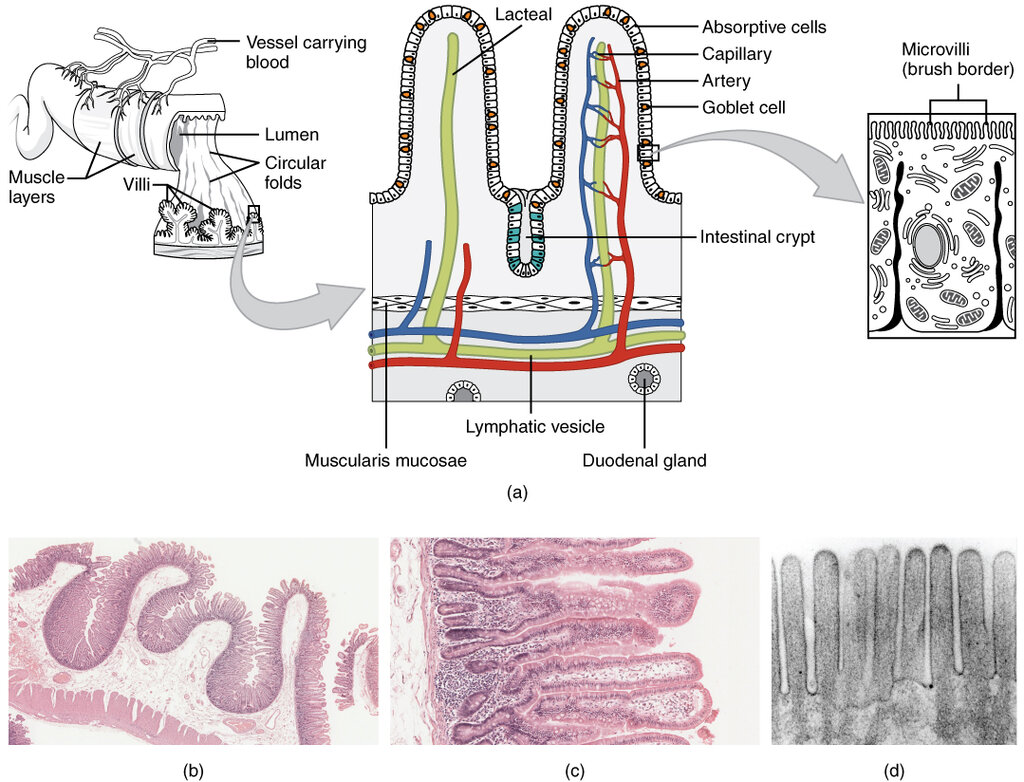
Animals with a monogastric system have a simple, single-chambered stomach. Food enters the stomach, where strong acids and enzymes begin to break it down. From there, it moves into the small intestine, where most of the nutrient absorption occurs. Finally, waste passes through the large intestine.
This system is efficient for digesting grains and proteins but struggles with fibrous plant material like grass.
Ruminant animals, like cows, sheep, and goats, have a much more complex system. They possess a stomach with four distinct compartments: the rumen, reticulum, omasum, and abomasum. This setup allows them to do something monogastric animals can't: digest cellulose, the tough, fibrous component of plants.
The rumen acts as a large fermentation vat, filled with microorganisms that break down cellulose. The animal regurgitates and re-chews its food, a process known as "chewing the cud," to further break it down. Only after this extensive processing does the food move to the abomasum, which functions like a monogastric stomach. This intricate digestive anatomy is why a cow can thrive on a diet of grass, while a pig cannot.
Understanding these fundamental differences in digestive systems is key to providing the right nutrition for any animal.
Now, let's test your understanding of these core concepts.
Which of the following are all classified as macronutrients?
Which nutrient is primarily responsible for building and repairing tissues like muscle, skin, and hair?
Grasping these basics of nutrients and digestion is the first step in understanding animal health and formulating effective diets.