Mastering Anger Management
Understanding Anger
What Is Anger?
Anger is a basic human emotion. It's a natural response to feeling attacked, deceived, frustrated, or treated unfairly. Like happiness or sadness, it's a normal part of the emotional spectrum. It signals that something is wrong, that a boundary has been crossed, or that a goal is being blocked.
Anger itself isn't good or bad. It's simply a piece of information. How we react to it is what matters.
Think of it like the check engine light in a car. The light isn’t the problem; it’s a signal that something under the hood needs your attention. Anger works the same way, alerting you to problems that need to be addressed, whether they’re external, like an injustice, or internal, like unmet expectations.
Common Anger Triggers
Anything can trigger anger, from a minor annoyance like a slow internet connection to a major life event. These triggers are highly personal and vary from one person to the next. What makes one person furious might barely register for someone else. However, most triggers fall into a few common categories.
| Trigger Category | Examples |
|---|---|
| Frustration | Traffic jams, a computer crashing, goals being blocked. |
| Injustice | Feeling treated unfairly, seeing someone else mistreated. |
| Threats | Feeling physically threatened, having your values challenged. |
| Disrespect | Being insulted, ignored, or condescended to. |
| Hurt | Emotional pain caused by the actions or words of others. |
Past experiences also play a huge role. If a past situation made you feel powerless or hurt, a similar event in the present can trigger a much stronger angry response.
How Your Body Reacts
When you perceive a threat, your brain's alarm system sounds off. This triggers the famous "fight-or-flight" response, a survival mechanism that prepares your body for intense physical action. The hypothalamus, a small region at the base of your brain, kicks things off.
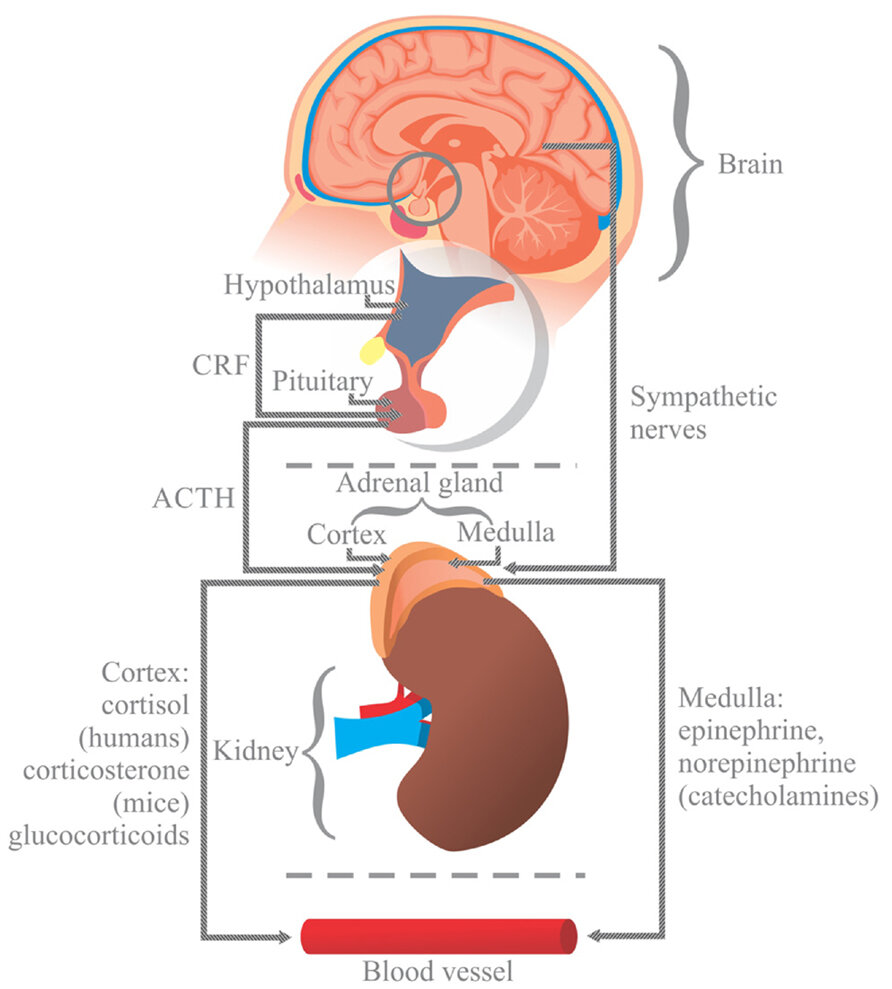
As the diagram shows, this signal travels through the pituitary and adrenal glands, flooding your body with stress hormones like adrenaline and cortisol. This hormonal surge causes immediate, noticeable physical changes:
- Heart rate and blood pressure increase, pumping blood to your muscles.
- Breathing becomes faster and shallower, getting more oxygen into your system.
- Muscles tense up, getting ready for action.
- Senses sharpen, making you more alert.
This is why you might feel your heart pounding, your face flush, or your fists clench when you're angry. Your body is physically preparing to either confront the threat or run from it.
How Your Mind Reacts
At the same time, your mind undergoes its own changes. The rush of stress hormones can make it difficult to think clearly. Your focus narrows to the source of your anger, tuning out other information. This is helpful for dealing with an immediate physical threat, but not so helpful for navigating a complex social situation.
Psychological responses to anger often include:
- Difficulty concentrating on anything other than the trigger.
- Exaggerated or catastrophic thinking, where the situation seems worse than it is.
- Tunnel vision, both literally and figuratively.
- Recalling past grievances and adding them to the current problem.
This mental state can make it easy to jump to conclusions or say things you don't mean. Your brain is prioritizing speed and defense over nuance and careful consideration.
These physical and mental responses are deeply connected. The physical sensations of anger can reinforce the angry thoughts, and the angry thoughts can keep the physical response going. This can create a feedback loop that makes it hard to calm down once the initial trigger is gone.
Now, let's test your understanding of what happens in your mind and body when you feel angry.
The provided text compares anger to a car's 'check engine light'. What does this analogy primarily illustrate about the emotion?
During the 'fight-or-flight' response triggered by anger, which of the following physiological changes typically occurs?
Recognizing what anger is, what causes it, and how it affects you is the first and most important step. When you understand these reactions, you're better equipped to handle them.