Mastering American Mahjong
Introduction to American Mahjong
The American Twist
Mahjong arrived in the United States from China in the 1920s and quickly became a sensation. An American named Joseph P. Babcock simplified the rules and standardized the tile sets for a Western audience, sparking a nationwide craze.
Over time, the American version of the game continued to evolve. In 1937, a group of players in New York City formed the National Mah Jongg League (NMJL). They introduced a key innovation that defines the American game to this day: a standardized card of winning hands that changes every year. This keeps the game fresh and challenging for players of all levels.
What's in the Box?
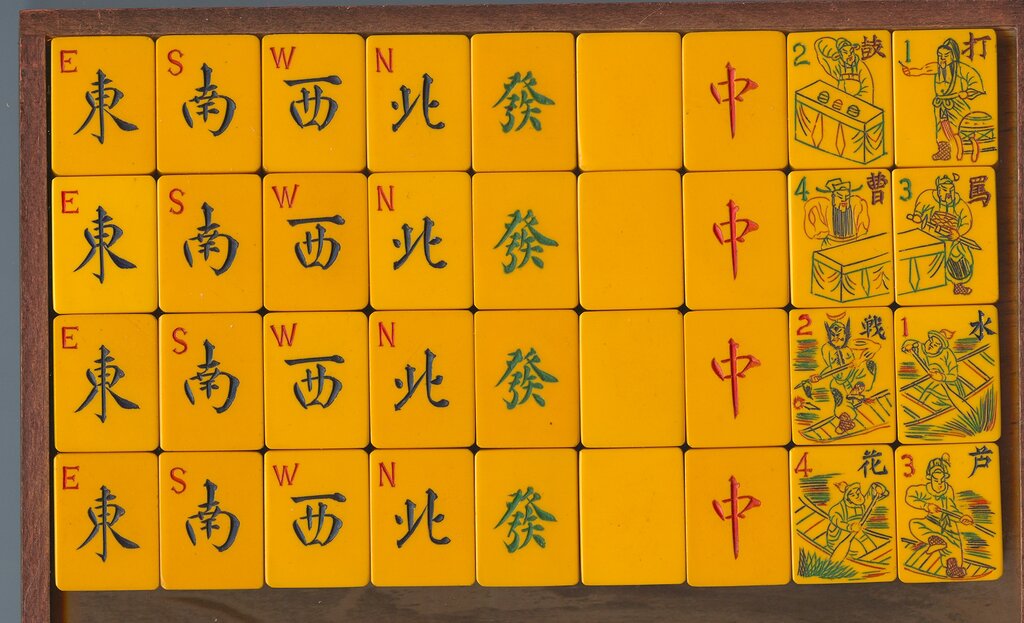
A standard American Mahjong set contains 152 tiles. These tiles are divided into suits (Dots, Bams, and Craks), Winds, Dragons, Flowers, and a unique addition for the American game: Jokers.
Each player uses a rack to organize their tiles, keeping them hidden from opponents. A pair of dice is used at the beginning of each game to determine the dealer and how the tiles are distributed.
The most important component is the NMJL card. This card, which is updated annually, lists the specific combinations of tiles, or hands, that players must match to win. Without the card, you can't play the game.
American mahjong adds eight extra tiles — Jokers that are played as wild cards — creating new layers of strategy and luck.
The Goal of the Game
The objective in American Mahjong is straightforward: be the first player to complete a 14-tile hand that matches one of the patterns on the current year's NMJL card.
Players draw and discard tiles in turn, trying to assemble their winning hand. Once a player successfully forms a valid hand, they declare "Mahjong!" to win the round.
It's a game that blends skill, strategy, and a little bit of luck. Recognizing patterns, making quick decisions, and adapting to the tiles you draw are all part of the fun. Let's review some key terms before testing your knowledge.
Ready to check your understanding?
Who was instrumental in simplifying and standardizing Mahjong for an American audience in the 1920s?
What is the most significant innovation introduced by the National Mah Jongg League (NMJL) to the American version of the game?
Now that you know the basics of its history, components, and objective, you're ready to learn how the game is played.