Mastering All Over Print
Introduction to All-Over Printing
Printing Beyond the Box
Most printed t-shirts have a design squarely in the middle. It might be a logo, a photo, or a clever phrase, but it lives inside an invisible box on the chest or back. All-over printing breaks out of that box.
It’s a technique used to print a design across an entire piece of fabric, from one edge to the other. The pattern or image covers every inch, including the sleeves, collar, and seams. Think of a Hawaiian shirt, a pair of patterned leggings, or floral bedsheets. The design isn't just placed on the item; it is the item.
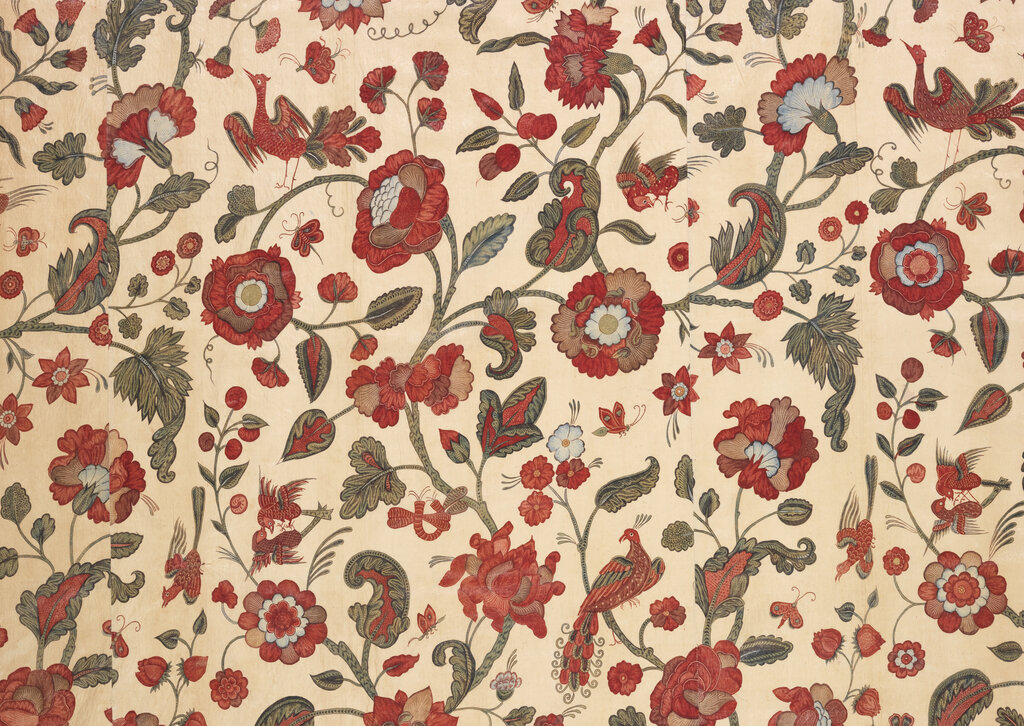
This seamless coverage opens up a world of creative possibilities. Instead of being limited to a small area, designers can create immersive, bold visuals that transform a simple piece of cloth into a work of art. This is why all-over printing is so significant in industries like fashion, home decor, and sportswear, where visual impact is key.
A Different Approach
So, how is this different from traditional printing? It comes down to when the printing happens. Traditional methods, like screen printing a logo, are usually done on a finished product, like a pre-made t-shirt. All-over printing happens before the product is fully assembled.
There are two main ways to do this:
-
Print, then cut and sew: The design is printed onto huge rolls of fabric. These printed rolls are then cut into the individual pieces of a garment (like front panel, back panel, sleeves) and sewn together.
-
Cut, then print and sew: The fabric is first cut into the necessary pieces. Each individual piece is then fully printed before being stitched together to form the final product.
The key is that the printing happens on flat fabric, not a finished, three-dimensional garment. This is what allows the ink to cover the entire surface without wrinkles or gaps.
Comparing the Methods
To understand the benefits of all-over printing, it helps to compare it directly with a more common technique like standard screen printing.
| Feature | All-Over Printing | Traditional Screen Printing |
|---|---|---|
| Coverage | Full surface, edge to edge | Limited to a specific area |
| Design | Seamless patterns, large images | Logos, graphics, text blocks |
| Process Stage | Before the item is sewn | After the item is made |
| Feel | Ink is often part of the fabric | Ink can feel like a layer on top |
| Complexity | More complex, requires printing then assembly | Simpler, print directly on item |
While traditional printing is perfect for many applications, all-over printing offers a level of design freedom and visual impact that other methods can't match.
What is the defining characteristic of all-over printing?
At what stage of the manufacturing process does all-over printing typically happen?