Mastering Albanian Core Structures
Phonetics and Cases
The Sound of Albanian
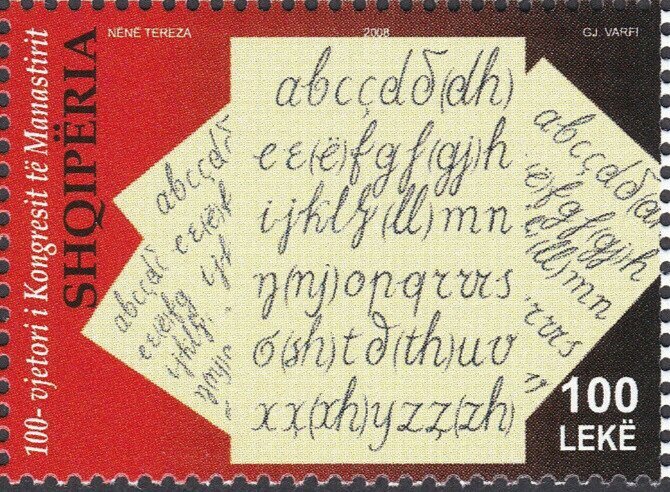
The Albanian alphabet has 36 letters. Once you know their sounds, you can pronounce almost any word correctly. The language is highly phonetic, meaning letters consistently represent the same sounds. Standard Albanian is based on the Tosk dialect, spoken in the south, so we'll focus on its pronunciation.
Two sounds to note are the 'rr', a trilled 'r' like in Spanish, and 'xh', which sounds like the 'j' in 'jeep'. Paying attention to these small details from the start will make mastering the grammar much easier.
When Nouns Change Form
In English, a noun's role in a sentence is shown by its position. We know who is doing the action and what is receiving it based on word order. For example, in "the dog chases the cat," we know the dog is the chaser.
Albanian works differently. It uses a case system, where a noun's ending changes to show its function. This means word order can be more flexible. There are five cases in Albanian: Nominative, Genitive, Dative, Accusative, and Ablative. We'll start with the two most common: Nominative and Accusative.
case
noun
A grammatical category that reflects a noun's function in a sentence, such as whether it is a subject, object, or shows possession. This is often indicated by changing the noun's ending.
Before we look at cases, we need to understand another key feature: definite versus indefinite forms. In English, we use articles like 'a' or 'the'. Albanian does this by adding a suffix to the noun itself.
Definite articles in Albanian are a bit more complex than their English counterpart “the.” Rather than appearing before the noun, the definite article is attached as a suffix to the end of the noun.
This means a word like djalë (boy) becomes djali (the boy). The suffix changes based on the noun's gender and number. This is a fundamental concept for building sentences.
| Indefinite (a/an) | Definite (the) | Meaning |
|---|---|---|
| një djalë | djali | a boy / the boy |
| një vajzë | vajza | a girl / the girl |
| një libër | libri | a book / the book |
Nominative and Accusative
With the idea of definite and indefinite forms in mind, let's look at the first two cases.
The Nominative case is used for the subject of a sentence. It's the person or thing performing the action. This is the basic, dictionary form of the noun.
For example:
- Një djalë lexon. (A boy reads.)
- Vajza shkruan. (The girl writes.)
In both sentences, djalë and vajza are the subjects, so they are in the nominative case.
The Accusative case is used for the direct object. It's the person or thing receiving the action.
When a noun becomes the direct object, its ending often changes. Notice how djalë and vajzë are different in these sentences:
- Unë shoh një djalë. (I see a boy.)
- Unë shoh djalin. (I see the boy.)
- Unë shoh një vajzë. (I see a girl.)
- Unë shoh vajzën. (I see the girl.)
The indefinite masculine form (djalë) doesn't change, but the definite masculine (djalin) and both indefinite (vajzë) and definite feminine (vajzën) forms do. Learning to spot these changes is key to understanding who is doing what in an Albanian sentence.
| Noun | Case | Form | Example Sentence (Meaning) |
|---|---|---|---|
| djalë (boy) | Nominative | djali | Djali lexon. (The boy reads.) |
| djalë (boy) | Accusative | djalin | Unë shoh djalin. (I see the boy.) |
| vajzë (girl) | Nominative | vajza | Vajza shkruan. (The girl writes.) |
| vajzë (girl) | Accusative | vajzën | Unë shoh vajzën. (I see the girl.) |
Let's test your understanding of these core concepts.
How many letters are in the Albanian alphabet?
The Albanian sound 'xh' is pronounced like the 'j' in which English word?
Understanding how nouns change for definiteness and case is the first major step toward building complex, accurate sentences in Albanian.