Mastering AI Technology
Introduction to Artificial Intelligence
What Is Artificial Intelligence?
Artificial intelligence is the science of making computers do things that require intelligence when done by humans. This includes tasks like learning from experience, solving problems, understanding language, and recognizing objects in the world.
This introduction to this special issue discusses artificial intelligence (AI), commonly defined as “a system’s ability to interpret external data correctly, to learn from such data, and to use those learnings to achieve specific goals and tasks through flexible adaptation.”
Instead of being programmed with a rigid set of rules for every possible situation, an AI system is designed to be flexible. It learns patterns from data and adapts its behavior to achieve a specific goal. This allows it to handle new, unseen situations in a way that traditional software cannot.
A Brief History
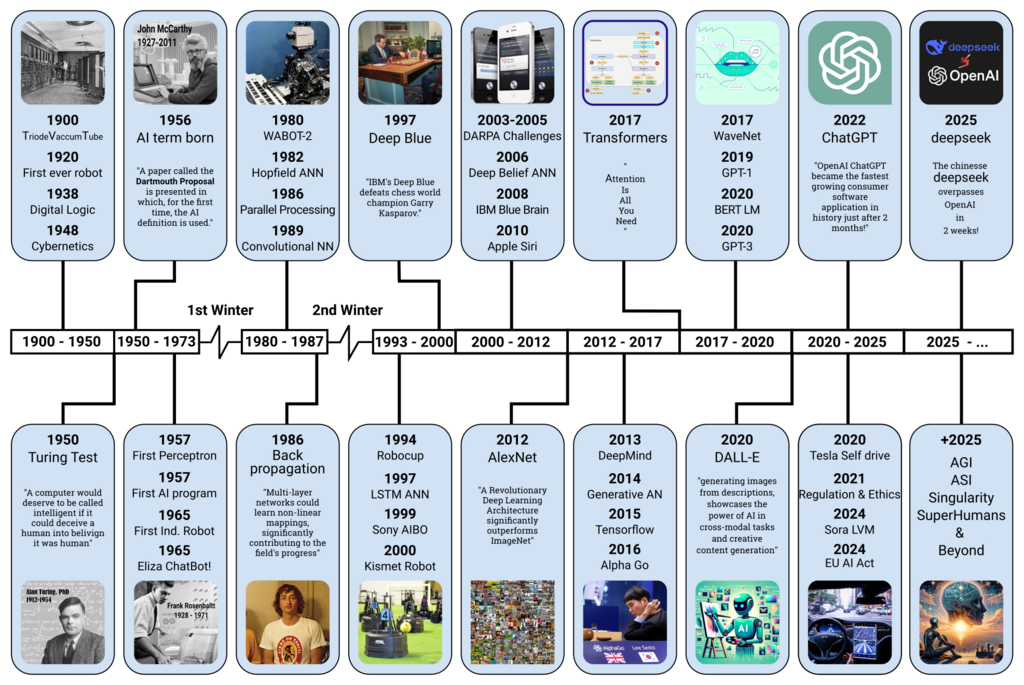
The dream of intelligent machines has been around for centuries, but the formal field of AI research began in the summer of 1956 at a workshop at Dartmouth College. Early researchers were optimistic, predicting that machines with human-like intelligence were just a few decades away.
Progress was slower than expected, leading to periods of reduced funding and interest known as "AI winters." However, breakthroughs in computing power and the availability of massive datasets in the 21st century sparked a resurgence. This led to the powerful AI tools we see today.
Two Kinds of AI
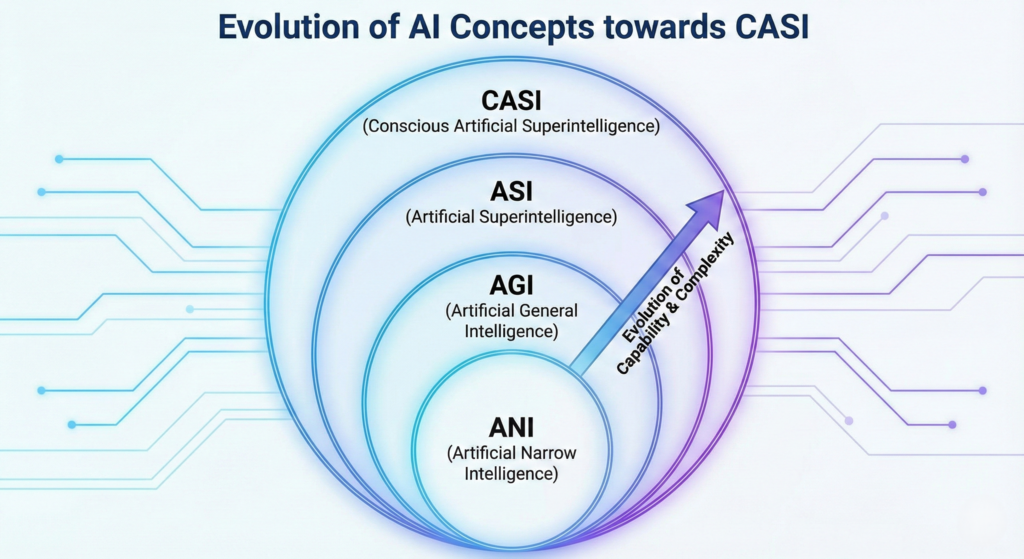
When people talk about AI, they are usually referring to one of two broad categories: Narrow AI and General AI.
| Type | Description | Current Status |
|---|---|---|
| Narrow AI (ANI) | Designed to perform a single, specific task. | All current AI is Narrow AI. |
| General AI (AGI) | Can understand, learn, and apply knowledge across a wide range of tasks, similar to a human. | Theoretical; does not yet exist. |
Narrow AI is all around us. The spam filter in your email, voice assistants like Siri and Alexa, and the recommendation engine on Netflix are all examples of Narrow AI. They are incredibly good at their one job but can't operate outside of it. You can't ask your spam filter for a weather forecast.
General AI, on the other hand, is the stuff of science fiction. It's a hypothetical machine with the flexible, creative, and general-purpose intelligence of a human being. Building AGI is a long-term goal for many researchers, but it remains a monumental challenge.
The Building Blocks of AI
Artificial intelligence isn't a single technology; it's a broad field with many specialized subfields. Here are a few of the most important ones.
Machine Learning
noun
A subfield of AI where algorithms are trained on data to find patterns and make predictions without being explicitly programmed for the task.
Natural Language Processing (NLP) is what allows machines to understand, interpret, and generate human language. It's the technology behind language translation apps and chatbots.
Computer Vision gives computers the ability to "see" and interpret the visual world. This is crucial for applications like self-driving cars, which need to identify pedestrians, traffic lights, and other vehicles.
Ethical Questions and Social Impact
As AI becomes more powerful and integrated into our lives, it raises important ethical questions. We must consider issues of bias, privacy, and accountability.
AI systems learn from data, and if that data reflects existing societal biases, the AI can perpetuate or even amplify them. For example, a hiring tool trained on historical data might unfairly favor candidates from a certain demographic. Ensuring fairness and transparency in AI is a major area of research and debate.

AI's impact on society is profound. It has the potential to solve some of the world's biggest problems, from discovering new medicines to creating more efficient energy systems. At the same time, it is changing the job market and raising questions about the future of work. Understanding both the promise and the challenges of AI is crucial for navigating the future.
Now, let's test your understanding of these foundational AI concepts.
What is the fundamental goal of Artificial Intelligence?
The voice assistant on your phone, which can answer questions but cannot write a novel, is an example of what?
You've now got a solid foundation in what AI is, where it came from, and the key ideas that drive it forward.