Mastering AI SEO and Generative Engine Optimization
AEO and GEO Fundamentals
Beyond the Blue Links
For years, the goal of search was simple: get your website to the top of the search results page. That list of blue links was the entire game. But the game is changing. Search is evolving from a list of resources into a conversation, an engine that provides direct answers instead of just options.
You've seen this with Google's AI Overviews, which summarize information at the very top of the page. You've experienced it with chatbots like ChatGPT, Perplexity, and Gemini, which synthesize information from across the web to answer complex questions. These systems don't just point to information; they consume it and generate something new. This shift requires a new approach to getting noticed, moving beyond traditional Search Engine Optimization (SEO).
Meet AEO and GEO
Two new disciplines have emerged to navigate this landscape: Answer Engine Optimization (AEO) and Generative Engine Optimization (GEO). While related, they serve distinct purposes.
Answer Engine Optimization (AEO) focuses on providing the immediate, concise answer for specific queries. Think of voice assistants like Siri or Alexa, or the “featured snippets” Google sometimes shows. The goal is to be the answer, directly and succinctly.
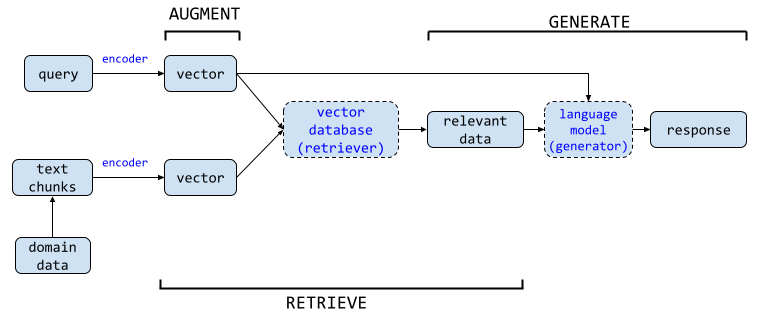
Generative Engine Optimization (GEO) is about optimizing your content to be found, understood, and cited by Large Language Models (LLMs). The goal here is to become a trusted source that an AI uses to construct its detailed, synthesized responses. You're not the entire answer, but you're a critical, credited part of it.
Generative Engine Optimization (GEO) is the practice of improving visibility, citation frequency, accuracy, and brand presence inside AI-generated answers.
From Clicks to Citations
The most significant change is the metric of success. Traditional SEO is obsessed with Click-Through Rate (CTR). Success means a user clicks your link. In the new world of AEO and GEO, the goal is often to avoid a click entirely by providing the answer upfront. The new key metric is —how often your brand or content is mentioned as a source in an AI-generated response.
This means that brand mentions are becoming as valuable as backlinks. An AI doesn't just look at which sites link to you; it looks at who is talking about you and in what context. It uses an to build a map of the world, connecting concepts, people, and companies. Your goal is to establish your website as a trusted entity on a specific topic. The AI needs to know who you are and what you're an expert in.
Why This Matters
The rise of AI Overviews and other generative search tools has a direct impact on organic traffic. If a user gets a complete, satisfying answer at the top of the search results, they have little reason to click through to any individual website. This could mean a significant drop in visitors for sites that have long relied on high search rankings.
The new challenge isn't just to rank, but to be the source of truth that powers the answer.
Adapting requires a shift in strategy. Content must be structured not just for human readers, but for machine comprehension. Clarity, authority, and factual accuracy are more important than ever. By focusing on AEO and GEO, you're not just optimizing for an algorithm; you're future-proofing your content for the next era of information discovery.
Ready to test your knowledge on these new optimization strategies?
What is the primary goal of Generative Engine Optimization (GEO)?
Which of the following best describes the key metric 'Citation Share' in the context of new search strategies?
Understanding the differences between SEO, AEO, and GEO is the first step toward building a resilient strategy in an AI-driven world.