Mastering AI Prompts
Introduction to Prompt Engineering
The Art of the Ask
At its heart, a prompt is just a set of instructions you give to an AI. Think of it like giving directions. If you tell someone to “go to the city,” you might get a confused look. But if you say, “Give me walking directions to the public library at 5th and Main, starting from here,” you’ll get a clear, useful path. The quality of the instructions directly shapes the quality of the result.
Prompt Engineering
noun
The skill of designing and refining instructions (prompts) to guide an AI model toward a specific, desired outcome.
This skill is becoming essential for anyone who uses AI tools. It’s the difference between getting a generic, unhelpful response and a precise, creative, and useful one. You’re not programming the AI in a traditional sense; you’re communicating with it. And like any form of communication, clarity and context are everything.
Prompt engineering is the discipline of crafting, refining, and optimizing these prompts.
Clarity is Key
The single most important rule in prompt engineering is to be specific. An AI model can’t read your mind. It can only work with the words you provide. Vague prompts lead to vague, generic, or unpredictable outputs.
Consider the difference between these two requests:
- Vague: “Write about space.”
- Specific: “Write three surprising facts about Jupiter's moons for a middle school science class. Keep the tone exciting and easy to understand.”
The first prompt could result in anything from a poem about stars to a technical paper on black holes. The second prompt gives the AI clear guardrails: a topic (Jupiter's moons), a format (three facts), an audience (middle schoolers), and a tone (exciting). The more detail you provide, the better the AI can tailor its response to your needs.
Think of it this way: the more precise the input, the more predictable the output.
An Iterative Process
You rarely get the perfect output on your first try. Prompt engineering is a cycle of trial, error, and refinement. Think of it as a conversation. You make a request, the AI responds, and then you adjust your next request based on what you received. Maybe the tone was too formal, or the answer was too long. Each attempt helps you learn how the AI interprets your instructions.
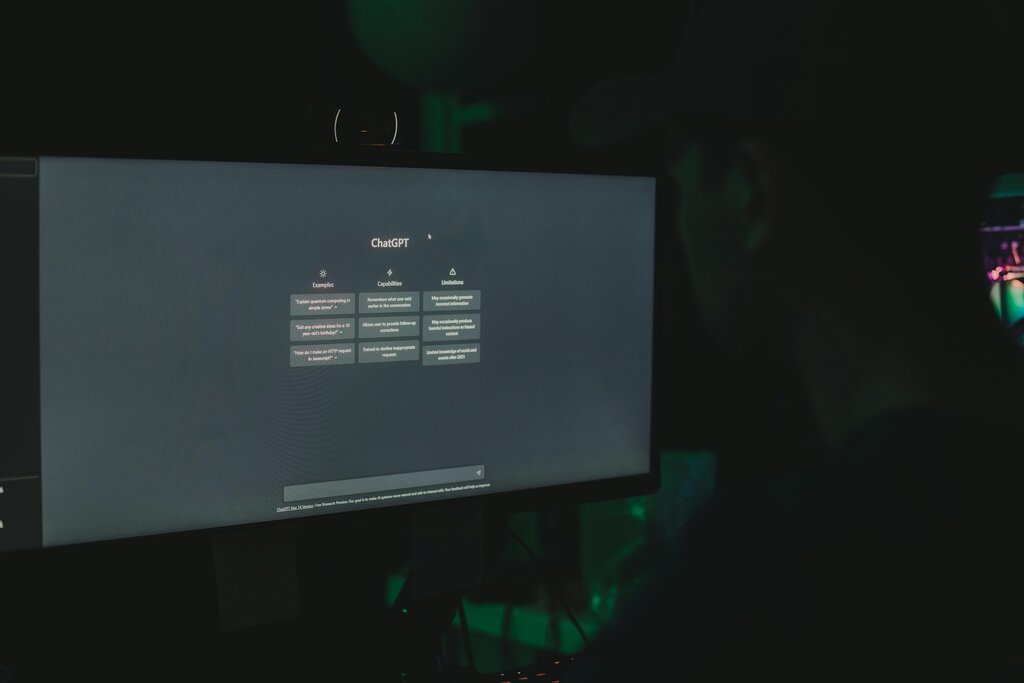
This refinement loop is where the real skill lies. You might start with a simple prompt and add constraints, examples, or a specific role for the AI to adopt. For instance, if the AI's first draft of a marketing email is too generic, you might refine your prompt to say, “Rewrite this, but adopt the persona of a friendly, expert barista trying to sell a new blend of coffee.”
Finally, it helps to understand the tool you're using. Different AI models have different strengths, weaknesses, and quirks. A model trained primarily on creative writing will respond differently than one trained on scientific papers. A model designed for generating images won't understand a prompt asking for a spreadsheet. Part of prompt engineering is learning the capabilities of your chosen AI and tailoring your prompts to fit what it does best.
What is the most fundamental principle of effective prompt engineering?
Which of the following prompts is most likely to produce a useful, targeted response?
By combining clear instructions with an iterative approach, you can guide AI to produce remarkably useful and creative results.