Mastering AI Prompts
Introduction to Prompt Engineering
What is Prompt Engineering?
Think about ordering a coffee. You could just say, "Give me a coffee." You'd get something, but it might not be what you wanted. Or, you could say, "I'd like a medium iced latte with oat milk and one pump of vanilla syrup." With that specific instruction, you're almost guaranteed to get exactly what you're picturing.
Prompt engineering is the art and science of giving specific instructions to an Artificial Intelligence (AI). It's how we guide AI models to produce the most accurate, relevant, and useful responses. The instructions we give are called prompts.
Prompt
noun
The input, typically text, given to an AI model to instruct it to perform a task.
As AI becomes more integrated into our daily lives, from writing emails to generating code, knowing how to communicate effectively with it is a crucial skill. The better your prompt, the better the AI's output.
The quality of AI output often depends directly on the quality of the prompt.
A Quick Look Back
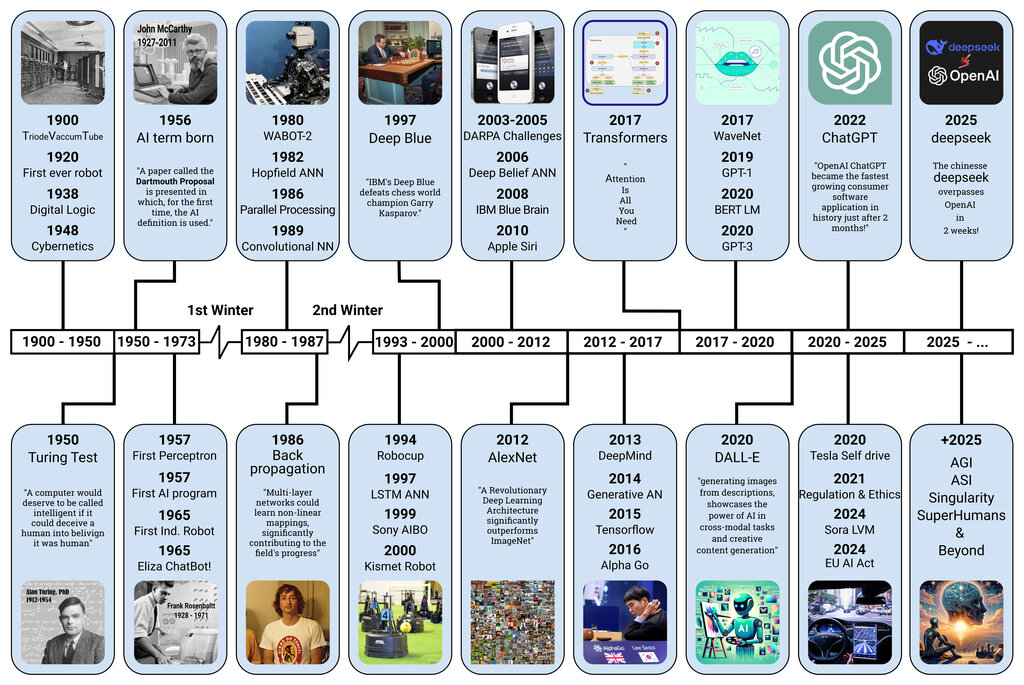
Talking to computers isn't new. For decades, we've used command lines and search queries to tell machines what to do. But those were rigid. A misplaced character or a slightly different phrase could lead to an error.
Modern AI, especially Large Language Models (LLMs), is different. These models are trained on massive amounts of text from the internet, books, and other sources. This allows them to understand and process natural, human-like language. This shift from rigid commands to flexible conversation is what made prompt engineering so important. We're no longer just giving orders; we're collaborating with the AI.
Why Prompts Matter
The quality of a prompt has a direct impact on the AI's response. A vague prompt will almost always lead to a generic or unhelpful answer. A clear, specific, and context-rich prompt guides the AI toward the exact output you need.
Let's look at an example. Imagine you want the AI to help you with an email.
A vague prompt: "Write an email to my team."
The AI has no idea what the email should be about, who the team is, or what the tone should be. It will likely produce a generic, unusable template.
A specific prompt: "Draft a friendly and professional email to my software engineering team. Announce that the project deadline for the 'Odyssey' feature has been moved from this Friday to next Wednesday to allow for more testing. Keep it under 100 words."
This prompt provides everything the AI needs: the audience (software engineering team), the context (project 'Odyssey' deadline change), the key information (new date), the desired tone (friendly and professional), and a constraint (under 100 words). The result will be a much more useful, targeted response.
This process of refining your instructions is the core of prompt engineering. It’s an iterative cycle of writing a prompt, evaluating the output, and then tweaking the prompt to get a better result.
The AI on the Other Side
To write good prompts, it helps to have a basic idea of what's happening inside the AI. Large Language Models (LLMs) like the ones that power most chatbots are complex systems trained on vast datasets of text and code.
Think of an LLM as a very advanced prediction engine. When you give it a prompt, it doesn't "understand" your request in the human sense. Instead, it uses the patterns it learned during its training to predict the most probable sequence of words that should come next. The prompt provides the starting point and the crucial context for these predictions.
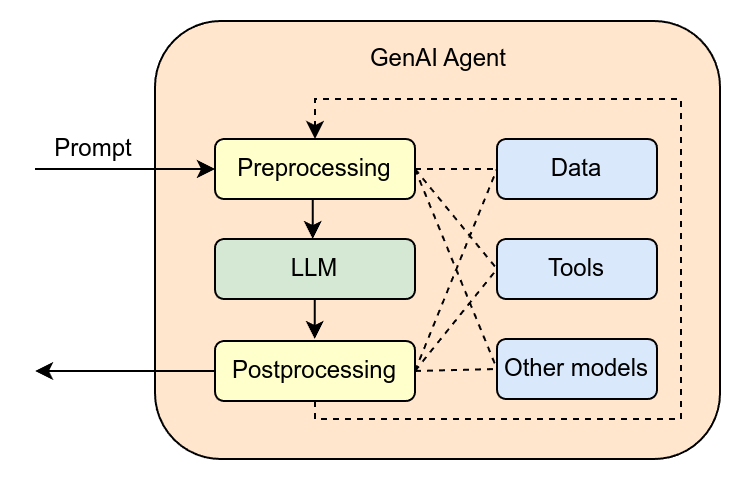
Because the AI relies on patterns and probability, the instructions you provide are its only guide. A well-structured prompt essentially narrows down the infinite possibilities of what the AI could say to the specific thing you want it to say.
Prompt engineering bridges the gap between human intention and the AI's predictive capabilities.
Mastering this skill is the first step toward unlocking the full potential of AI tools. It allows you to move from being a passive user to an active collaborator, shaping the AI's output to meet your specific goals.
What is the primary goal of prompt engineering?
According to the text, a vague prompt is likely to lead to a generic or unhelpful answer.