Mastering AI Prompts
Introduction to AI Models
What is an AI Model?
At its heart, an artificial intelligence (AI) model is a program trained to recognize patterns. It learns from vast amounts of data, much like how we learn from experience. Instead of being explicitly programmed with rules for every possible situation, an AI model figures out the rules on its own by analyzing examples.
Think of it like learning to identify cats. You wouldn't show a child a list of rules like "has pointy ears, has whiskers, has fur." Instead, you'd show them many pictures of different cats. Eventually, their brain builds a mental model of what a cat is. An AI model does something similar, but with data.
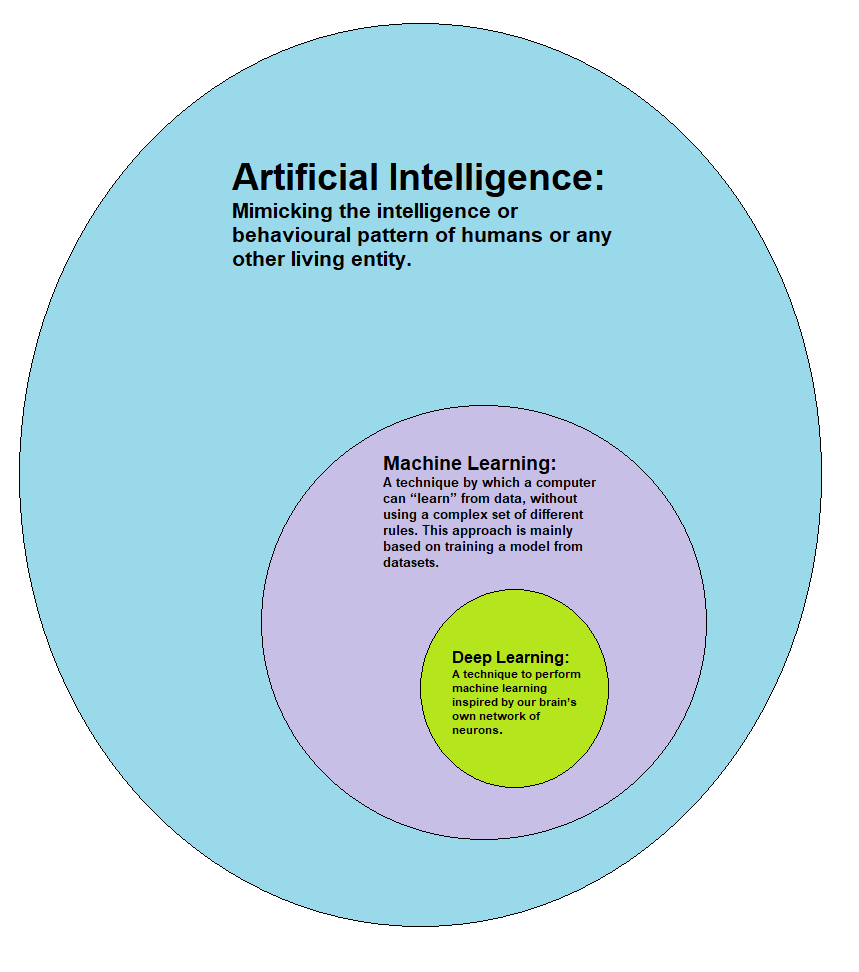
A Large Language Model, or LLM, is a specific type of AI model that focuses on understanding and generating human language. These are the models that power chatbots and writing assistants. They are called "large" because they are trained on enormous datasets, often containing a significant portion of the text available on the internet, and because the models themselves have billions of parameters, which are like internal knobs the model can tune during training.
The Architecture of an LLM
So how does an LLM actually work? Most modern LLMs are built on an architecture called the Transformer. You can think of this as the model's brain structure. It was a breakthrough because it allowed models to handle long sequences of text and pay attention to the relationships between words, even if they are far apart in a sentence.
Imagine you read the sentence: "The cat, which had been sleeping peacefully on the windowsill all morning, suddenly woke up and chased it." The Transformer architecture helps the model understand that "it" likely refers to something chased by the "cat," not the windowsill. It weighs the importance of different words when processing the sentence, a concept called "self-attention."
This architecture is made up of layers of artificial neurons, which are mathematical functions that process information. When you give an LLM a prompt, the text is converted into numbers and passed through these layers. Each layer refines the model's understanding, paying attention to grammar, context, and the subtle nuances of your request, before generating a response one word at a time.
How LLMs are Trained
Training an LLM is a massive undertaking. It happens in two main stages.
First is pre-training. The model is fed a colossal amount of text from books, articles, websites, and other sources. Its task is simple but powerful: predict the next word in a sentence. For example, given the text "The quick brown fox jumps over the lazy..." the model's goal is to predict "dog."
By doing this billions of times, the model learns grammar, facts about the world, reasoning abilities, and even some biases present in the training data. This stage is computationally expensive, requiring specialized hardware and weeks or months to complete.
Pre-training builds a general understanding of language. The next stage refines it for specific tasks.
The second stage is fine-tuning. After pre-training, the model is a powerful but unfocused language machine. To make it useful as a chatbot or assistant, it's trained on a smaller, high-quality dataset of conversations or instructions. This helps align the model's responses with human expectations, making them more helpful, truthful, and safe. This is often where techniques like Reinforcement Learning with Human Feedback (RLHF) are used, where human reviewers rate the model's outputs to teach it what a "good" answer looks like.
Common Applications
The capabilities learned during training allow LLMs to perform a wide range of tasks. You've likely already encountered them in various forms.
- Content Creation: Writing emails, blog posts, marketing copy, and even poetry.
- Summarization: Condensing long articles or documents into key points.
- Translation: Translating text between different languages.
- Chatbots and Virtual Assistants: Powering conversational AI for customer service or personal productivity.
- Code Generation: Writing snippets of code based on a natural language description.
Understanding these basic principles—what a model is, its general architecture, and how it's trained—is the first step to mastering the art of communicating with them effectively.
Now, let's test your understanding of these core concepts.
What is the fundamental way an artificial intelligence (AI) model learns?
What distinguishes a Large Language Model (LLM) from other types of AI models?