Mastering AI Prompts
Introduction to AI Models
What's Inside an AI Model?
At its core, an AI model is a complex system designed to recognize patterns and make decisions. Think of it like a digital brain, built from interconnected nodes called artificial neurons. These networks, known as neural networks, are inspired by the structure of the human brain.
When you give an AI a prompt, the information flows through this network. Each neuron processes a small piece of the puzzle, passing its result to the next. This journey transforms your input, like a question or a command, into a coherent output, like an answer or a generated image. The whole process is about taking an input, running it through a series of calculations, and producing a useful result.
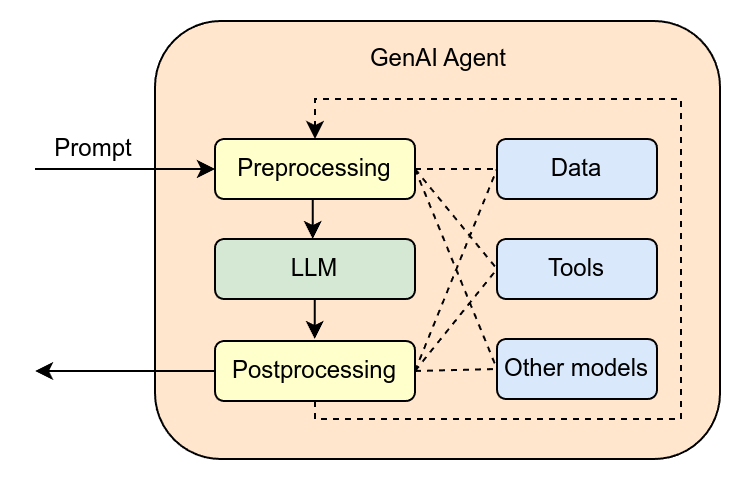
The model's internal structure, or architecture, determines its capabilities. Some architectures are great at understanding language, while others excel at identifying objects in pictures. Regardless of the type, the fundamental idea is the same: learning from data to perform a specific task.
The Role of Training Data
An AI model isn't smart out of the box. It has to be taught, and its textbook is data. This process is called training. To teach a model to identify cats, you show it millions of pictures of cats. To teach it to write stories, you feed it a vast library of books and articles.
The model learns by finding patterns, relationships, and structures within this training data. It adjusts its internal connections over and over until its outputs are consistently accurate. The more high-quality data it sees, the better it gets at its job.
The quality of an AI model is directly tied to the quality of its training data. If the data is biased or inaccurate, the model's responses will be too. This is the classic principle of 'garbage in, garbage out.'
For example, if a model used for hiring is trained on historical data where only men were hired for a certain role, it might learn to unfairly favor male candidates. That's why carefully curating diverse and representative training data is one of the most important jobs in building AI.
Common AI Applications
AI models are already integrated into many tools we use daily. They operate behind the scenes, making technology more helpful and intuitive. From simple conveniences to complex problem-solving, their applications are broad and growing.
| Application | How It Works |
|---|---|
| Recommendation Engines | Analyzes your past behavior (e.g., movies watched, songs liked) to suggest new content you might enjoy. |
| Language Translation | Identifies patterns between languages to translate text or speech from one language to another in real time. |
| Virtual Assistants | Uses natural language processing to understand and respond to voice commands, set reminders, or answer questions. |
| Image Recognition | Scans photos to identify and tag faces, objects, and scenes, which helps organize your photo library. |
These examples are just the tip of the iceberg. AI is also used in healthcare to analyze medical images, in finance to detect fraudulent transactions, and in scientific research to accelerate discoveries.
Understanding these basic components—architecture, data, and applications—is the first step to effectively communicating with AI. When you write a prompt, you're interacting with a system that has been trained on a massive dataset and designed for a specific purpose.
What is the fundamental building block of a neural network, the component inspired by the human brain?
The process of teaching an AI model by feeding it vast amounts of data is called ____________.