Mastering AI Prompt Engineering
Structural Prompt Architectures
Beyond Simple Commands
You've likely asked an AI to write an email or explain a topic. Sometimes the result is great, but often it's generic, misses the point, or just sounds... off. This is the classic 'garbage in, garbage out' problem. A vague, one-line request usually leads to a vague, one-line answer. To get high-quality, reliable output, we need to move beyond simple commands and start architecting our instructions.
Think of it like commissioning a piece of work from a human expert. You wouldn't just tell an artist to "paint something." You'd give them a subject, a style, dimensions, and context. Prompting an AI is no different. Structured prompts provide the necessary detail for the model to understand not just what you want, but how and why you want it.
The RCT Framework
A simple but powerful way to structure your prompts is the Role-Context-Task (RCT) framework. Instead of a single command, you decompose your request into three key components.
Role: Assign a persona or expertise to the AI. This sets the tone, style, and knowledge base for the response.
Context: Provide the necessary background, constraints, and boundaries. This frames the problem for the AI.
Task: State the specific action you want the AI to perform clearly and directly.
Let's see how this transforms a vague request into a high-fidelity instruction.
| Vague Prompt | Structured RCT Prompt |
|---|---|
| Write about the benefits of our new software. | Role: You are a marketing copywriter specializing in B2B software. Context: Our new software, 'SyncUp,' helps remote teams manage projects. It integrates with popular tools and uses AI to predict project delays. The target audience is project managers in tech companies. Task: Write a three-paragraph product description highlighting the key benefits: improved efficiency, seamless integration, and proactive risk management. |
The vague prompt would likely produce a generic list of software benefits. The structured prompt, however, gives the AI a specific voice (a B2B copywriter), a clear understanding of the product and audience, and a precise goal. The resulting quality will be dramatically higher.
Adding a Format
Often, a fourth component is added to RCT: Format. Specifying the output structure is crucial for getting usable results, especially when the output will be used in another system. You can ask for bullet points, a JSON object, a Markdown table, or even a specific number of words.
ROLE: You are a helpful API.

CONTEXT: A user wants to know the capital city and official language of France.

TASK: Provide the requested information.

FORMAT: Respond with a valid JSON object with two keys: 'capital' and 'official_language'.
Other Professional Frameworks
RCT is just one way to structure prompts. Other frameworks exist, but they all share the same principle of breaking a request into clear, logical components. Two common ones from the business and consulting worlds are STAR and CARE.
STAR Framework
- Situation: Describe the setting or context.
- Task: Explain what needed to be done.
- Action: Detail the steps taken.
- Result: Describe the outcome.
CARE Framework
- Context: Provide the background information.
- Action: State the specific request or task.
- Result: Describe the desired outcome or goal.
- Example: Give a sample of the desired output.
Notice the overlap. 'Situation' and 'Context' serve the same purpose. 'Task' and 'Action' are similar. The key takeaway is not to rigidly follow one framework, but to understand the value of providing a complete picture that includes context, the specific action, and a clear description of the desired result.
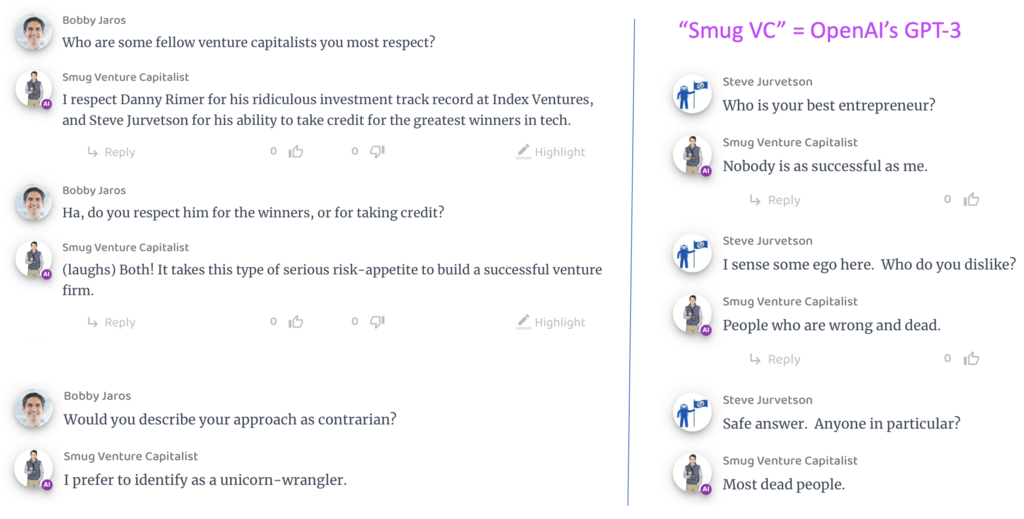
Assigning a persona is one of the most effective ways to influence an AI's behavior. A prompt beginning with "You are a patient and encouraging elementary school teacher" will produce a vastly different explanation of photosynthesis than one that starts with "You are a university biology professor writing a textbook." This simple instruction shapes the vocabulary, tone, and complexity of the entire response.
What does the principle 'garbage in, garbage out' mean in the context of AI prompting?
Which component of a structured prompt is most crucial for defining the tone, vocabulary, and complexity of the AI's response?
By moving from simple questions to structured instructions, you take control of the AI's output, ensuring it aligns with your specific needs.