Mastering AI Prompt Engineering
Introduction to Prompt Engineering
Talking to AI
Communicating with an AI is a lot like giving instructions to a person. If you're vague, you'll get a vague result. If you're specific and clear, you're much more likely to get what you want. This is the simple idea behind a powerful skill called prompt engineering.
Prompt engineering is the practice of designing inputs (prompts) to guide AI models toward producing desired outputs.
Think of it like ordering coffee. If you just say, "Give me a coffee," you might get a plain black coffee, an espresso, or a latte. Who knows? The barista has to guess. But if you say, "I'd like a large iced oat milk latte with one pump of vanilla," you'll get exactly what you're picturing.
Prompts are the instructions we give to AI models. They can be simple questions, detailed commands, or even a few examples to show the AI what we want. Learning how to craft these instructions effectively is the difference between getting a generic, unhelpful response and a precise, valuable one.
The quality of the AI's output is directly tied to the quality of your input.
How AI Follows Instructions
It’s helpful to remember that an AI doesn't "think" or "understand" in the human sense. A large language model (LLM) is a complex pattern-matching system. It has been trained on a massive amount of text and images from the internet, learning the relationships between words, concepts, and ideas.
When you give an AI a prompt, it doesn't reason about your request. Instead, it uses your words as a starting point to predict a sequence of words that is statistically likely to follow. It's essentially completing the pattern you started.
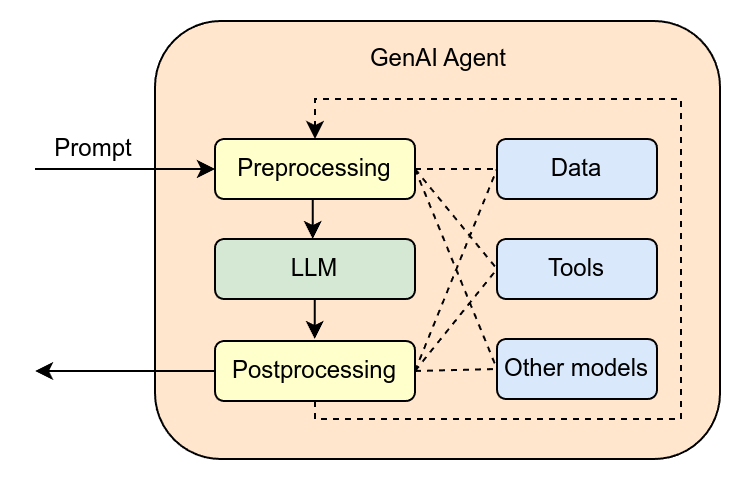
A well-crafted prompt guides this prediction process. It provides strong context, narrowing down the infinite possibilities to the ones that are most relevant to your goal. A vague prompt provides weak context, forcing the model to make a bigger guess about which patterns to follow. This often leads to generic or off-topic results.
Clarity is Key
The core purpose of prompt engineering is to reduce ambiguity. You want to leave as little room for interpretation as possible. Let's look at an example.
| Vague Prompt | Specific Prompt |
|---|---|
| "Write about climate change." | "Explain the concept of carbon capture in three sentences for a high school student." |
With the vague prompt, the AI has no idea where to start. Should it discuss the history, the causes, the political debate, the scientific consensus? The topic is huge. The result will be a very general overview.
The specific prompt gives the AI clear guardrails:
- Topic: Carbon capture
- Length: Three sentences
- Audience: A high school student
This level of detail guides the AI to produce a focused, concise, and useful response. By providing context and constraints, you engineer a better outcome.
The text compares prompting an AI to ordering a coffee. What is the main point of this analogy?
According to the text, how does a large language model (LLM) primarily process a prompt?
Mastering this skill is fundamental to working effectively with AI. It transforms the tool from a novelty into a reliable partner for creative and analytical tasks.